Stepping Outside My Comfort Zone to Find Peace
OVERTURE
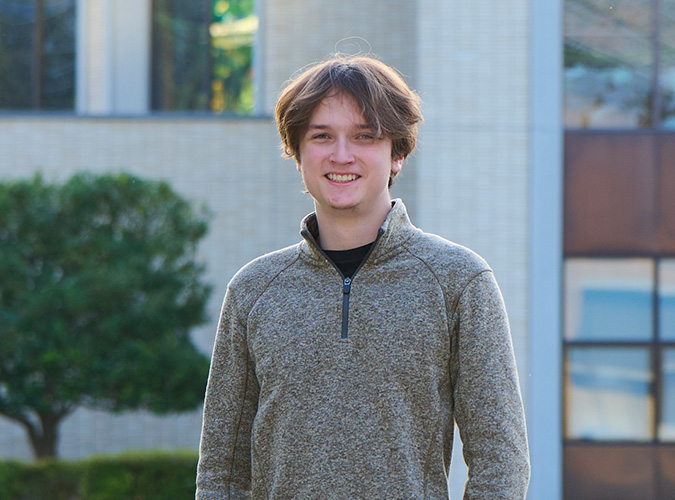
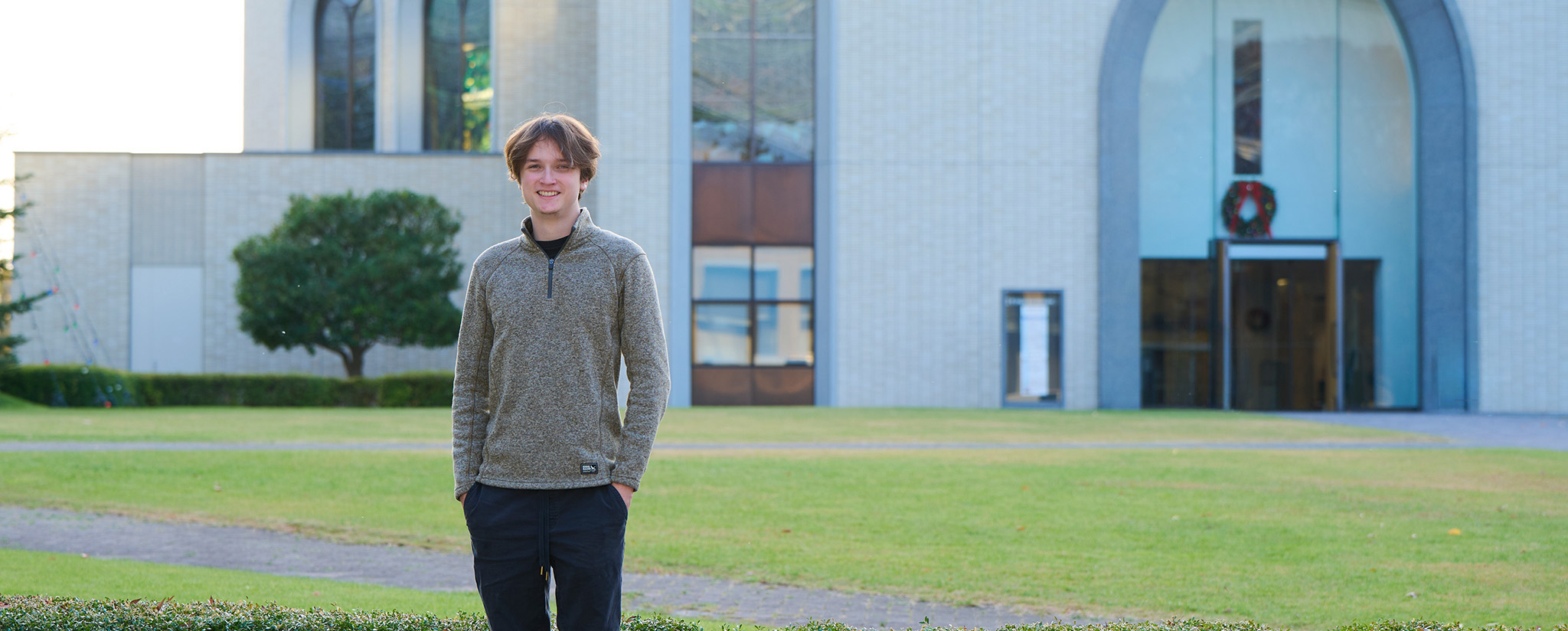
Jack Smith left rural Arkansas for the suburbs of Tokyo to step outside his computer science and STEM bubble and experience true independence. He chose Aoyama Gakuin University Sagamihara Campus, seeking a balance between peaceful Japanese life and Tokyo’s urban bustle. Through cultural immersion, Japanese study, and exploring the city, Jack has learned that to truly know yourself, sometimes you must go far from home.
Intrigue that stemmed from a five-day homestay
My path to Japan started with languages: not just Japanese, but Chinese and
Korean too. As someone drawn to hard problems, these languages fascinated me.
When my
high school offered Japanese classes, I jumped in, even though I didn’t know much about
Japan at the time. Everything changed through online exchanges with a high school in Osaka.
Using Japanese with actual Japanese students, hearing about their lives, it was no longer
abstract vocabulary lists but real people and real conversations.
When my school announced a five-day homestay program in Osaka, I went for it. We were paired with local Japanese families, and those five packed days had more impact than I could have imagined. I experienced my first onsen hot spring bath, spent a day in Kyoto, and got a taste of what life in the Kansai region was like. But what struck me wasn’t the tourist attractions. It was the peacefulness of it all, the way people treated each other with such respect.
The trip also delivered a humbling reality check. Despite a year of study, I could barely follow conversations. Everyone spoke so fast, the words blending in ways my textbook hadn’t prepared me for. But here’s what kept me motivated: Japanese people’s reactions when I tried speaking their language. Even my broken attempts made them light up with genuine smiles and visible pleasure that this foreigner was making the effort to speak their mother tongue. It wasn’t about perfection; it was about connection. I wanted to experience more of that.
After returning home, those friends I made in Osaka became my motivation. If I felt burnt out from studying—and without Japanese classes at Hendrix College, self-study could be tough—I’d think about being able to hang out with them again, this time having genuine conversations in Japanese. I relied on watching YouTube channels to listen to native speakers and improve my listening ability. So, when study abroad opportunities appeared, I knew I had to take the plunge. AGU seemed like the perfect place for me, as a hub in Tokyo with many international students, opportunities, and a global business environment.

Seeking peace over the bustle:
my decision to choose Sagamihara
Choosing the Sagamihara campus over the Aoyama one was unconventional, I know. When you tell a college student about the buzzing Shibuya atmosphere, it’s no wonder they get excited. But I realized that’s just not me, I’m more of a low-key guy. Coming from the more rural Arkansas, I’m not wired for 24/7 city intensity. I wanted a slower-paced Japanese suburban life, keeping the Tokyo buzz at arm’s length. I have some friends who take karate classes at the Aoyama campus, and they confirmed that the crowded commute into the city could be a tiring one. At Sagamihara, excitement is optional, not mandatory.
The practical factors mattered too. Sagamihara’s science and technology focus meant I’d meet more people with similar interests. Both campuses have their upsides, and of course there are many perks that come with being in Shibuya, but after weighing the options I felt that Sagamihara would be the right fit for me. Since I’m here for two semesters, I feel that the more relaxed environment has let me to adjust to Japan at my own pace.
The reality has exceeded my expectations. My neighborhood is genuinely quiet.
The tree-lined walkway through campus transforms with the seasons; watching leaves fall, you
can feel the arrival of autumn. The library offers a warm refuge on cold days. The gym offers amazing value compared to anything back in the States. The chat room lets me connect with Japanese students
practicing English while I practice Japanese.
Compared to American campuses, the
facilities here feel cleaner, more modern, more intentional. The calm, focused atmosphere is
exactly the balance I sought—peaceful by default, with all of Tokyo’s vitality accessible
whenever I want to take the trip downtown.
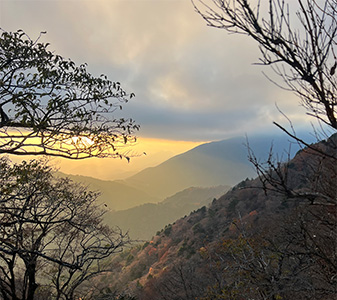
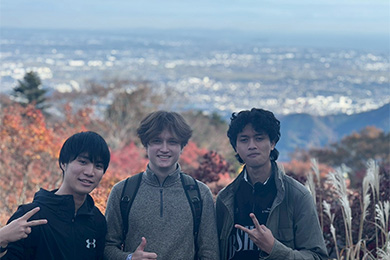 Mount Oyama in Kanagawa (1,252 m). The hike was tough, but the view from the summit was truly breathtaking and absolutely worth it.
Stepping outside my comfort zone
to embrace liberal arts and
Japanese
Choosing to study in the School of Global Studies and Collaboration (GSC) was a deliberate decision to push myself outside my comfort zone. My curriculum since early high school has largely focused on computer science and math. I’ve always been good at those subjects, but I realized that putting all your eggs in one basket is risky. I wanted to balance STEM with humanities and interdisciplinary studies.
The shift has been profound. In computer science, you’re trained to find the correct answer efficiently and move on. But GSC’s liberal arts courses revealed how much of the real world does not work that way. My political history classes showed me that historical events resist simple narratives and are not black-and-white. There are always multiple perspectives, complex motivations, and contextual factors. Not heroes and villains, just humans making difficult choices.
This nuanced thinking will make me a better computer scientist. Technology doesn’t exist in a vacuum. Understanding societal impact, considering multiple viewpoints, appreciating human complexity: these skills matter when you’re building systems that affect people’s lives.
Japanology has been my favorite class, hands down. Instead of lectures about Japanese culture, we practice it through traditional dancing, koudan storytelling, and calligraphy. Doing these activities hands-on makes them memorable in ways lectures never could and is something that I could only experience through coming here as an exchange student.
My Japanese study has been equally intensive. I am focusing on speaking and listening courses, a big change from my self-studies back in America, when I would focus on reading and vocabulary. Even in a short few months, I have felt my listening comprehension improve dramatically. It is a challenge, since my conversational fluency lags behind my knowledge, but this pressure motivates me to double-down on my studies.
In my international business class, I’m the only international student in a
group with six Japanese classmates. That class is taught in English, and I’ve learned that
sometimes I need to step up when it comes to facilitating conversations and keeping our
group on track. Whether it’s language barriers or cultural differences in group dynamics,
this dynamic has taught me about effective cross-cultural communication. What really
impresses me is how prompt Japanese students are. When deadlines approach, they remind
everyone to stay organized, which can be very different from group projects where teammates
may slack off.
I practice Japanese everywhere I can. My friends help keep my
accountable, pushing me to order in Japanese at restaurants and get over the awkwardness of
using my Japanese. Every conversation is practice, every interaction a chance to improve.
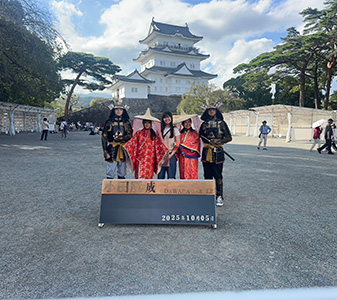
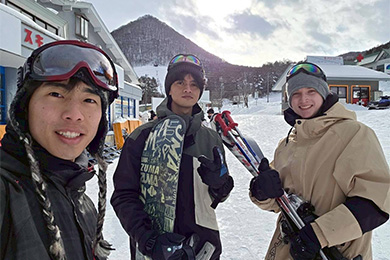 Learning to ski together with my friends was the best experience. My friend Naufal from GSC (an exchange student from Gadjah Mada University in Indonesia, center in the photo) and his tutor, Naoya Obara, a student in the College of Science and Engineering (left in the photo).
Learning self-reliance in a land far from home
Independence takes on new meaning when home is 6,000 miles away. While I’m at Hendrix, my parents live less than an hour from campus, close enough to help me with any problems and offer advice rooted in their own American college experiences. Here, they can’t help me set up a Japanese bank account or navigate procedures at my city hall. When challenges arise, I figure them out myself.
It is a big leap to move to a country where everything operates differently: language, culture, customs, systems. But people adapt faster than we may initially expect. After just a month, I’d established my routine, and what once felt overwhelming became manageable. The juggling act of new schedules and unfamiliar procedures gave way to comfortable patterns.
These problem-solving skills have value beyond practical survival. I’ve grown more patient, more adaptable. Living where I can’t speak the language fluently has taught me to embrace uncertainty, to communicate creatively when words fail. That first month, my dorm felt like temporary lodging. But repetition breeds familiarity. Now it genuinely feels like home, complete with a fourth-floor balcony view of parks and distant buildings.
Dorm life has also revealed Japanese culture’s emphasis on consideration
for others. Everyone maintains quiet hours, keeps shared spaces clean, and respects communal
living. It creates an environment where focus comes naturally when I need to buckle down for
my studies.
My favorite discovery? Late-night walks in my neighborhood. No crowds, no
expectations, just the quiet streets and my thoughts. According to a Stanford University
study I read about, walking can increase creative output by up to 60 percent, thanks to a
connection between blood flow and mental clarity. Back in Arkansas, I’d sometimes sit in my
car at night listening to music, seeking that same decompression. Here, I can walk without
needing to keep my guard up. After long days of mentally translating between English and
Japanese and bouncing between classes and responsibilities, these walks offer release. I
observe trees, listen to the sounds around me, and feel the heiwa, or peace, that defines so
much of what I love about Japan. This has become a go-to method for me to think through
problems and unwind.
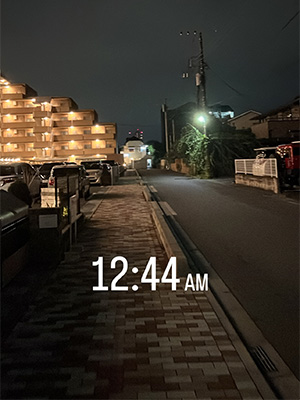 Taken near my dorm during a late-night walk. I captured this moment because I loved the calm atmosphere.
You must go far to come close to yourself
You can’t learn who you are by just staying comfortable. Growth requires leaving your bubble, experiencing different realities. If you never step outside familiar patterns, you’ll never discover what you’re capable of becoming. Japan has taught me things about myself that Arkansas never could. I’ve learned I thrive in peaceful, genuinely calm, environments. I’ve discovered Japanese cuisine extends far beyond ramen and udon—the variety and quality are remarkable. Most importantly, I’ve learned to pause before judging unfamiliar practices, to ask “why” instead of just comparing things to American norms.
The language barrier itself has become a teacher. Japanese people respond completely differently when I speak their language versus English. Even fragmented Japanese can make them brighten up and show genuine smiles of appreciation. It seems to be more important to meet people where they are, rather than worry about perfection. That lesson extends beyond language to all cross-cultural interaction.
What strikes me most is how internationally minded the Japanese students that I’ve met are, compared to back home. They casually mention middle school trips they took to Thailand or high school exchanges in Europe. In my hometown, even traveling abroad during high school would be unusual for most people. Maybe that’s why American perspectives can be more limited: fewer opportunities to expand the bubble besides trips to Canada or Mexico.
Tokyo itself offers more than just Japanese culture. Last weekend, my friends and I ate at an Indonesian restaurant. The city teems with Asian culture and cuisine, like Thai and Malaysian, which I would not encounter back in Arkansas. I’m not just learning about Japan but rather sampling a broader Asian experience.
This exchange has balanced my technical training with a humanistic perspective. The critical thinking and communication skills emphasized in liberal arts complement my computer science foundation. Understanding broader impacts, considering multiple viewpoints: these will make me a better technologist. Looking ahead to a potential career in financial technology, the adaptability I’ve developed here—while solving problems independently in unfamiliar environments—is just the training I need. And having experience in Japan, one of the world’s major financial centers, is giving me insight into Asian markets that I believe will prove valuable.
I’ve learned that the heiwa I experience in Japan is not just an absence of conflict, but the presence of something that makes me feel content, even blissful. I find this to be pervasive in my daily life in Sagamihara, and I want to carry this feeling forward in my future.
For students considering studying abroad: if you’re hesitant, go anyway. The language barrier is real. Homesickness is real. Feeling lost at times is real. But these challenges are precisely where the growth happens. All the other people I’ve met here are glad they came. Not a single person regrets it. If you don’t go, you might spend years wondering what you missed, or what you could have become. You’ll never discover your true capabilities without pushing into unfamiliar territory. You must go far to come close to yourself, and I promise the journey is worth it.
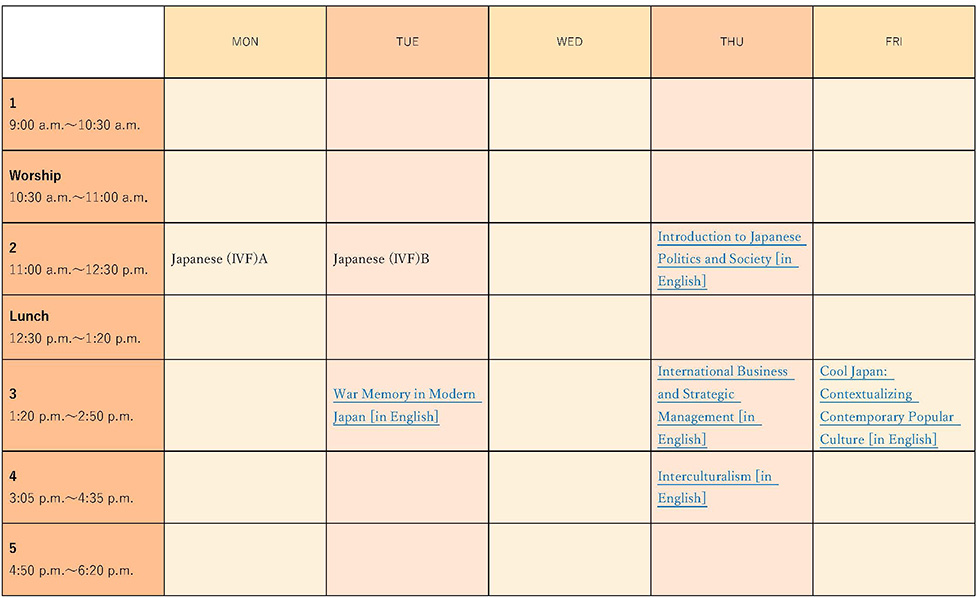
| MON | 2 11:00 a.m.〜12:30 p.m. | Japanese(ⅣF)A |
|---|
| TUE | 2 11:00 a.m.〜12:30 p.m. | Japanese(ⅣF)B |
|---|---|---|
| 3 1:20 p.m.〜2:50 p.m. | War Memory in Modern Japan [in English] |
| THU | 2 11:00 a.m.〜12:30 p.m. | Introduction to Japanese Politics and Society [in English] |
|---|---|---|
| 3 1:20 p.m.〜2:50 p.m. | International Business and Strategic Management [in English] | |
| 4 3:05 p.m.〜4:35 p.m. | Interculturalism [in English] |
| FRI | 3 1:20 p.m.〜2:50 p.m. | Cool Japan: Contextualizing Contemporary Popular Culture [in English] |
|---|
Interview video
Aoyama Gakuin International Center
The role of the International Center (IC) at Aoyama Gakuin University is to provide educational support related to the internationalization of the university as well as to help the development of students to become global citizens. The main work of the IC consists of supporting both students going overseas and international students from overseas partner schools and approved institutions; as well as planning and operating intensive language training along with other programs and special events. Through these efforts it is the goal of the IC to support globalization of the educational system of Aoyama Gakuin. The worldwide trend of globalization affects not only corporate activities and international relations but should also impact the structure of university education and curricular content. With that in mind, the IC strives to strengthen and expand collaboration between overseas universities and Aoyama Gakuin University while respecting the diverse cultures and traditions of each country as well as the customs and values of our students.