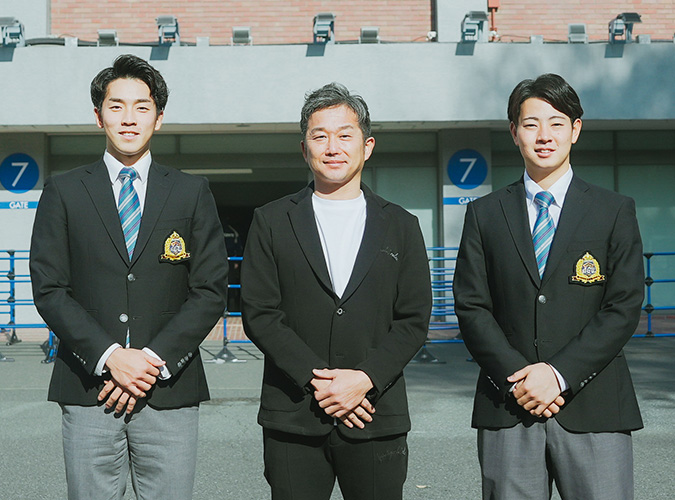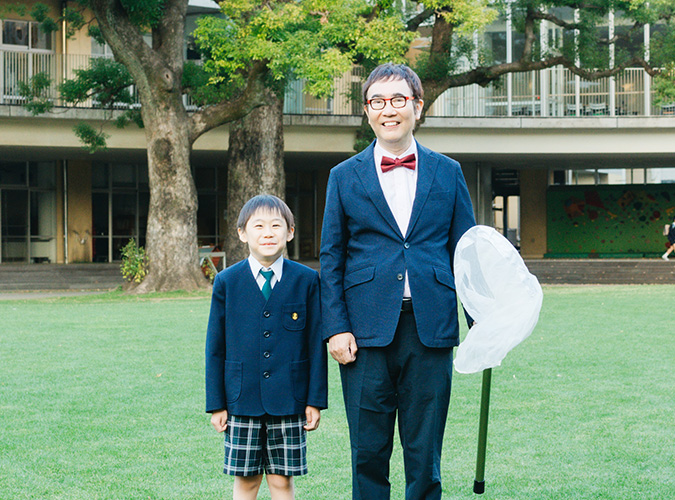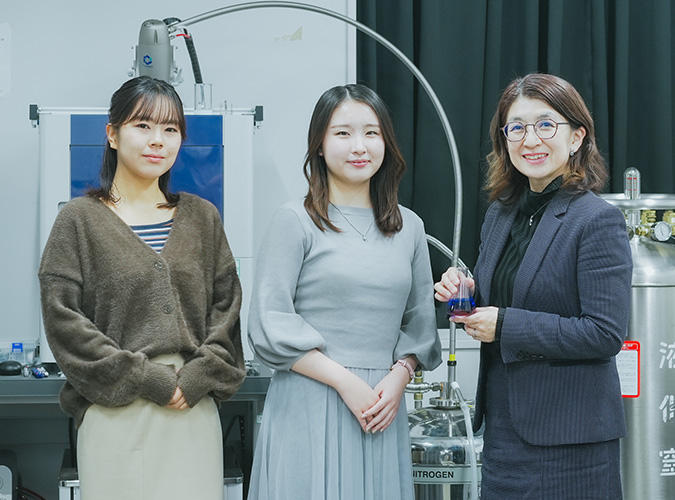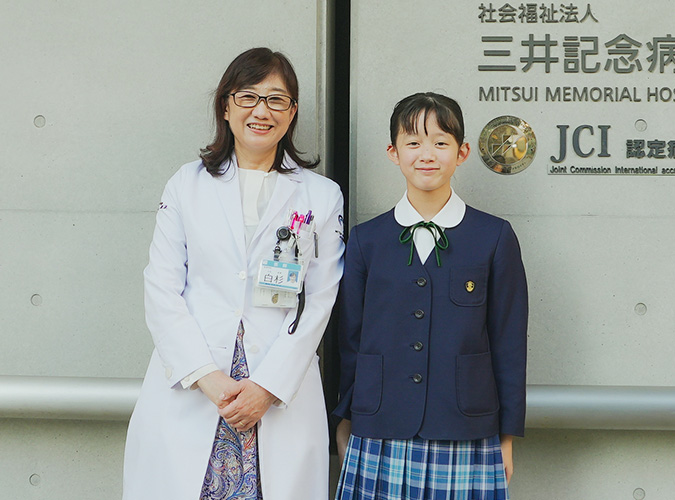
150th Anniversary Project
"Aogaku Mind Opening Up the Future"
The basis of our management is the belief that "for the world, for the people"
| Alumni and Graduates |
Weathernews Inc.
Chairman and Representative Director
Kusabiraki Chihito
×
Graduate Graduate School of Science and Engineering Mechanical Engineering Course Doctoral Program 2nd year
Shinichi Ishikawa
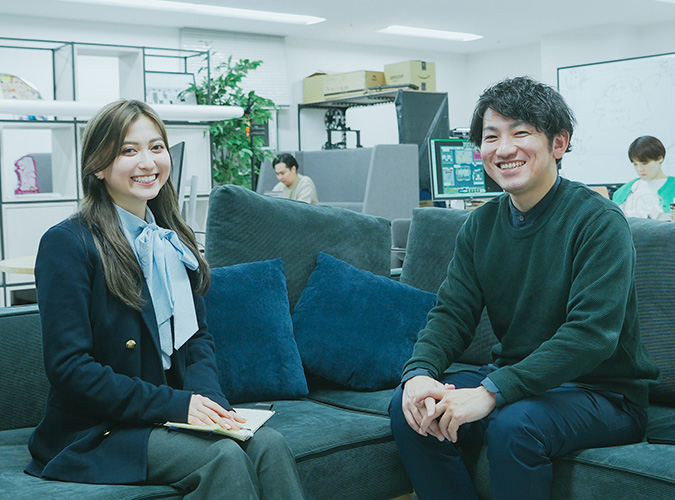
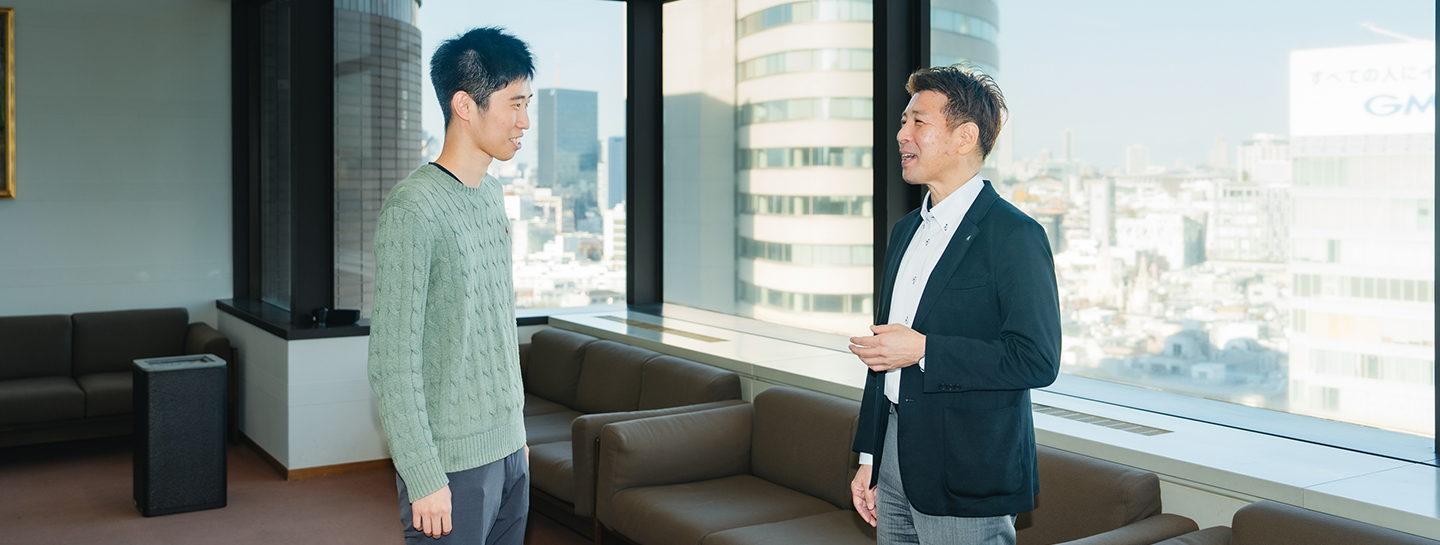
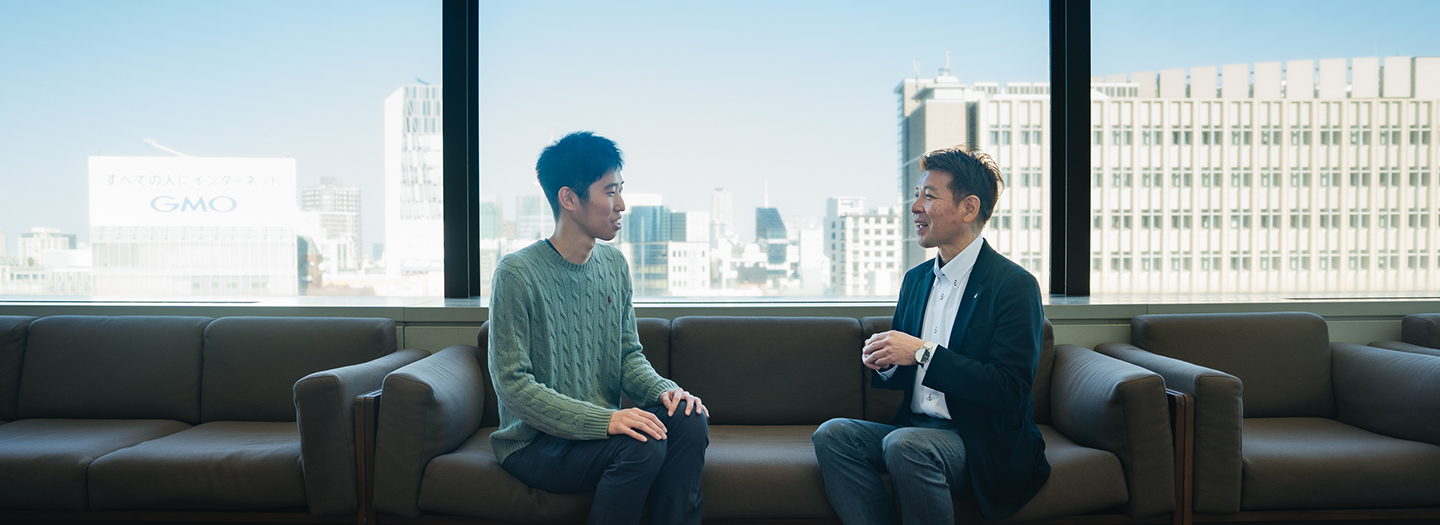
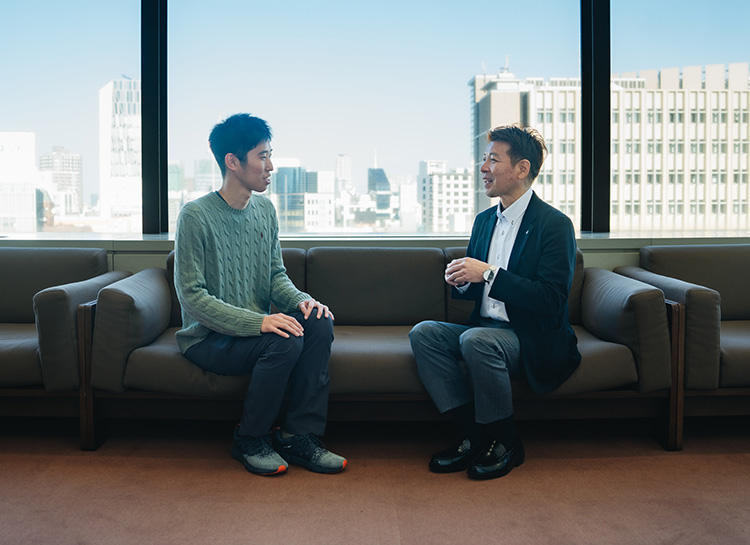
In 2024, Aoyama will celebrate its 150th anniversary. Many graduates have built wide-ranging careers based on what they learned at the school. This time, Ishikawa Shinichi, a second-year doctoral student in the Department of Graduate School of Science and Engineering, Graduate School Mechanical Engineering Course interviewed Kusabiraki Chihito, chairman and CEO of Weathernews Inc. (hereinafter Weathernews), one of the world's largest private weather information companies. Ishikawa aims to start his own company in the future and launch a "manufacturing platform" centered on 3D printing technology. We asked Kusabiraki about the philosophy he values in his work, management according to the growth stage of a company, and a message for current students.
Profile
Chairman and CEO, Weathernews Inc.
Kusabiraki Chihito
1987 Graduated College of Science and Engineering Faculty of Science and Engineering
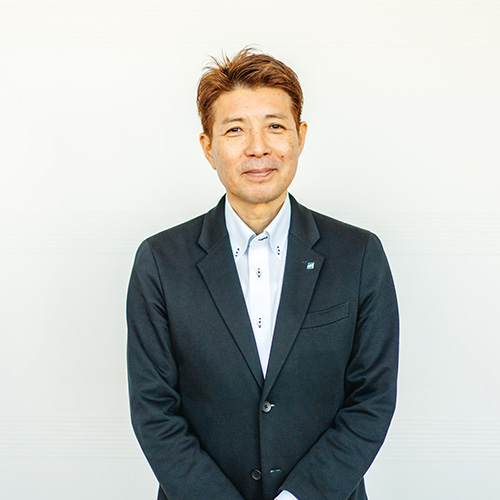
Born in Tokyo. At university, he conducted research on quantum physics in the laboratory of the late Professor Toshiya Komoda (Professor Emeritus Aoyama Gakuin University). After graduating, he joined Weathernews Inc., which had just been founded. He has expanded the company's business to include weather risk countermeasures, from personal services such as weather apps to climate change countermeasures, and has grown the company into one of the world's largest private weather information companies. In 2006, he was appointed Representative Director and President (general management and chief sales officer), and in June 2024, he was appointed Representative Director and Chairman.
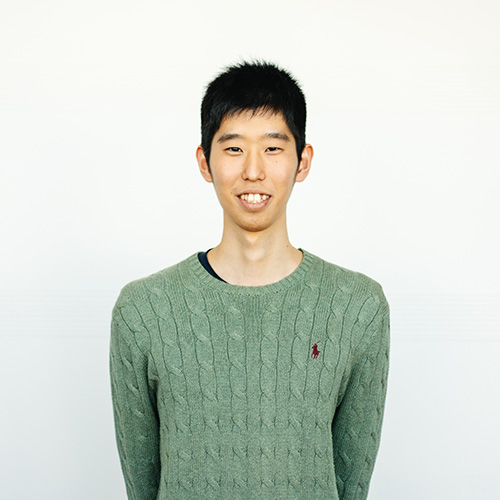
<2025 Academic Year Academic Excellence Award - Grand Prize Winner>
Second year of doctoral program in Mechanical Engineering Graduate School of Science and Engineering Mechanical Engineering Course
Shinichi Ishikawa
Graduated from Miyazaki Nihon University High School, Miyazaki Prefecture
He is a member of Associate Professor Ryosuke Tazaki 's laboratory. As a doctoral student support student of the AGU Future Eagle Project (AGU FEP), he is conducting research on next-generation 3D printing technology based on robotics and is also involved in the management of AGU MAKES (3D printer lab) located in the machine workshop on Sagamihara campus. His goal in the future is to start his own company and launch a "manufacturing platform." He aims to create a production base that utilizes 3D printing technology and a place where children can have fun experiencing cutting-edge technology.
TALK THEME
1st TALK
"What is most important to you in your work?"
It means "working for the world and for people."
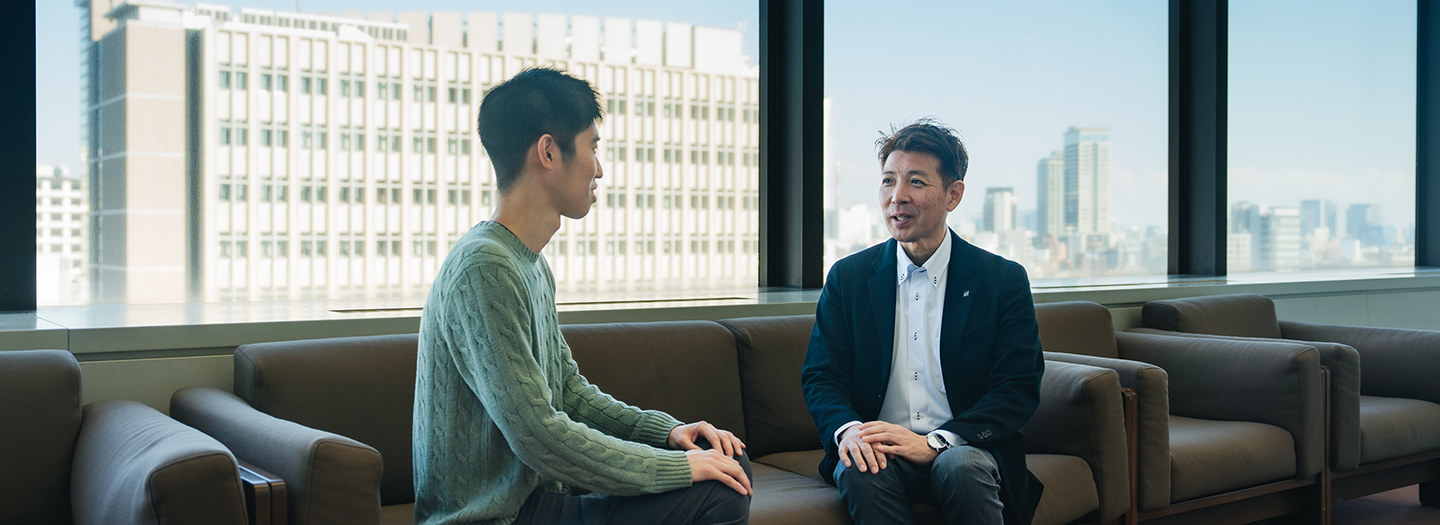
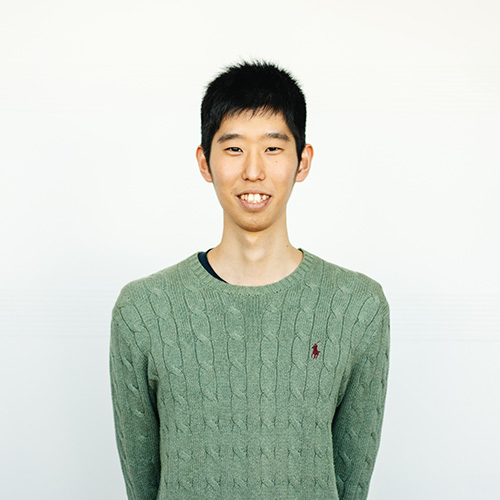
Ishikawa
I am currently researching 3D printing technology in Professor Ryosuke Tazaki 's laboratory. I have loved robots and manufacturing since I was a child, so I went on to study Department of Mechanical Engineering. In the process of using 3D printers on a daily basis, I realized that 3D printers are not magic boxes that can make anything, but that they are prone to failure and have a personal aspect. Conventional 3D printers are based on simple movements and movements along predetermined paths, and measurement technology during operation and operation based on measurement information are still in development. In my research approach, I aim to realize 3D printing technology that can operate without failure even in complex environments by measuring with force sensors and cameras during operation and correcting the movements while modeling. In the future, I would like to start a company and launch a "manufacturing platform" centered on 3D printing. Why did you want to go into meteorology, Mr. Kusabiraki?
I've loved weather and geological phenomena since I was a child. Another big influence was the flooding of the Tama River caused by heavy rain in 1974. I lived near the Tama River at the time, so I witnessed the damage caused by the flooding, and even as a child I had a strong desire to "reduce this kind of weather damage even if only a little."
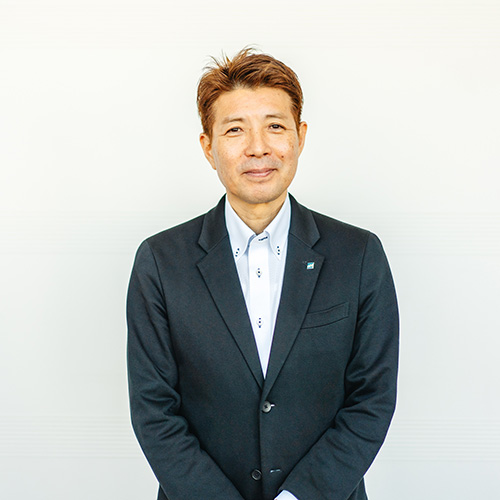
Kusabiraki
Ishikawa
So you were able to actually realize your dream of working in meteorology. Why did you decide to join Weathernews out of all the weather-related companies?
The biggest factor was the words of Ishibashi Hiroyoshi, the founder and president of Weathernews. Ishibashi originally chose the meteorological field because he believed his mission was to "protect the lives of sailors." When I visited the company during my job search, Ishibashi asked me, "If you had to choose between a job that is so busy you have no time to sleep but is fulfilling, or a job with no overtime and where you can value your private life, which would you choose?" When I hesitated to answer, Ishibashi saw through and said, "You're the former." "Because 'Weather never sleeps.' You probably want to work in the weather. If so, you'll want to work without even sleeping." Those words were exactly what I was thinking, so I was completely captivated.
Kusabiraki
Ishikawa
That's a memorable encounter! Did Mr. Ishibashi continue to influence you in various ways after you joined the company?
Yes. Mr. Ishibashi gave me a lot of important advice. When I succeeded Mr. Ishibashi as president, he told me, "The company will go under when the president gets emotional or when the company runs out of cash." Since then, I have made it a rule to remember that "if you get emotional, you lose," and I treasure a smile. Regarding cash management, we gathered members who are skilled in accounting and finance and put in place a system. There are also some points that I changed from Mr. Ishibashi's way of doing things. Mr. Ishibashi was a charismatic type who started a company based on his own driving force, but I have a collective management system with colleagues who have strengths in their respective fields.
Kusabiraki
Ishikawa
Has the way you demonstrate leadership changed depending on your age and position?
Yes. Especially when I was younger, I was very conscious of showing respect to older people. This is another word from Ishibashi-san: "Older people are your 'seniors in life'. You should never forget that even when you become a leader." Now that I'm on the older side, I try to proactively talk to younger employees. Outside of work, I want to be "friends" with everyone in the company. I try to build trust by communicating with them in my private life as well, for example by joining the company's baseball team.
Kusabiraki
Ishikawa
I learned a lot from this because I was also thinking about how to interact with my juniors in the lab. When mentoring juniors, I feel that the way to "get results" varies depending on the person, so how should I manage them depending on the personality and situation of the person?
In my case, if the junior has no doubt that "this will definitely produce results," I will let them try. If they fail, they must take responsibility and set a deadline, and I think it is the role of a leader to make a responsible final decision. On the other hand, if the other person's intentions are uncertain, I will thoroughly discuss the matter.
Kusabiraki
Ishikawa
I would like to put this into practice right away. What do you consider to be the most important thing in your work?
"Are our services serving the world and people?" Weathernews was founded by Ishibashi because he wanted to "protect the lives of sailors," and he continues to work on weather and environmental issues with that same desire. In terms of corporate survival, private weather information companies will be eliminated if they are not truly serving the world. Looking back now, I think this attitude of mine is something I learned naturally from the teachings of "servant leadership" that Aogaku upholds. It's hard to realize the significance of this when you're a student, but once you enter society there are many occasions when you come to appreciate what you have learned.
Kusabiraki
Ishikawa
I understand that you joined Weathernews shortly after it was founded. Were there any crises along the way from then until the company grew into one of the world's largest private weather companies? I would be grateful if you could also tell us how you overcame those crises.
There were many difficult situations. Weathernews did not get to where it is today without any problems. I'd like to talk about two representative ones. The first was a problem with corporate culture. As the business expanded, we started to hire mid-career employees, and the culture that had been in place since the company's founding began to waver. At the heart of Weathernews is the desire to "be useful to people," but some of the mid-career hires did not share this corporate philosophy.
Kusabiraki
Ishikawa
How did you get out of that crisis?
First, we clarified our corporate culture, and after going through the process of embodying that culture through our actions, we made sure to carefully explain our corporate culture so that it would reach each and every employee. However, those who were still incompatible with Weathernews' corporate culture were ultimately asked to leave. This was a final decision. But this decision also came with risks. If more people left, the profits of that department would decrease. However, when I suggested that we should "protect our corporate culture even if it meant accepting a decrease in profits," Mr. Ishibashi, who was the president at the time, said, "I understand. Don't worry about it, I'll take the blame." From there, we were able to gradually restore Weathernews to its original form.
Kusabiraki
Ishikawa
What about the second crisis?
This could be called "from personalization to organization." Personalization means that "only certain people can do that job," which would cause inconvenience to customers, so we promoted organization so that anyone could do the job. Some people were afraid that organization would weaken their expertise, so there were times when friction arose, but we persevered and made improvements.
Kusabiraki
Ishikawa
You have played a major role in the growth of the weather business in general. What are your goals for the future?
Yes. Recently, weather disasters due to the effects of climate change have been increasing, but at the same time, there are still many areas in the world where meteorological infrastructure is not yet in place. In light of this situation, I feel that my mission is to work to improve meteorological literacy throughout society. I will retire as president and become chairman in June 2024, so I would like to focus on this area as well.
Kusabiraki
2nd TALK
What if a small organization wants to beat a big company?
It's important to have both a short-term and a medium- to long-term perspective.
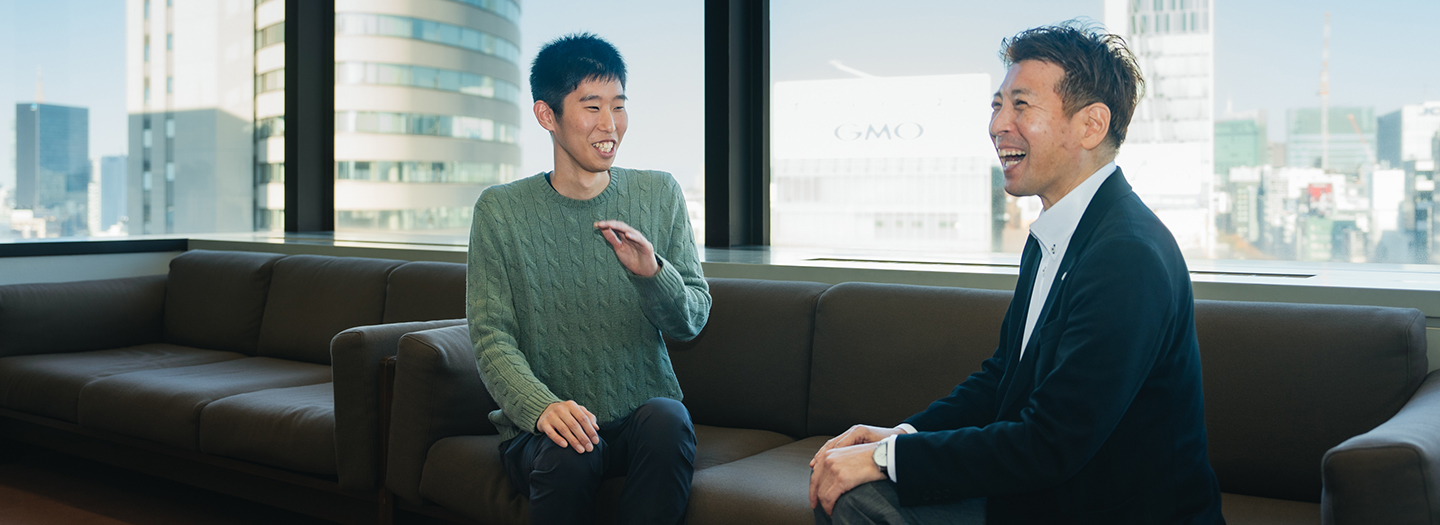
Now, I would like to ask a question about starting a business. I moved to Tokyo from my hometown of Miyazaki Prefecture to go to university. I have had a fulfilling research life in an environment where I can easily come into contact with cutting-edge technology and interact with a diverse range of people. Meanwhile, my desire to provide an opportunity for children living not only in the metropolitan area but also in rural areas to come into contact with cutting-edge technology has motivated me to start my own business. When it comes to starting a business, which do you think would be more useful after graduation: to gain experience at a large company first, or to play a core role in a small organization?
Ishikawa
Kusabiraki
From the perspective of starting a business, a small organization would be best. A company needs three roles: "sell, make, and count," and a small organization allows you to experience all of these. On the other hand, if you are aiming to create a sustainable company, it may not be a bad idea to gain experience working for a large company. As a company grows, the barrier of "organization" that I mentioned earlier will inevitably appear, so if you are thinking about the future, it may be a good idea to study at a large company where organization is already complete.
There are advantages to both.
Ishikawa
Kusabiraki
Yes. So, if you have to choose between these two, which one should you choose? If you are actually starting a business, I think it's fine to start small and experience "selling, making, and counting," and then recruit the people you need to organize as the company grows. So, if anything, a small company might be better. Also, from the perspective of learning, you could join a company that assumes that its employees will become independent or start their own businesses. I think that's an interesting approach, because you can thoroughly learn the knowledge necessary for starting a business.
Thank you. I hadn't thought of starting a company as an option. If I start my own company, I think I'll start as a small organization, but what are the key points for a small organization to beat a large company?
Ishikawa
Kusabiraki
That was the situation Weathernews was in when I joined the company. Weathernews had 60 employees, while competitors at the time had nearly 1,000. If you want to beat big companies with a small team, agility is more important than anything else in the short term. We will use our agility to pursue a niche strategy that picks up customer needs that big companies have missed. And in the medium to long term, what is called a "3C (customer, company, competitor) analysis" is necessary. This means formulating a service strategy after analyzing customers, your company, and your competitors. I think it's important to have both a short-term and a medium to long-term perspective in order to be a company that can continue to win.
If you are considering starting a business that utilizes your expertise as a researcher, is there anything you should be aware of?
Ishikawa
Kusabiraki
It seems that many researchers have a "product-out" mindset, where you create a product first and then think about the market. This is important, but you also need a "market-in" perspective, where you create things while considering the needs of the market. If you are not good at market-in thinking, it is recommended that you team up with colleagues who are good at that field.
AI has been evolving rapidly in recent years. How can you use AI to start a business?
Ishikawa
Kusabiraki
That's right. In Japan today, AI is often used to improve productivity. The idea is to replace existing human work and reduce labor costs. However, AI is actually a hint for new ideas. So, when using AI in starting a business, it's good to have the perspective of "Can we use AI to create some new service or value?"
What does this mean specifically?
Ishikawa
Kusabiraki
For example, instead of just switching from human call center operators to AI chatbots, we should think about new value beyond that. If we could have AI instantly analyze interactions with customers and use that to propose new products, and increase customer satisfaction and sales, I think that would be a very effective way to use AI.
3rd TALK
"What should I do while I'm a student?"
Be completely committed, and make friends.
Please tell us about your time as a student. What did you study at university?
Ishikawa
Kusabiraki
I was enrolled in the Department of Physics in the Faculty of College of Science and Engineering, and studied quantum physics in Professor Toshiya Komoda's laboratory. I had been very interested in weather from an early age, and felt that there was something in common between quantum physics and the mechanisms of typhoons. In addition, it was necessary to have a clear understanding of the purpose and process of research, so I was also able to learn logical thinking. The logical thinking I gained during this time is still useful in business in general.
What kind of person was Professor Komoda?
Ishikawa
Kusabiraki
He didn't say much, but he would clearly say what he needed to say. In fact, it was thanks to Professor Konda that I was able to pursue a career in meteorology. At the time, many science and engineering students found employment in electrical manufacturers, and I had lost confidence in my chances of finding a meteorological-related job and was starting to be swept away by the people around me. At that time, Professor Konda spoke out, "What do you really want to do?" and it woke me up. Those words, coming from a taciturn professor, pierced me all the more.
What kind of research are you aiming to do in graduate school, Mr. Ishikawa?
I have been researching next-generation 3D printing technology in the Tasaki Laboratory since my fourth year of undergraduate studies. I wanted to further my research, so I went on to the Master's program at the Graduate School Graduate School of Science and Engineering, but in my first year I was quite worried about my future path, such as finding employment in a company. After repeatedly asking myself questions, I realized that it was because I was a student that I could devote myself to the research I wanted to do purely and thoroughly, and my desire to continue my research grew stronger, so I decided to aspire to go on to the doctoral program.
What gave me a big boost in deciding to go on to a doctoral program was the AGU Future Eagle Project (AGU FEP), a doctoral program student support project. If you are selected as an AGU FEP encouraged student, you will receive a young researcher scholarship (effectively free tuition), as well as a monthly living support allowance of 180,000 yen and a yearly research allowance of 250,000 yen. This system, which allows me to devote myself to my research without financial worries, was a great help in pushing me to go on to a doctoral program. Because I am provided with research funds that I can use for my own research, I am highly motivated and am conducting my research independently.
My future goal is to create a manufacturing platform centered on 3D printing technology, where engineers can grow and children can have a place to interact with technology, and I want to make it a production base that incorporates cutting-edge 3D printing technology.
Ishikawa
Kusabiraki
It's wonderful that you are working hard towards your future goals in a favorable environment where you can immerse yourself in your research.
Thank you. Mr. Kusabiraki, how did you spend your time outside of your studies?
Ishikawa
Kusabiraki
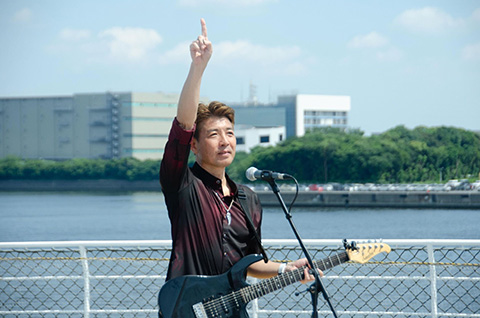
I was devoted to band activities with the aim of becoming a professional. I have long blonde hair. After graduating, I struggled to decide between music or getting a job, but in the end I chose my dream of meteorology. And that's how I got to where I am today. I still play in my private band, and recently played a live show in Hanoi, Vietnam.
If I'm thinking about starting my own business in the future, is there anything I should do while I'm a student?
Ishikawa
Kusabiraki
I'll be honest with you here, but the first thing is to have fun thoroughly. Once you become a working adult, it becomes difficult to create a large amount of free time. While you are a student and it is easier to create free time, broaden your horizons by visiting overseas countries, taking up new hobbies, or studying new subjects.
Lately, I've been so busy with my research that I feel like I don't have time to enjoy my hobbies.
Ishikawa
Kusabiraki
That's tough. But, and this is just my opinion, I think the fulfillment of work and private life are proportional. If your private life is fulfilling, your work will be fulfilling, and vice versa. When you're busy at work, you feel fulfilled as a person, so you should be able to take action. I think the most important thing in business is time management, so I always act with my top priorities in mind.
Is there anything else I should do as a student?
Ishikawa
Kusabiraki
First, make friends, then participate in an internship at a company, and improve your English skills. I think that valuing friends who have strengths that you don't have is very important for the future. Also, if you participate in an internship with a clear sense of purpose, you can see how society and the economy work. Mr. Ishikawa, have you ever done an internship?
Although it wasn't an internship, I worked part-time at a venture company that handled 3D printers for three years while I was an undergraduate. There, I learned the joys and difficulties of working in a small organization. In addition to how to approach work, I also learned how to get along with people and communicate. Through those experiences and my interactions with many people in the lab, starting my own business became familiar to me, and it became an option that I wanted to try myself.
Ishikawa
Kusabiraki
That was a good experience.
Yes. I think it was a valuable three years in which I was able to grow a lot. And lastly, how about the improvement of your English skills?
Ishikawa
Kusabiraki
This is my own experience, but in my third year at the company, I was unable to speak English as well as I wanted to during a business trip overseas, which was frustrating as I was unable to communicate on an equal footing with a client. I recommend that students start learning English now.
I also had little experience giving presentations in English in my first year of master's studies, and struggled with things like falling silent during question and answer sessions at international conferences. Since then, I have gained experience little by little, and now I can speak comfortably in everyday conversations and at the level of question and answer sessions at academic conferences.
Ishikawa
Kusabiraki
That's wonderful. You are an AGU FEP scholarship student, but did AGU FEP help you learn English?
Yes. AGU FEP provides support for overseas travel, and the experience of being in an English-speaking environment was valuable. AGU FEP also provides short-term study abroad support and workshops, and is committed to cultivating international perspectives and English language skills, so I would like to actively take advantage of these opportunities.
Ishikawa
Kusabiraki
It's difficult to try to learn a language all at once after entering society, so it's a good idea to actively engage in English study while you're a student.
Finally, please give us a message for Aogaku are aiming to realize their dreams.
Ishikawa
Kusabiraki
Yes. I would like to tell you two things. First, if you already know what you want to do, always be prepared. When the opportunity comes, only those who have been well prepared can make their dreams come true. Even something as simple as researching related information on the Internet can do the trick.
If you're not sure what you want to do yet, I think you'll learn a lot if you put your all into the work you're given. When I joined Weathernews, I was very keen to work in weather forecasting, but my experience in sales gave me a deeper understanding of how to build trusting relationships between people, and my programming work taught me the importance of risk management. Whatever your occupation, I think it's important to grasp what you can learn from it.
Today's talk has broadened my horizons greatly. Thank you very much for today.
Ishikawa
After Interview
As Ishikawa pursues his dream of starting his own business, what hints did he get from Kusabairaki's story?
Broaden your horizons, value making friends, and prepare for the future
I learned a lot from hearing about a wide range of topics, including the mindset that is important when working and management according to the growth stage of a company. Until now, I had only imagined starting a small-scale business, but I realized that I needed to look at it from a broader perspective, such as management and business administration. Also, when I was talking to Mr. Kusaka, my tension naturally eased and at the same time I felt an overflowing energy. I would also like to hone my human charm and find friends who can support each other. Furthermore, when I heard the words "Make friends during your student days" and "Fulfillment at work and in your private life are proportional," I felt that my way of thinking had fundamentally changed. I would like to make good use of my precious time as a student and prepare for the future.