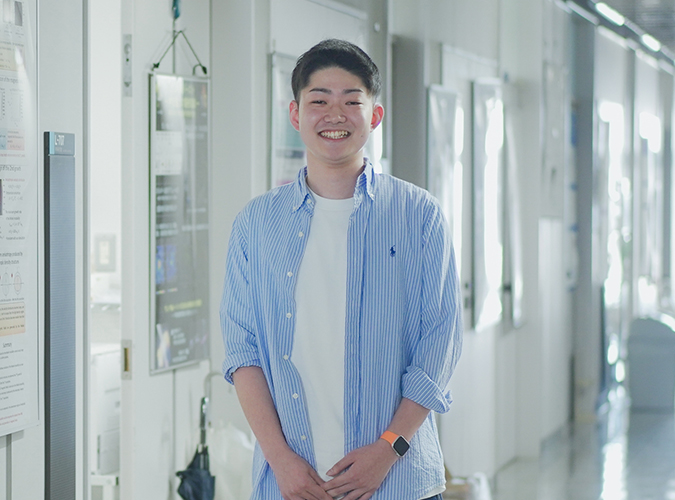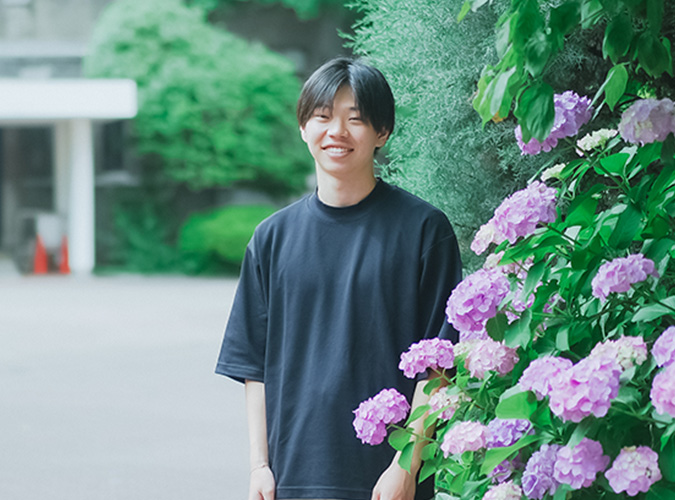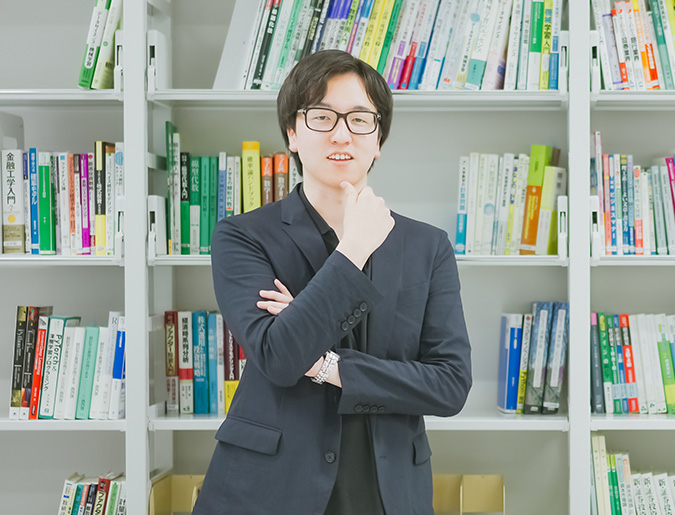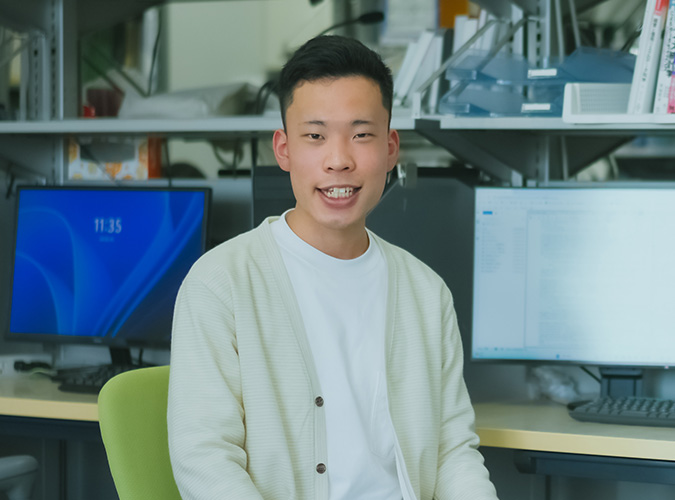
Four years of chasing big dreams with an indomitable spirit. Achieving the unclimbed summit of Punggi in the Himalayas

Posted on 2025/03/17
No. 341
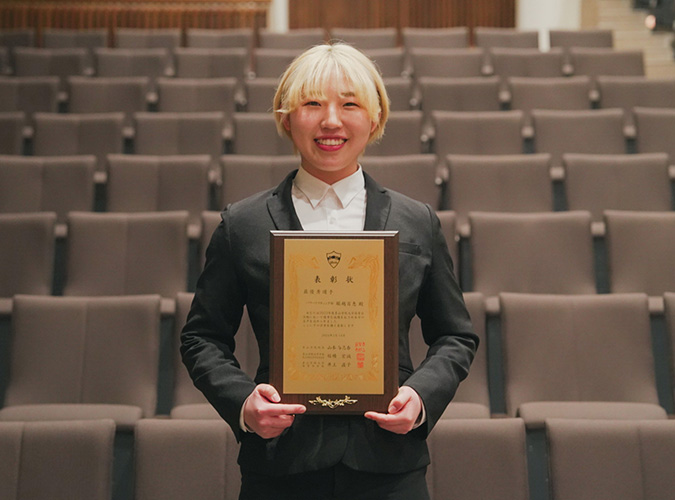
<2024 Alumni Association Award (Athletic Association Award) Best Athlete Award>
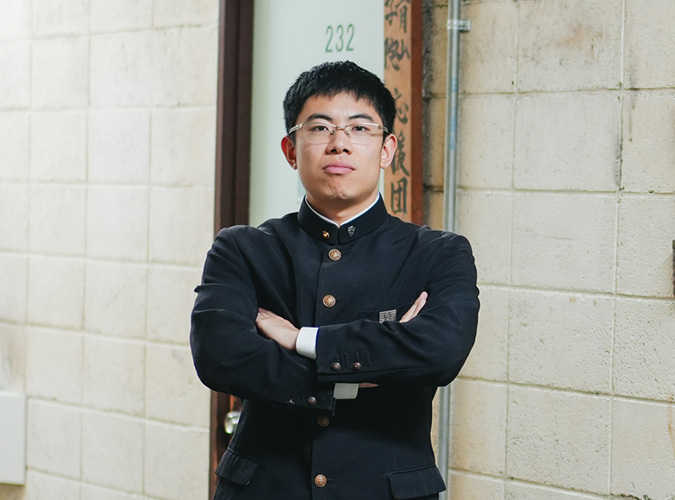
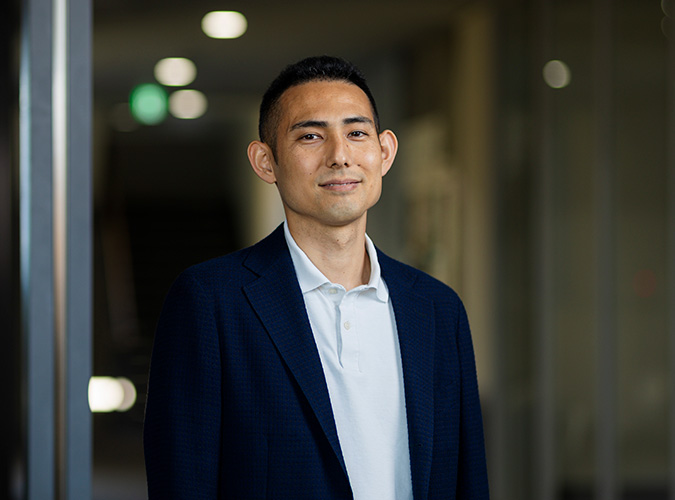
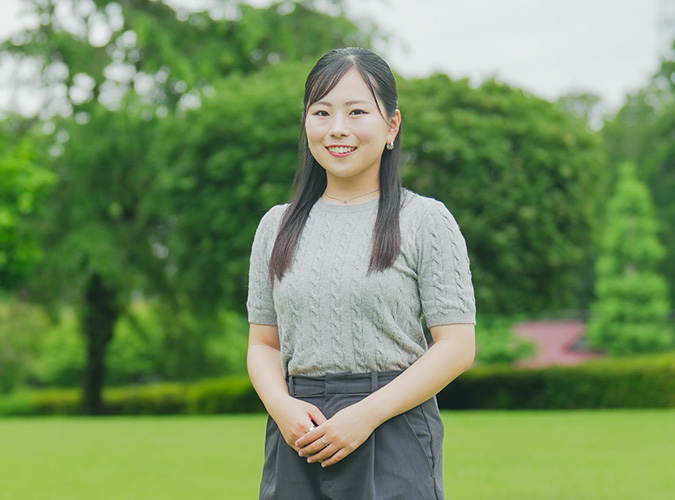
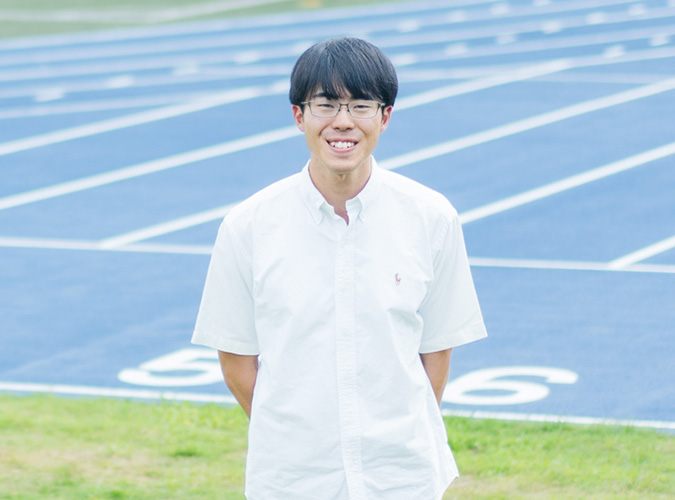
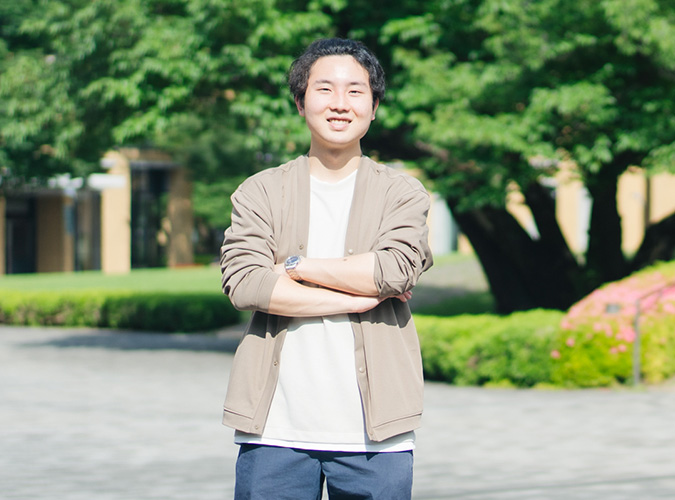
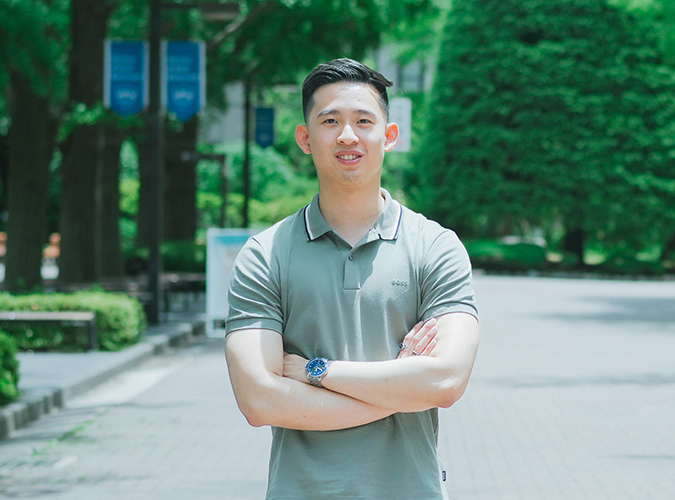
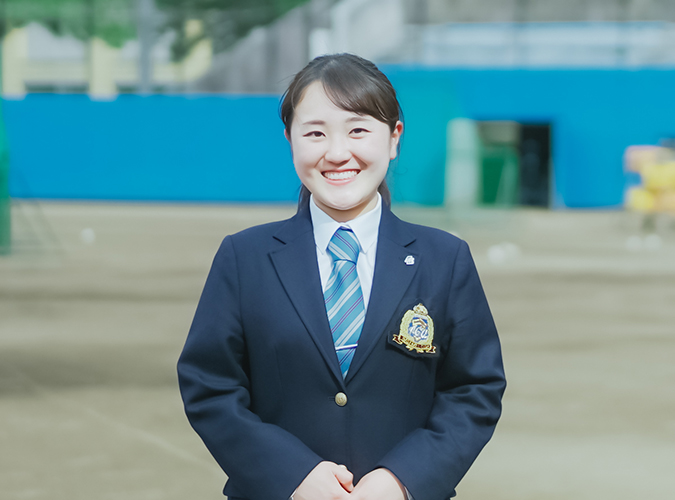
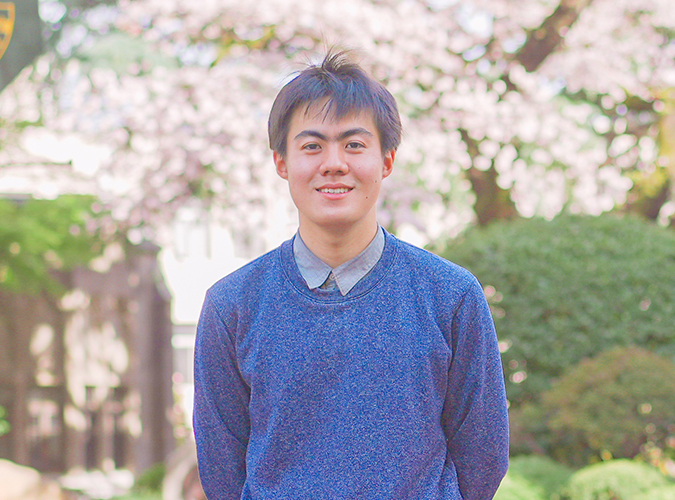
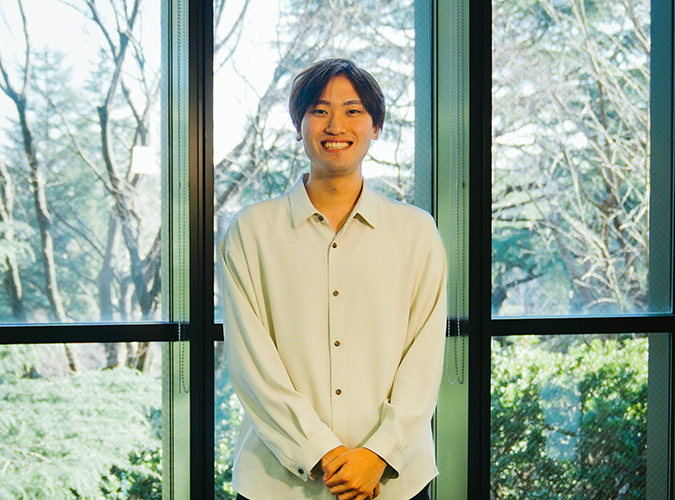
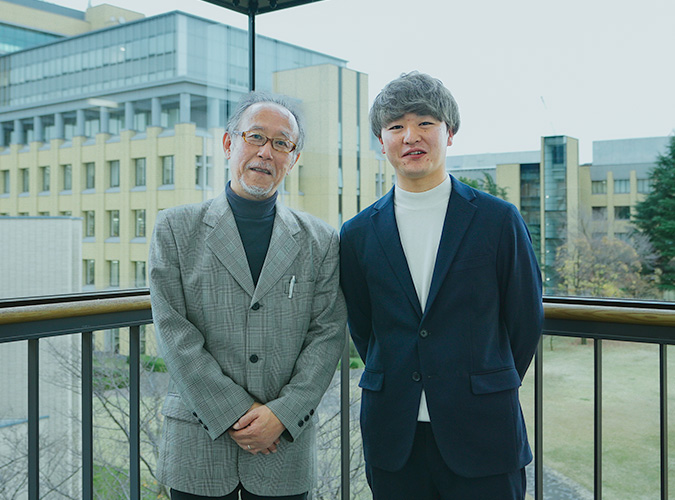
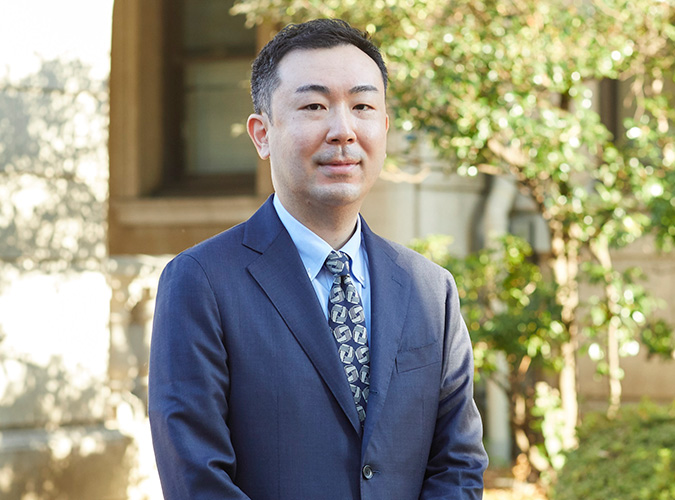
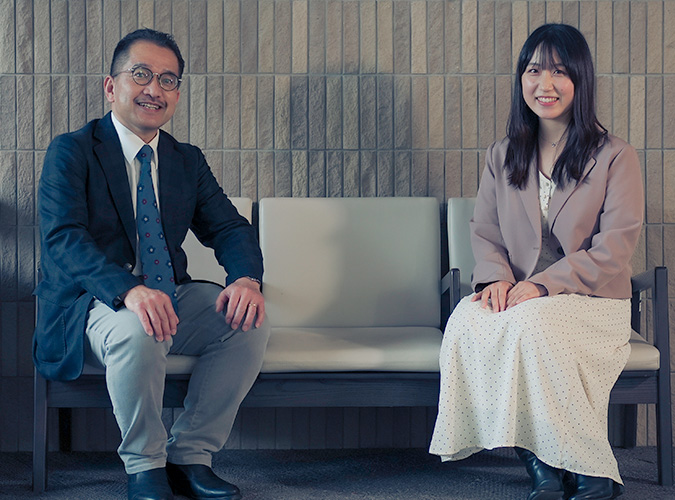
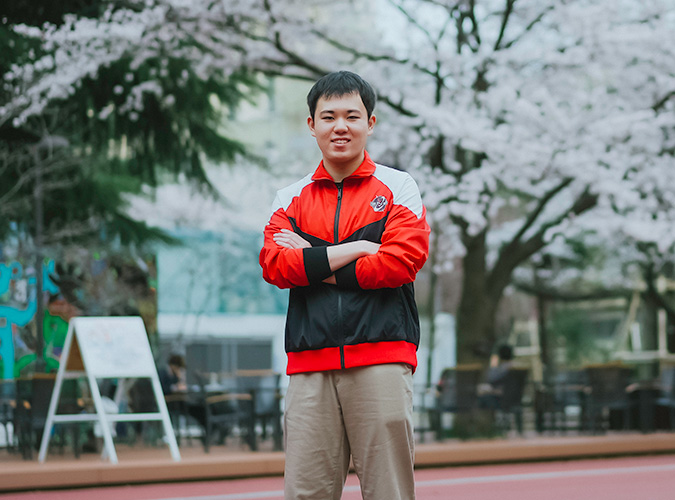
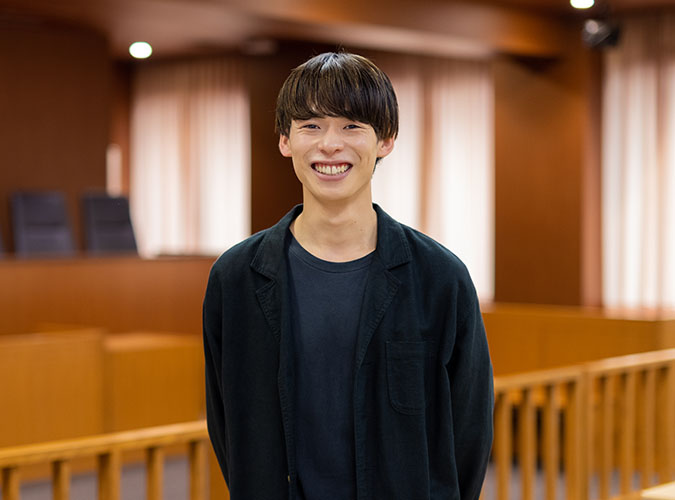
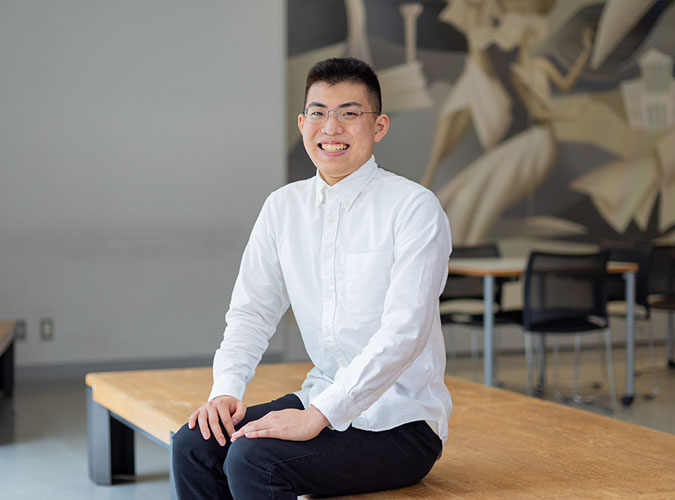
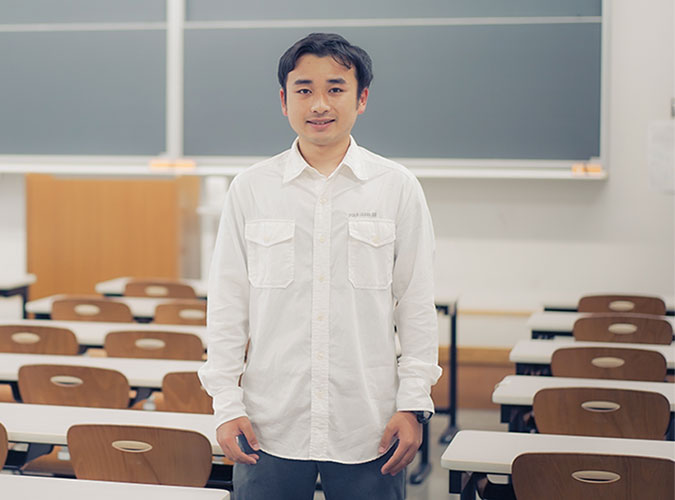
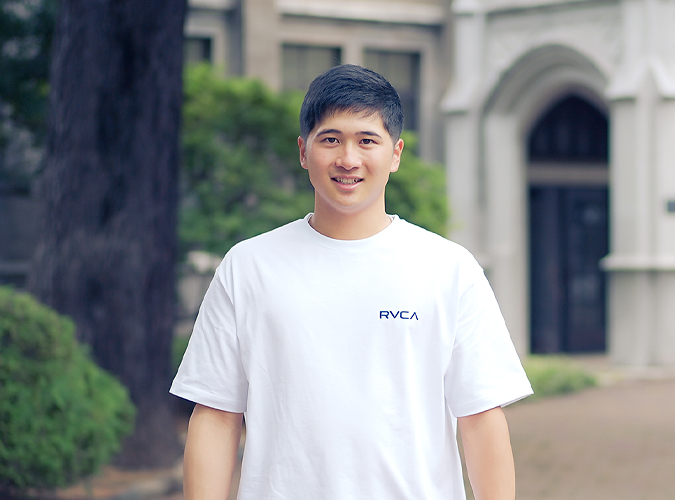
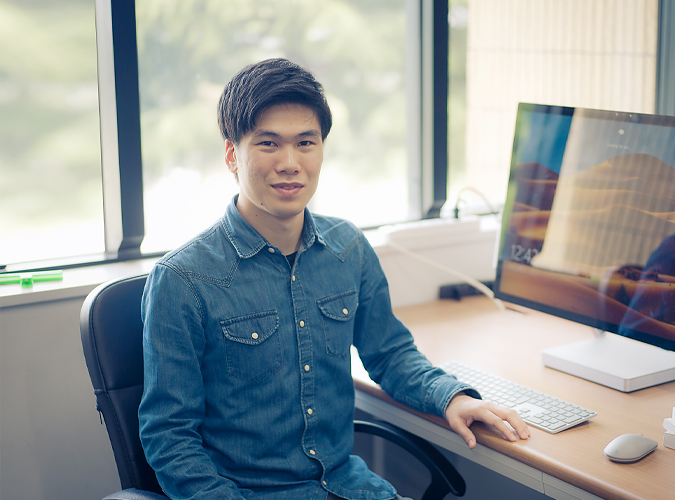
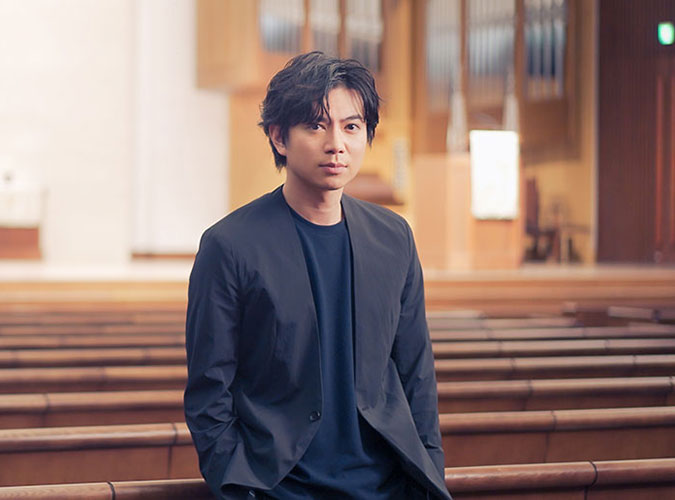
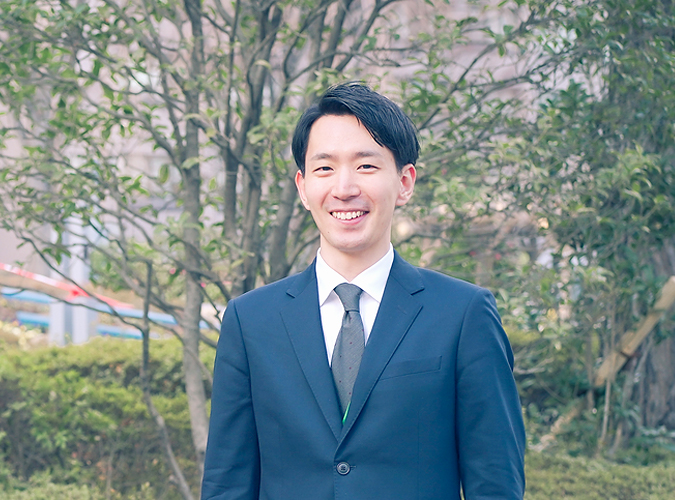
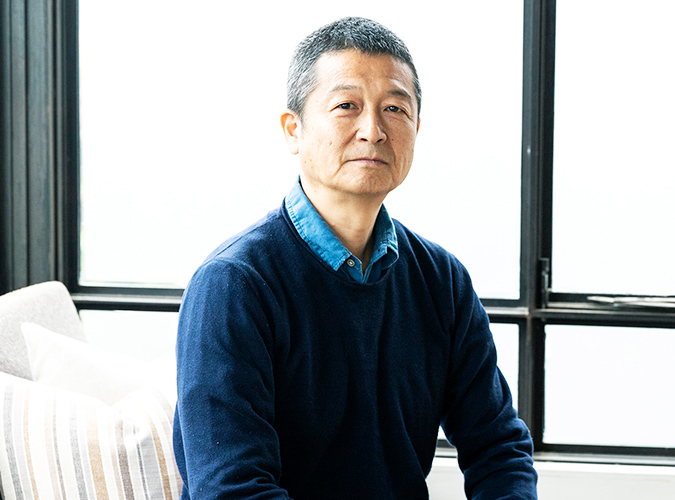
4th year Department of History College of Literature
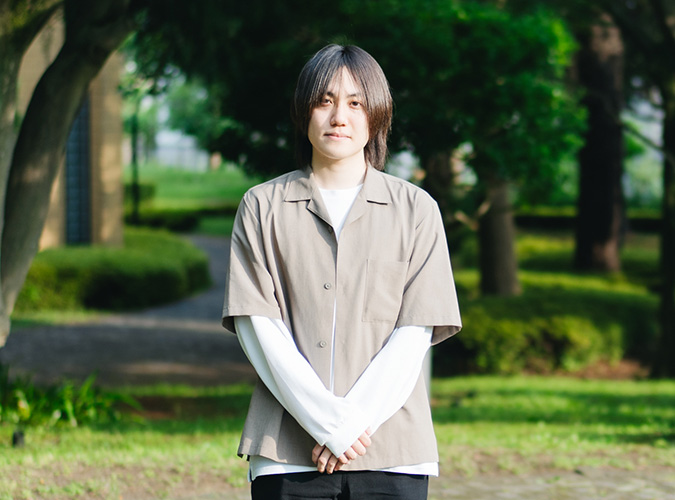
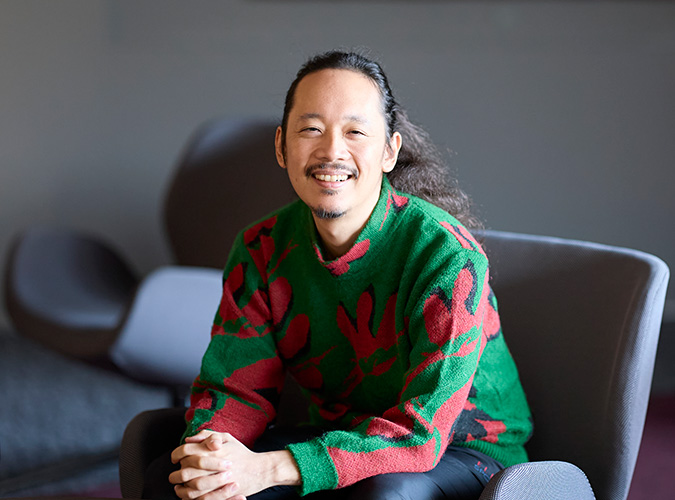
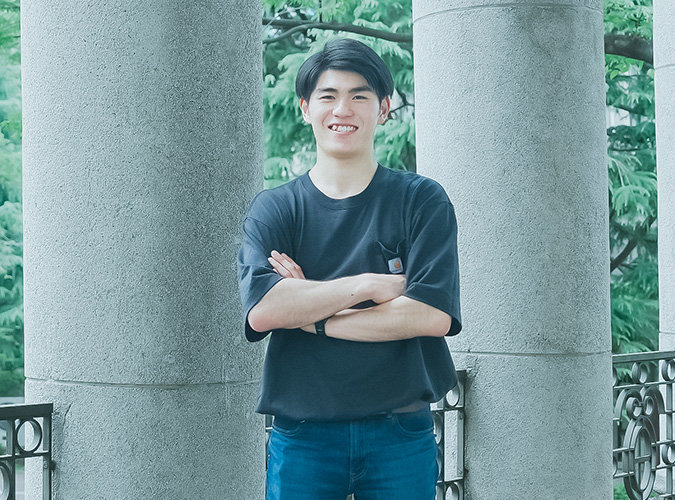
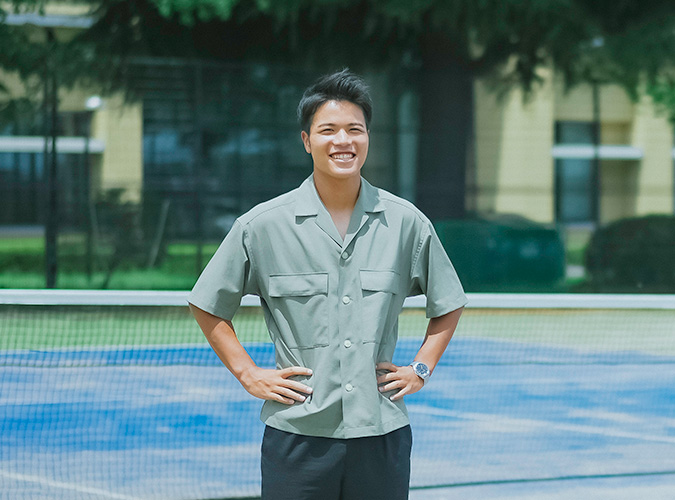
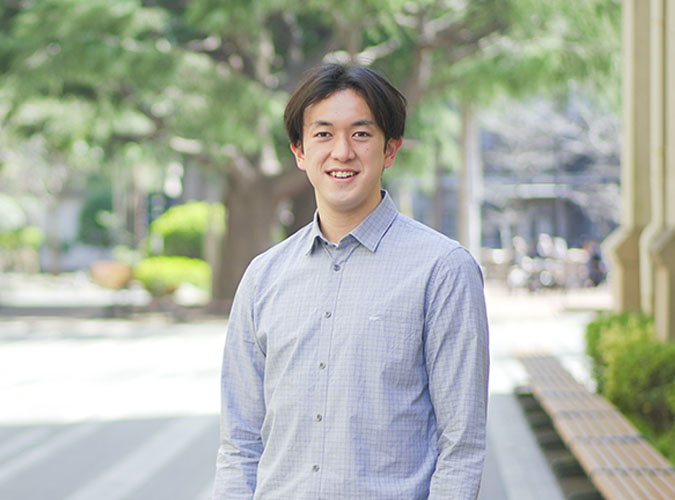
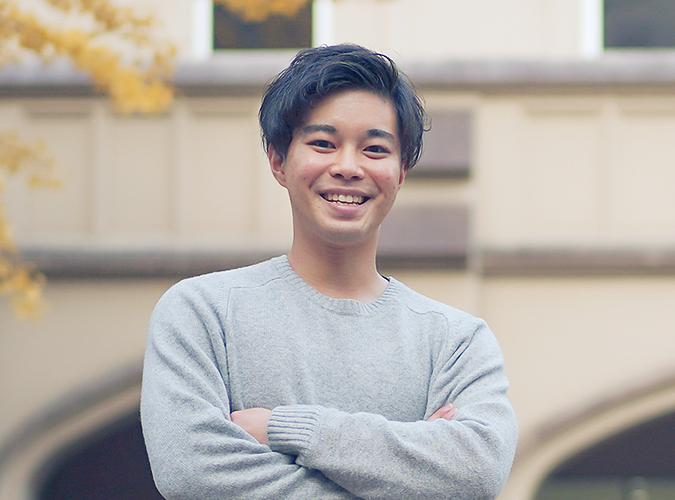
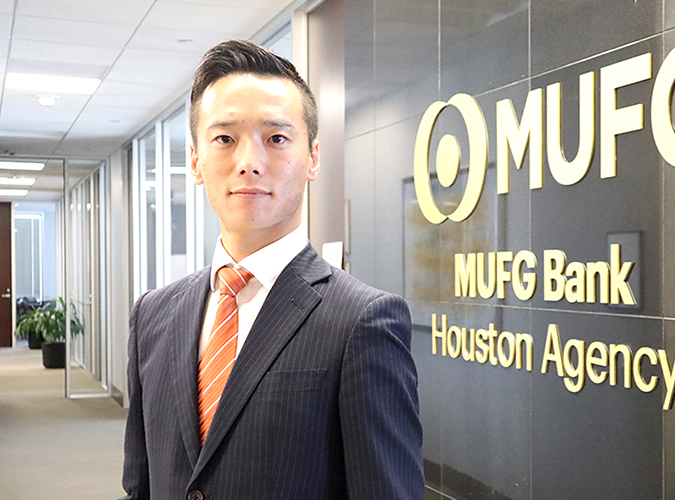
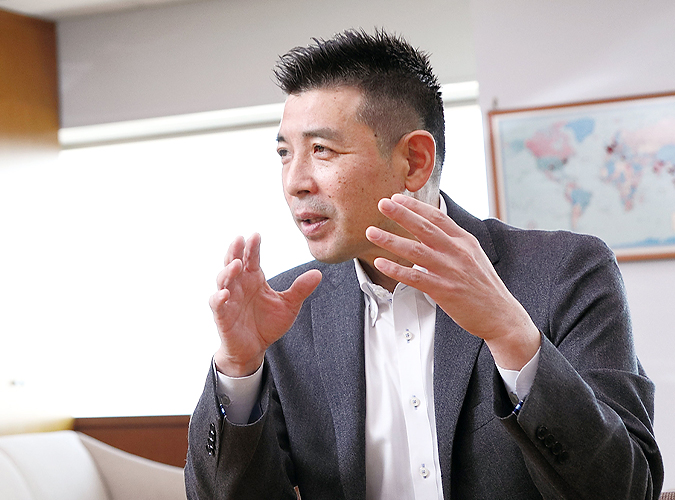
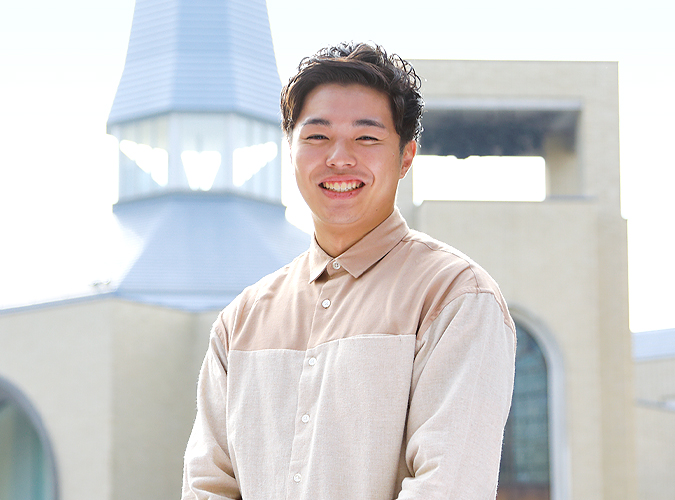
Takuma Inoue
Graduated from J. F. Oberlin High School, a private school in Tokyo

OVERTURE

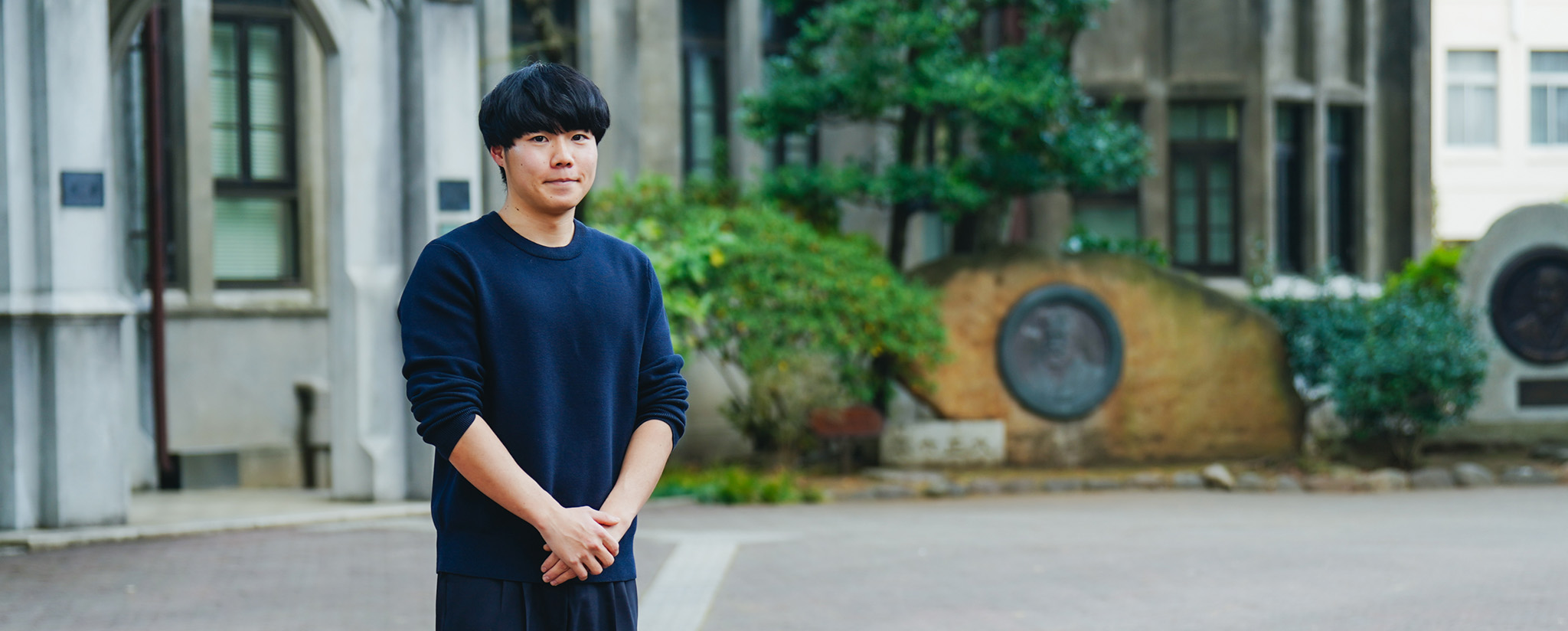
At 12:19 pm on October 12, 2024, the "Pungi Expedition Team of the Student Division of the Japan Alpine Club," consisting of Captain Inoue Takumi of the Mountaineering Club and five students from the University of Tokyo, Rikkyo University, and Chuo University, successfully reached the summit of the unclimbed peak "Pungi," 6,524 meters above sea level, in the Himalayas of Nepal. Inoue, who led the team as the general commander, said, "We were able to gain experience in pioneering something unknown." We asked him to look back on the path to achieving this great feat, which gave him many things, such as the ability to make decisions, problem-solving skills, and a mentality that is not easily shaken by small things.

Joining the mountaineering club to aim for the world, the journey to Pungi begins

The moment I stepped onto the top of Punggi, I was overwhelmed with emotions I cannot put into words. I was so happy to be alive, to have made it to the top, and to have friends I could trust around me - I was overcome with a sense of elation and happiness and just screamed. Over the past four years, I had been single-mindedly chasing the dream of standing on an "unclimbed peak" that no human has yet reached. All the hardships and suffering I had endured were sublimated, and I truly felt that the path I had walked was not a mistake.

Before entering university, my only mountaineering experience was at Mt. Takao, so I joined the mountaineering club of the university's university athletics association because I thought, "I want to try something with the goal of reaching the world at least once in my life." When I decided to join the university athletics association and looked into various clubs, I saw their past achievements and thought that even if I started in university, I might be able to go all the way to compete on the world stage in the mountaineering club. I also learned the term "unclimbed peaks," which I thought sounded cool, and I began to have a strong desire to do so.

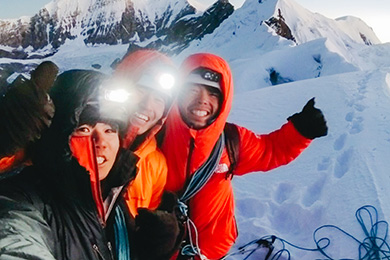
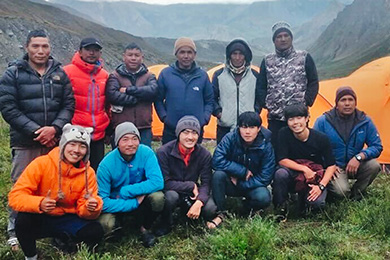
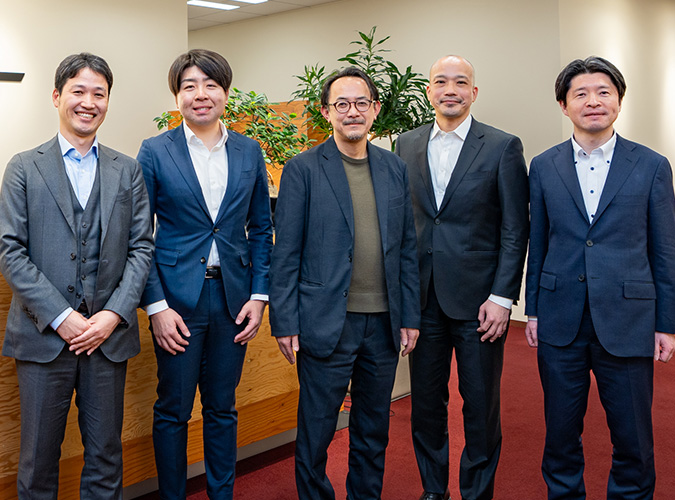
A commemorative photo of the group of friends who shared a rope and trusted each other's lives in Pungi (Inoue is on the left)

While gaining knowledge about mountains at weekly meetings, I also worked on my physical strength through bouldering and running, and continued to go into the mountains on weekends. When I first joined the club, there were no classmates or seniors one year older than me due to the COVID-19 pandemic, so I became a leader in my second year, and my desire to fulfill my responsibility to protect my juniors was also a driving force behind my training. We hold training camps three times a year, and the most memorable one is the winter training camp where we challenged Mount Yari in the harsh winter for three consecutive years from my first year. In my first year, we were forced to descend the mountain due to a sudden change in the weather, and in my second year, a junior student had a slipped back. In particular, in my second year, we struggled with so much snow that it took four days to climb a route that would have taken about four hours in the summer, and we had to give up just before the summit. Although I was very disappointed, looking back now, I think there were areas where I could have taken more care as a leader. In my third year, I reviewed the training and thoroughly trained the new students, making sure to provide detailed support. As a result, we were finally able to reach the summit, and I learned that small accumulations are very important in the mountains. I believe the know-how I gained there, the mental strength to never give up, and the leadership skills to bring the team together were all important factors that led me to reach the summit of Punggi.

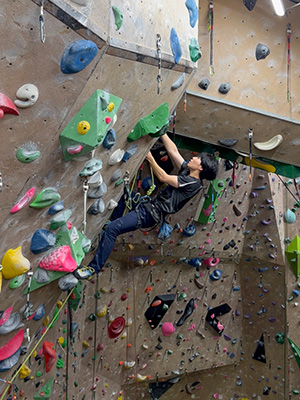
During bouldering training to improve climbing ability

He makes use of his free time and balances his studies with mountain climbing.
The fun of learning history and understanding the connections between past events

In my studies, I was conscious of how to study efficiently so that I would have time to go to the mountains. For reports, I would think about what I needed to write in my head while walking, and then I would use the time I spent traveling by train to pick out references that I could use, so that I could get the information I needed without getting lost in the library. Then, I would start writing right away, following the lines I had planned in advance.

When I was thinking about going to university, there was a time when I wanted to choose a faculty that seemed to have a strong job-hunting potential, but when I took the entrance exams, we were in the midst of the COVID-19 pandemic, and online classes were becoming mainstream, so I asked myself, "What do I really want to study at university?" As a result, I decided to study history, which was my favorite subject in high school, and chose Department of History College of Literature.

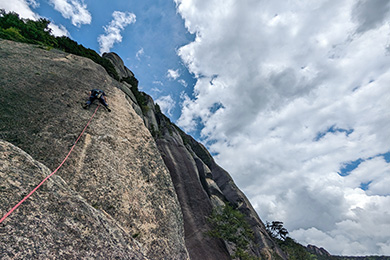
In the mountain area, activities are carried out according to the season, such as rock climbing in spring and autumn, and snow-covered mountains and ice climbing in winter.

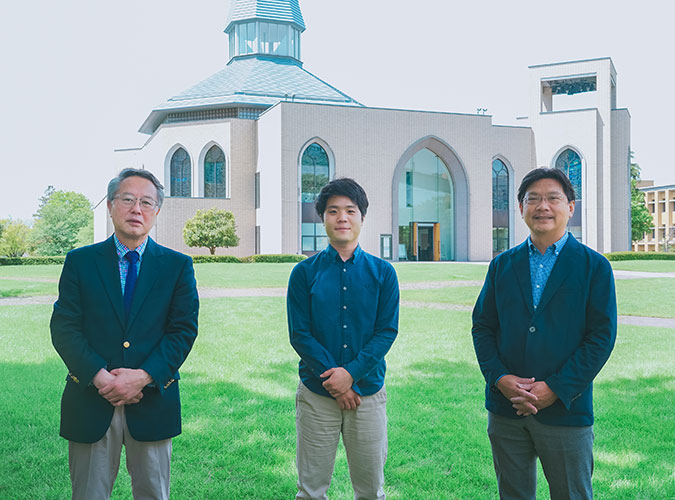
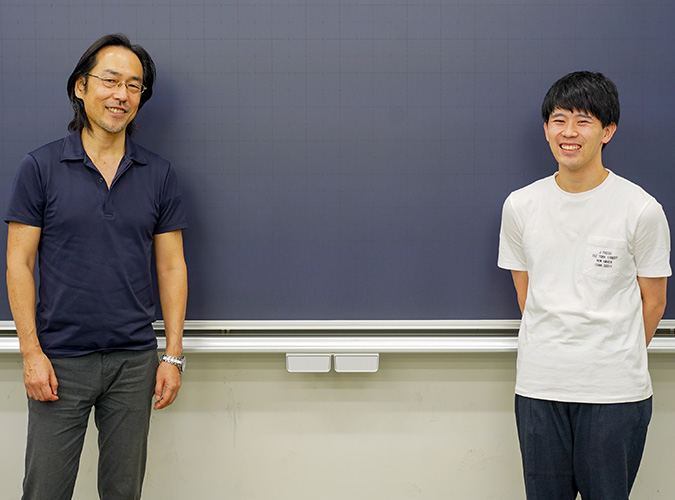
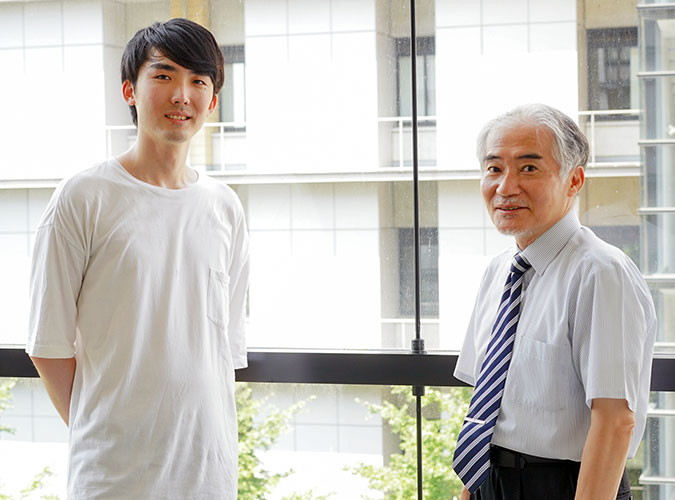
Each and every historical event did not happen in isolation, but had a history that led to it, and I find it fascinating to learn about how everything is connected. In my third year, I joined a seminar taught by Professor Yuki Kitamura , who specializes in ancient Japanese history, the source of Japanese history. As part of the seminar, I really enjoyed fieldwork in Kyoto and Nara. One thing that made a lasting impression on me was when I went out for a walk alone at night and felt a strong sense of fear at a certain shrine. I wondered, "Why did I feel fear at a shrine that is supposed to be a sacred place?" and I investigated the background to this.

By taking College of Literature' common course "Narrative Literature I and II," I realized the appeal of classical literature, which I had not been particularly interested in until then. I found the content, which related The Tale of the Bamboo Cutter to various classical works of literature, very fascinating, and I remember being able to learn more deeply and with a freer mindset than in the classical literature classes I had taken in high school. Also, by taking advantage of the system that allows me to select classes from other faculties while still in Department of History, and the "The Aoyama Standard" courses, I was able to come into contact with a wide range of fields beyond the boundaries of faculties and departments. I feel that through this system, I have been able to understand my field of expertise from multiple perspectives.

What is the significance of challenging unclimbed peaks in this information-saturated modern age?

There are two main reasons why I decided to attempt an unclimbed peak. The first is that I wanted to embody the original form of mountaineering in this age of convenience and information overload. Nowadays, even difficult routes that I have never been on can be easily learned in detail by reading blog articles, and Everest has been commercialized with ropes stretched from base camp to the summit. I think that this is a good thing in the sense that it opens the door. However, I thought that the great significance of the activity of mountaineering lies in the spirit of exploration, of exploring unknown mountains and routes with our own efforts and turning them into known things.
Secondly, I wanted the public to know more about the existence and activities of university mountaineering clubs. Fortunately, the number of members in Aogaku 's mountaineering club has been increasing since the generation two years below me, but it is not uncommon for other universities to have only one or two members. I thought that the first step in rekindling the excitement of university mountaineering clubs would be to spread the message that "there are young people today who devote their youth to the mountains" through this expedition and to get support from them.

The "Japan Alpine Club Student Division Pungi Expedition Team" was formed about a year and a half before the expedition. We decided that it would be difficult to take on the challenge with only Aogaku members at this time, so we decided to reach out to other universities. At that time, I was serving as the chairman of the Student Division of the Japan Alpine Club, a public interest incorporated foundation, so I called for participation at a regular meeting where representatives from each university gathered, and the captains and vice-captains from the University of Tokyo, Rikkyo University, and Chuo University gathered, and the members for this expedition were decided.

Our goal was to accomplish the challenge as students alone, without relying on experienced alumni, so we carefully selected the mountain we would attempt, taking into account our own capabilities. It didn't require advanced climbing techniques, but rather a test of physical endurance, and we wanted a mountain that had been climbed by a team in the past and about which we had some information - Punggi met all of these criteria. The idea of "first checking primary sources," which I learned in Department of History, was useful in finding the mountain. If you search for "unclimbed peak" on the internet, you will find a huge amount of information whose authenticity is unknown, but by first coming across the official list of unclimbed peaks published by the Nepalese government, we were able to carry out our research efficiently.

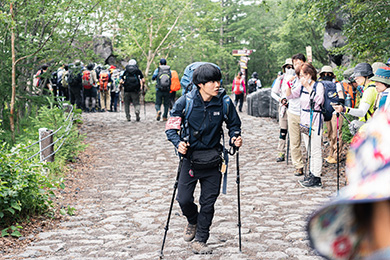
He worked as a guide for Mount Fuji, acclimatizing his body to the high oxygen levels and saving up for the expedition.

We planned to spend two months on the expedition, with the expectation that we would make up to four attempts. We covered half the costs ourselves, and for the rest we presented to the Japan Alpine Club and the alumni association and asked for donations. Fortunately, we received more than our goal, which we were very grateful for. Due to the strong yen, rising prices, and high tariffs, we ended up spending more than we had anticipated, so we had to live frugally during the expedition, but now it's a fond memory for us.

After crossing the huge crevasse that stood in our way, we finally reached the summit we had dreamed of!

As the team leader, I thought that one of the keys to a successful summit was how much we could improve our teamwork. In the winter before the expedition, we spent time together in the snowy mountains every few days, and this allowed us to understand each other's climbing levels, ways of thinking, and personalities. I think we were able to build a good team with strong trust by frankly exchanging opinions and caring for each other.
However, no matter how meticulously you plan and prepare, you cannot completely eliminate risk when climbing in the midst of magnificent nature. Of course, safety comes first, but it is also true that being too cautious can lead to not being able to do anything. In that respect, I am good at making decisions such as "we should go forward here" and "we should retreat here," so I made use of my inherent "cautious boldness" to clearly communicate my decisions as a leader even during practice. By explaining "why I make this decision" along with the reasons, I feel that I have gradually gained the trust of my team, who think, "If Inoue says so, it's okay."

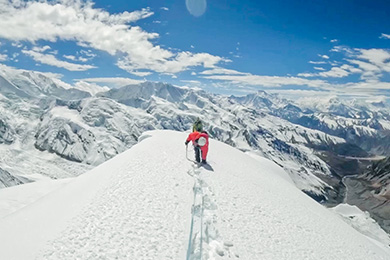
Climbing the snow to the summit

During the expedition, if I, as the team leader, became pessimistic, the mood of the entire team would become bad, so I tried to remain as cheerful as possible, even when everyone was suffering from altitude sickness. Although all the members were generally mentally tough, they could not help but be shaken up when an unexpected huge crevasse* appeared 100m from the planned final campsite during the first attack. There are many cases where people give up on the summit due to crevasses. However, not a single person said a negative word this time, and everyone mustered their remaining strength to find a route through, even though they had already been climbing for more than 15 hours since they set off.

Group photo of team members and Nepalese agent company staff at base camp

The next day, we tried to reach the summit, but after considering the fact that we were over 6,000m above sea level and everyone was suffering from mild altitude sickness, we lacked the necessary equipment, and we had enough time to make four attempts, we decided to retreat. It was exhausting to think about climbing the same path again, but we returned to base camp to change our mindset and started our second attempt a week later. We succeeded in our first summit at 12:19pm on October 12th. Our four-year dream had come true, and we thought from the bottom of our hearts, "I'm glad I'm climbing mountains." However, our joy was short-lived. The next thing we felt was intense fear. The sky was a little blue-black like space, and all we could see were the Himalayan mountains as far as the eye could see. I remember realizing that this was not an environment for life to live, and thinking that we had come to a terrible place. In the end, we didn't stay at the summit for even 10 minutes and descended.

*Deep cracks formed in glaciers, snowfields, etc.

Related link: [Mountaineering Club] The "Pungi Expedition" of the Japanese Alpine Club Student Division, led by Captain Takumi Inoue (4th year, Department of Department of History College of Literature), is the first in the world to summit the unclimbed Himalayan peak "Pungi" | Aoyama Gakuin University

I want to continue living my life based on my values.

One of the most difficult things about this expedition was traveling by car. The road conditions in Nepal are so severe that we even saw landslides left unattended on roads near the capital, Kathmandu. I know how good it is to live without radio signals or cars, and I hope that untouched nature will remain as it is. However, I still feel that infrastructure development is necessary so that people can live safely, and I began to wonder if there is something I can do to pave the way for this in the future.
99% of mountain climbing is hard, but the one minute remaining makes me think "I'm glad I'm doing mountain climbing," which is what makes me want to try again. In the future, there will be many things I don't want to do at work, and many difficult things, but if I can find joy that can turn that around, life will surely be fun. I want to find a job that allows me to pursue those small joys and be passionate about it.

After descending from Punggi, our summit was covered by many media outlets and we received a lot of feedback. We were excited for a while because we had achieved our goal of promoting the existence of the university mountaineering club, but afterwards, we all talked about how "what's important is not the evaluation from others." I attacked with four trusted friends, using all the strength we had, and fought in a harsh natural environment. We were lucky to succeed this time and were fortunate to be evaluated, but I am sure that even if we had failed, it would still have been the most valuable challenge for me. I strongly want to continue living by "my axis = my values."

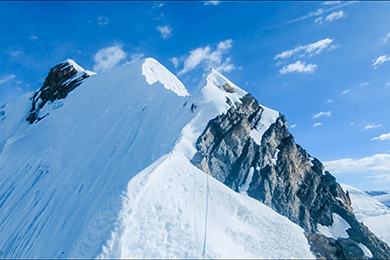
Just before the summit. The ridge opens up and becomes gentler.

*The links to each subject's "Course Content Details" are for the year they are published (2024).

College of Literature Department of History

College of Literature at Aoyama Gakuin University is based on history, thought, and language, and is grounded in the expertise of five international departments. Through learning, students are exposed to and deepen their understanding of the diverse intellectual endeavors that humans have created, thereby nurturing broad insight and wisdom. Through this "humanities" experience, students will hone their culture, intellect, sensitivity, and expressiveness, forming the "axis" that will open up their own future.
History is a scientific, empirical field that interprets historical documents and reconstructs the past. The struggle with difficult historical documents leads to the ability to judge things based on facts and express one's own opinions. Furthermore, becoming aware of the past, which is different from the present, can also be the starting point for imagining and creating a future that is different from the present. In Department of History, students deepen their learning from a variety of perspectives, including Japanese history, Eastern history, Western history, and archaeology.

VIEW DETAILS

Back Number

SEARCH