Major Theme and
While facing
Paving the way for the future
Exciting days

OVERTURE
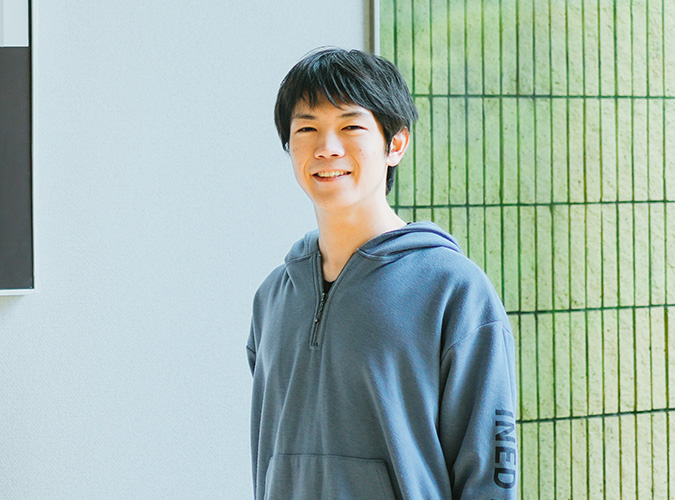
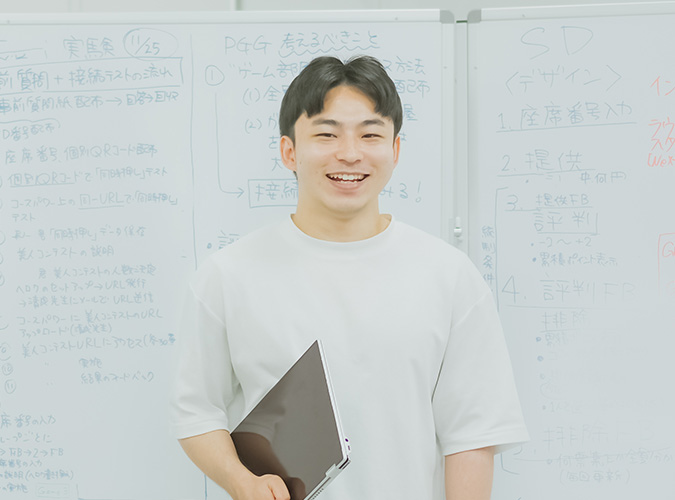
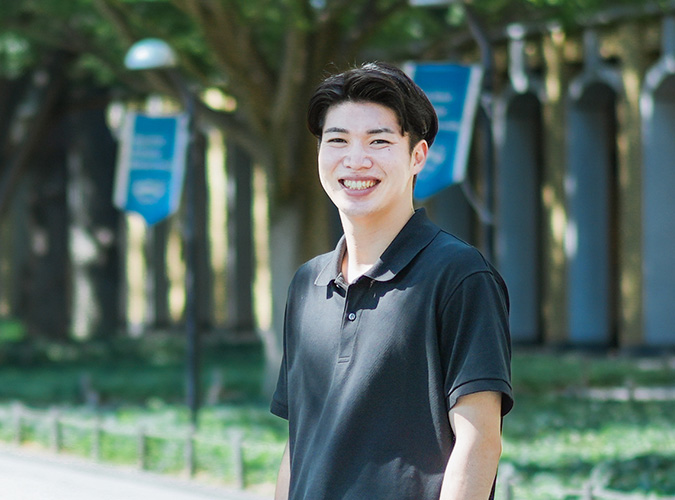
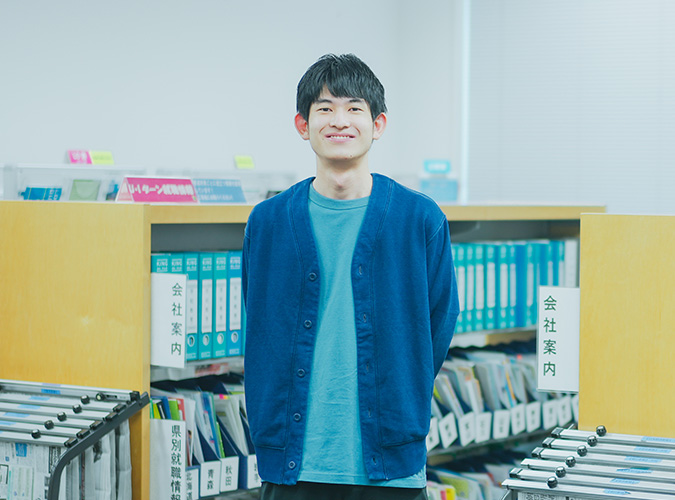
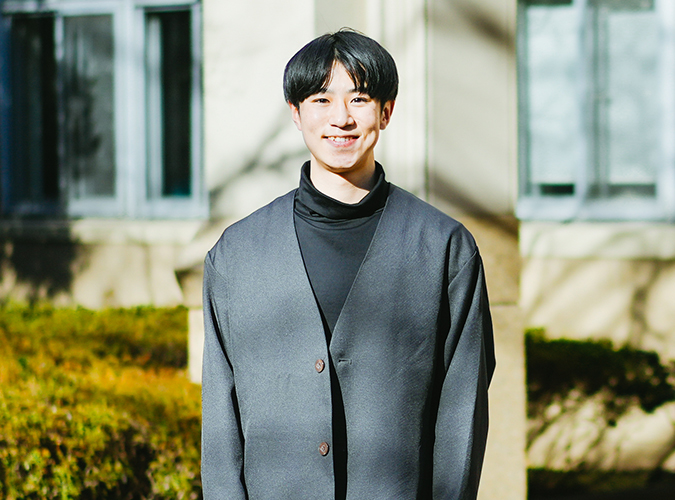
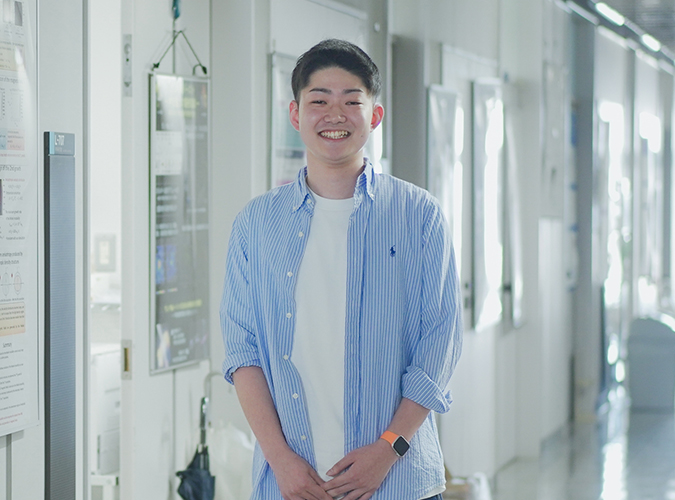
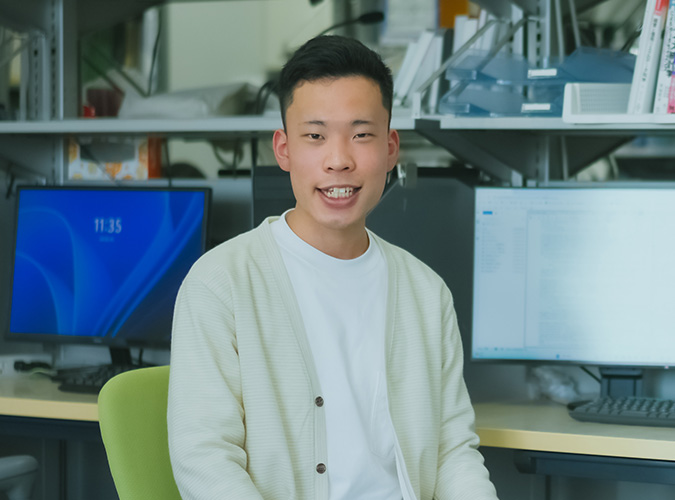
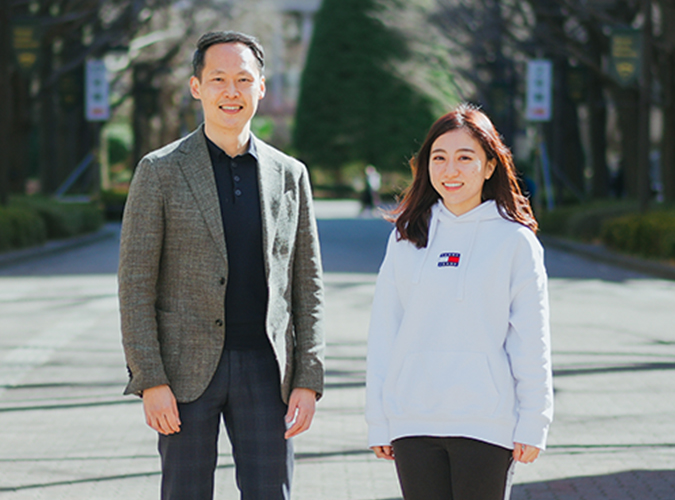
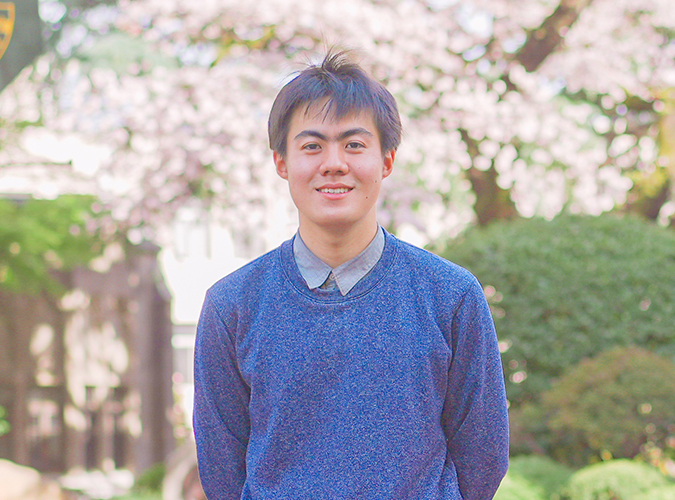
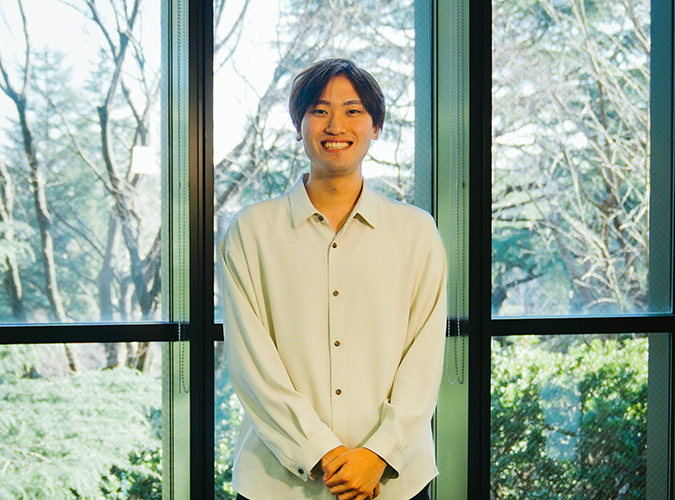
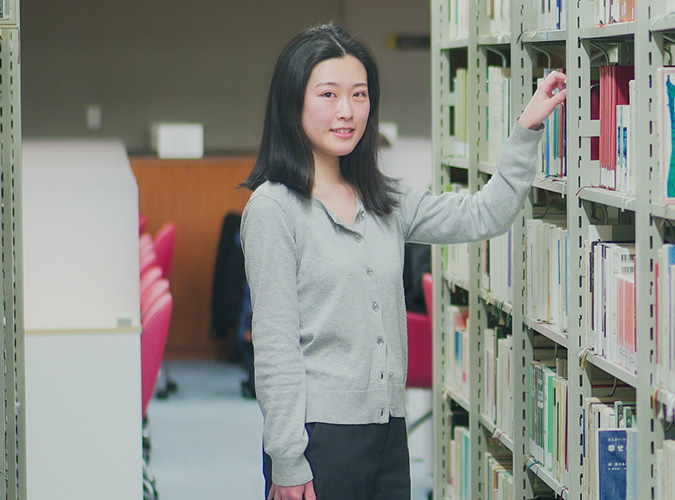
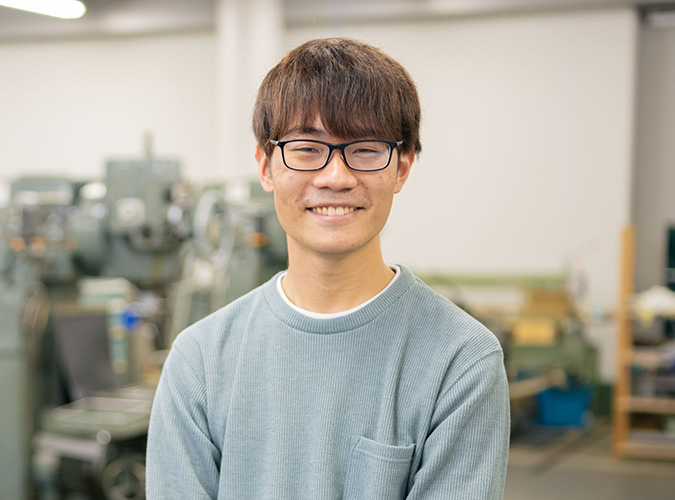
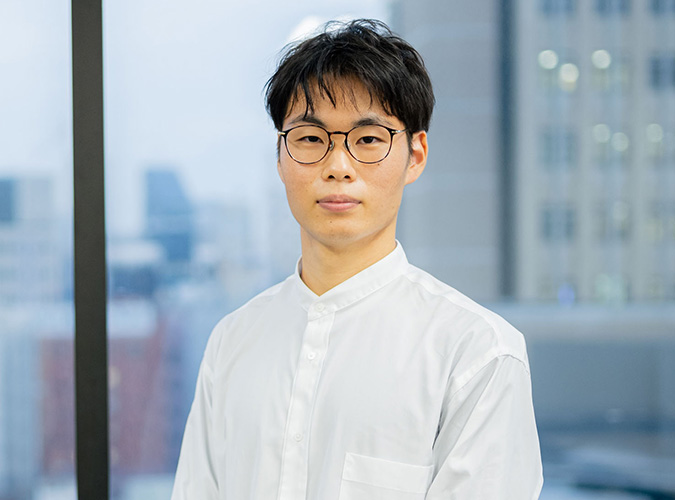
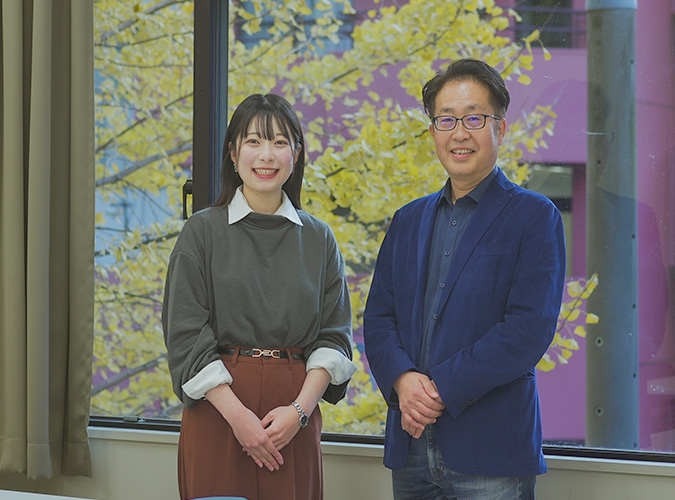
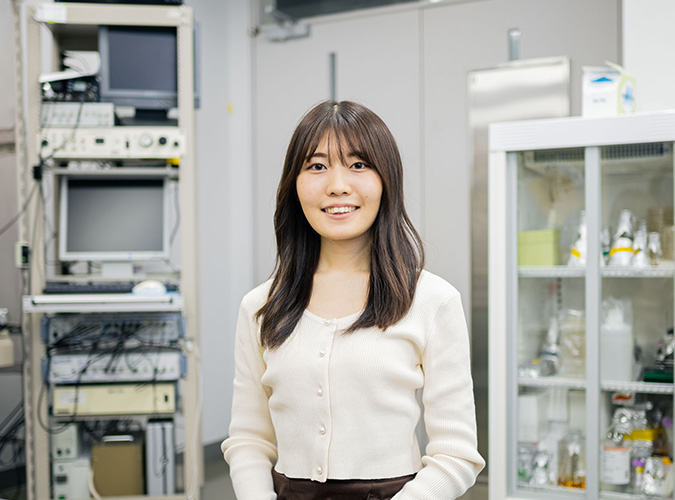
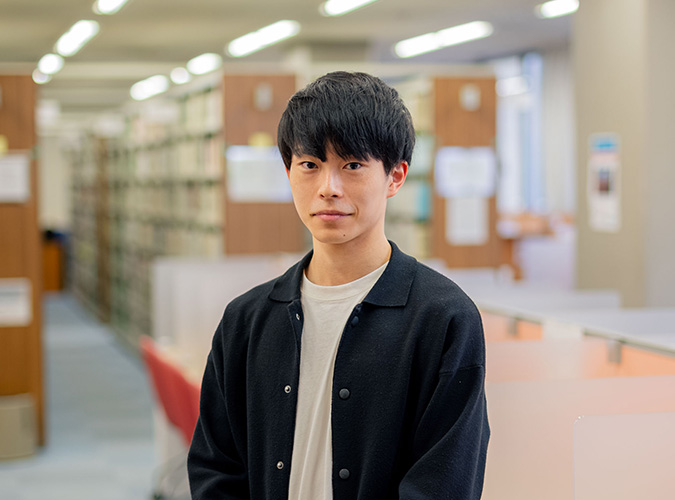
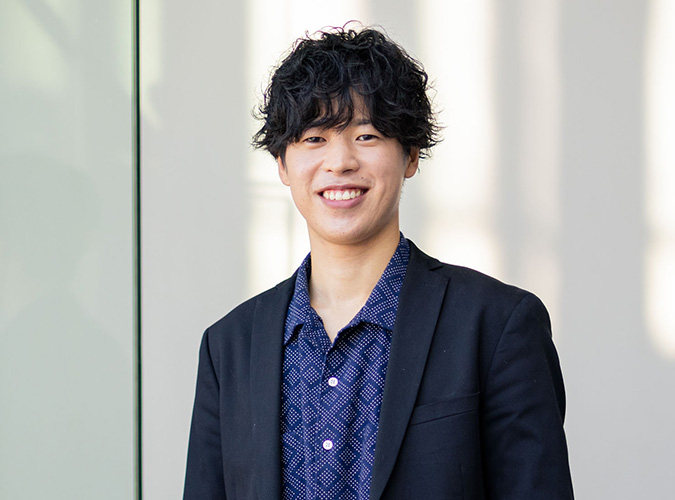
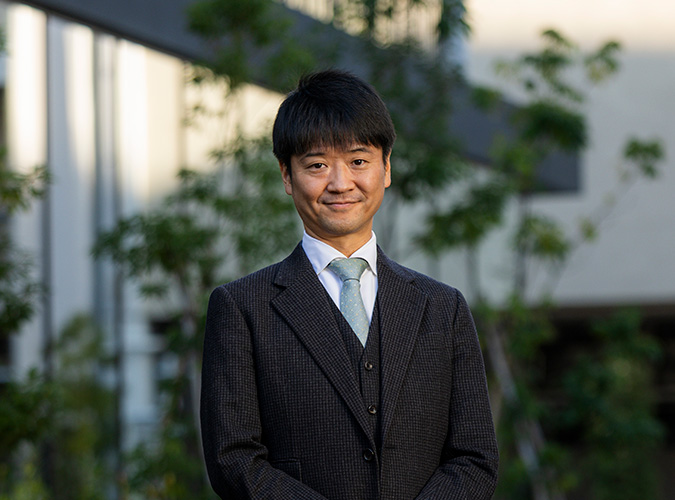
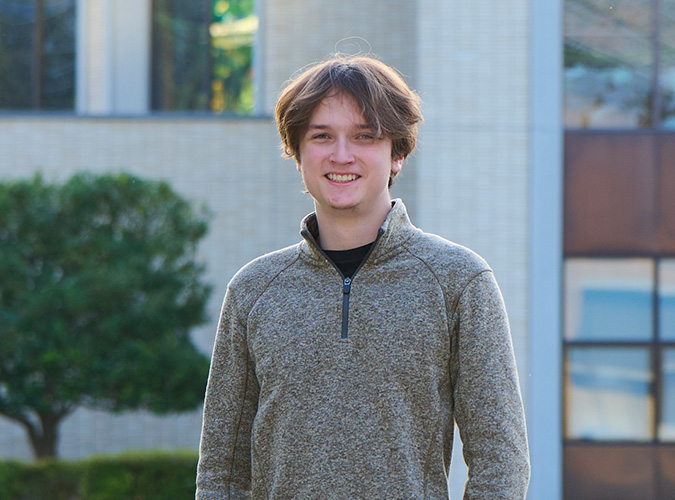
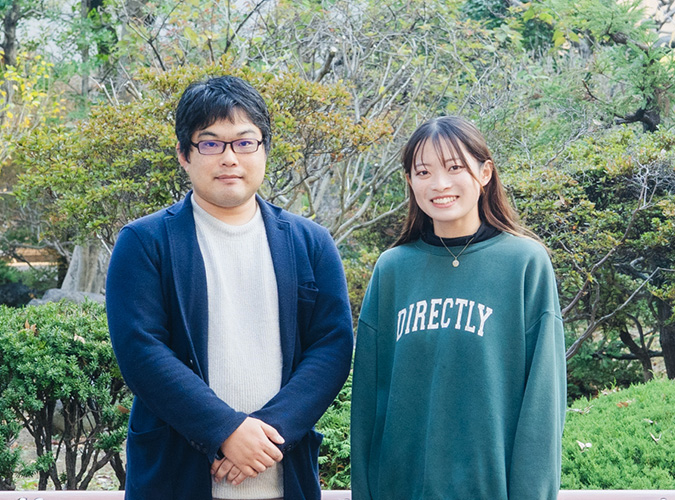
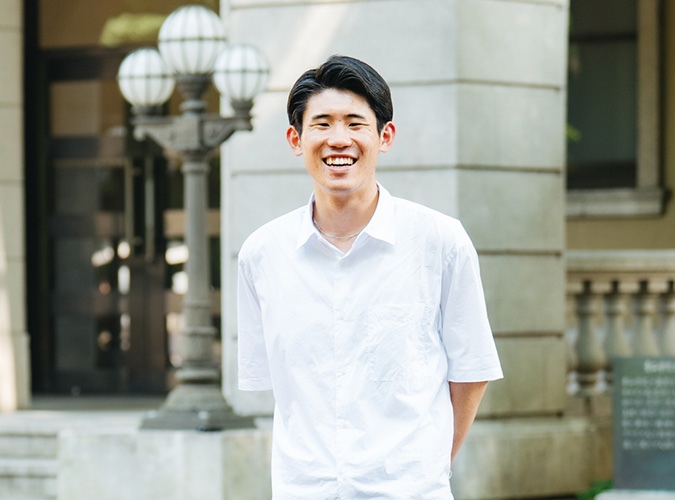
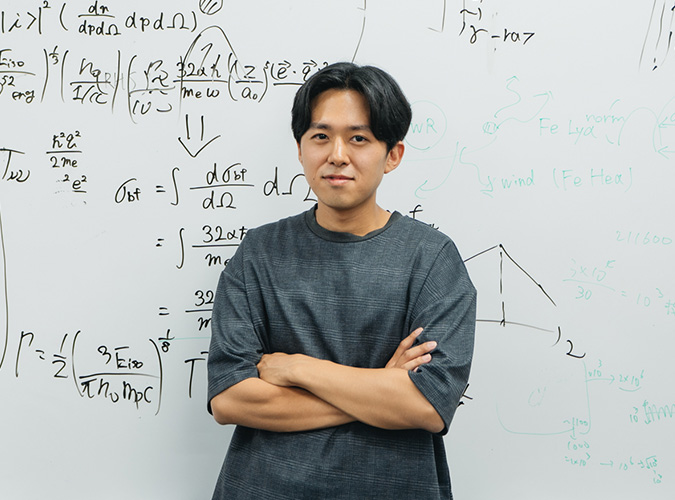
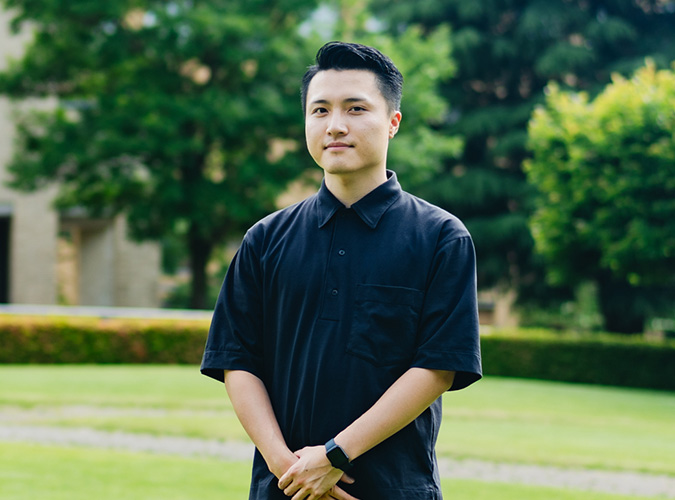
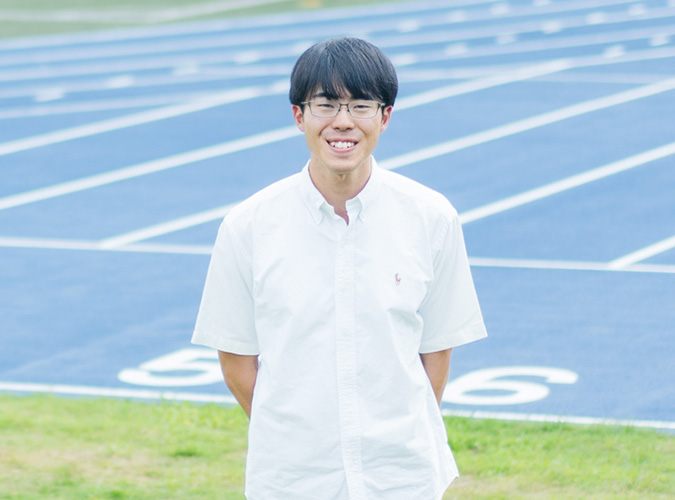
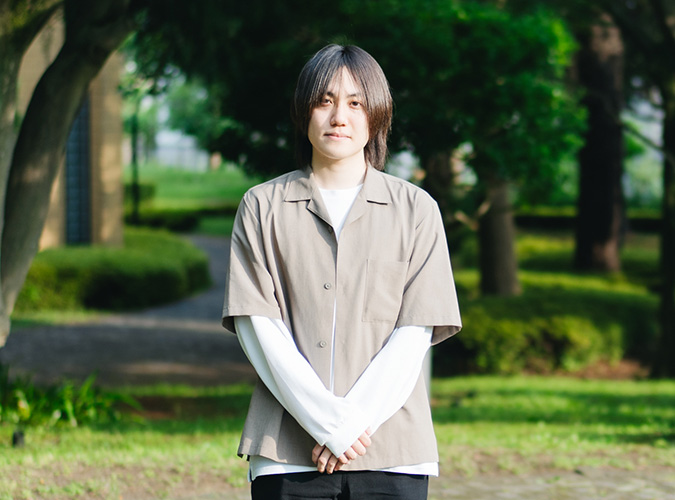
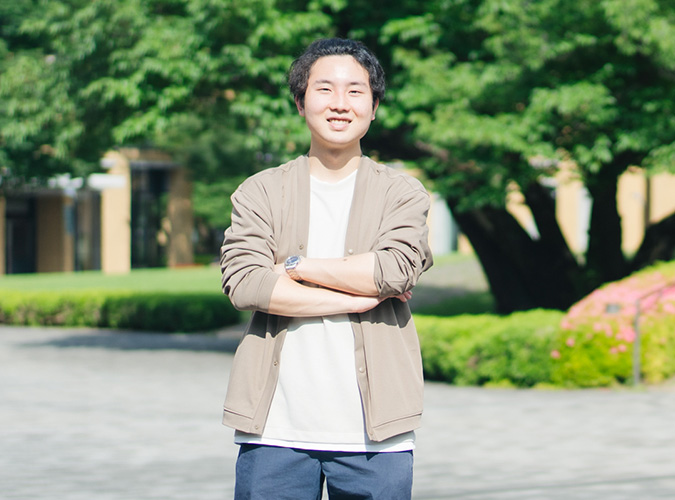
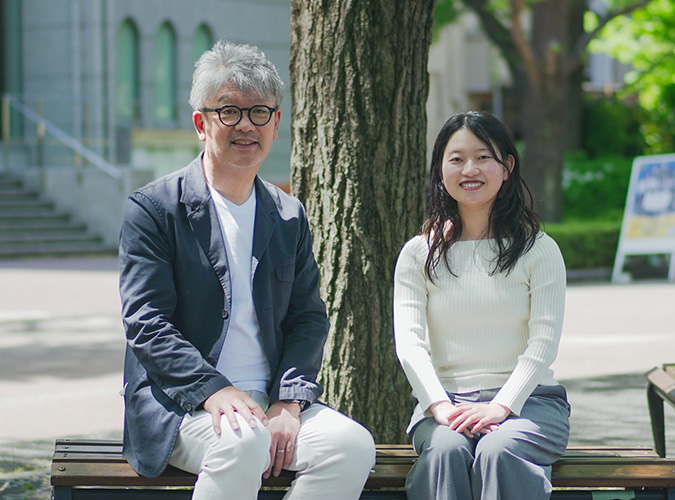
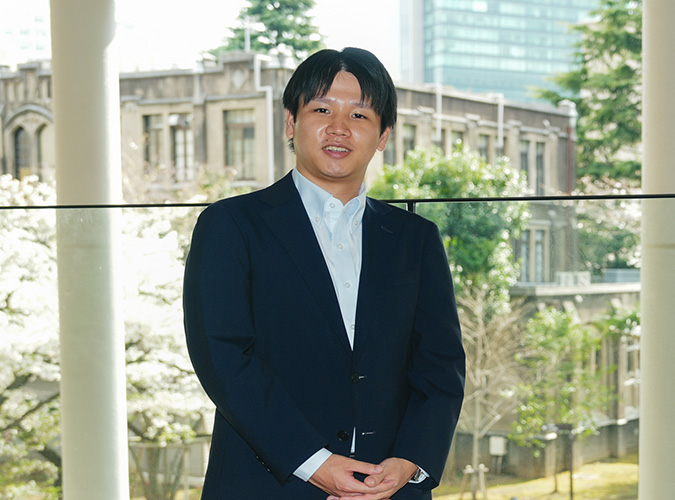
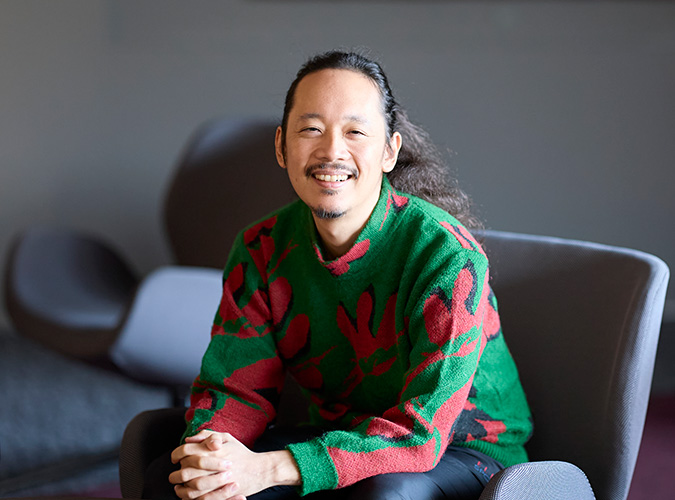
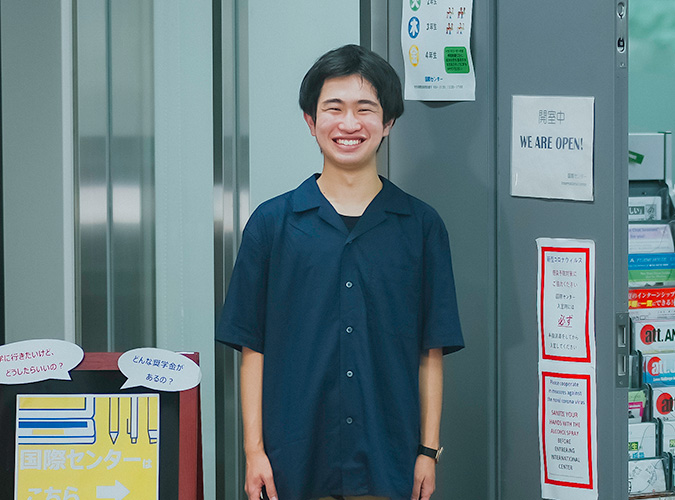
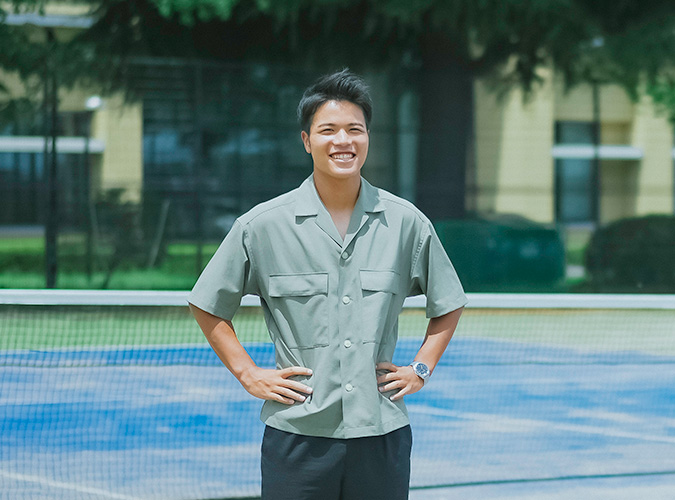
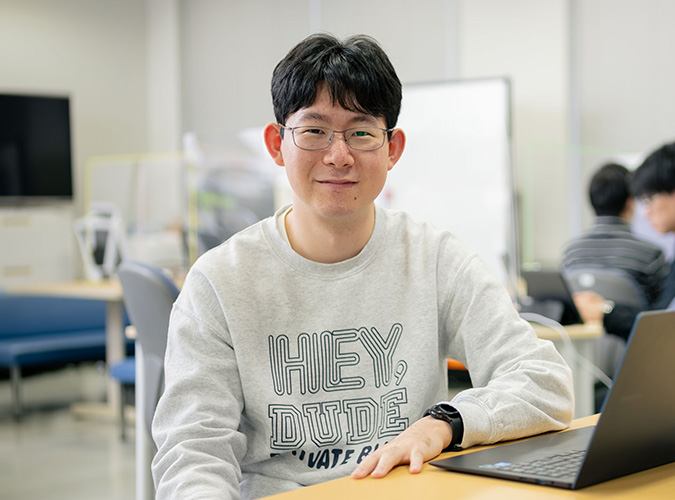
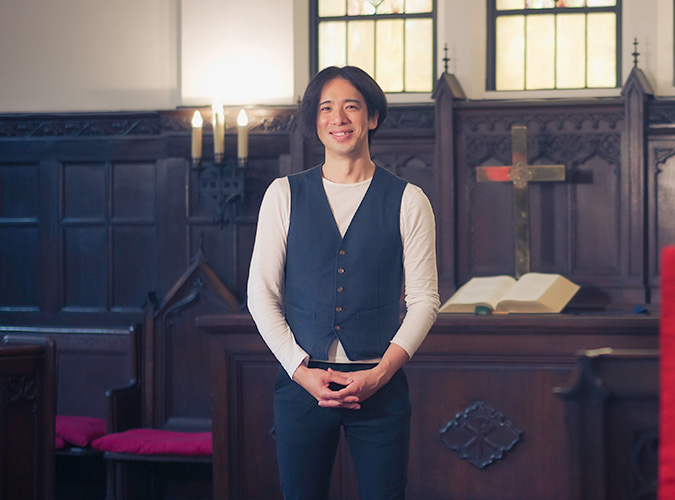
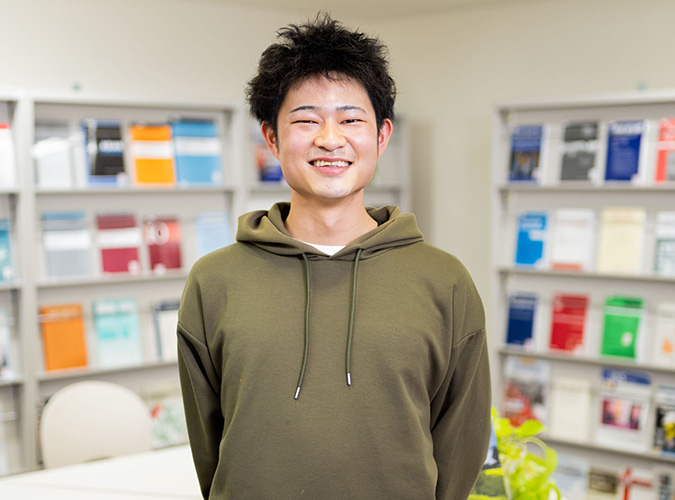
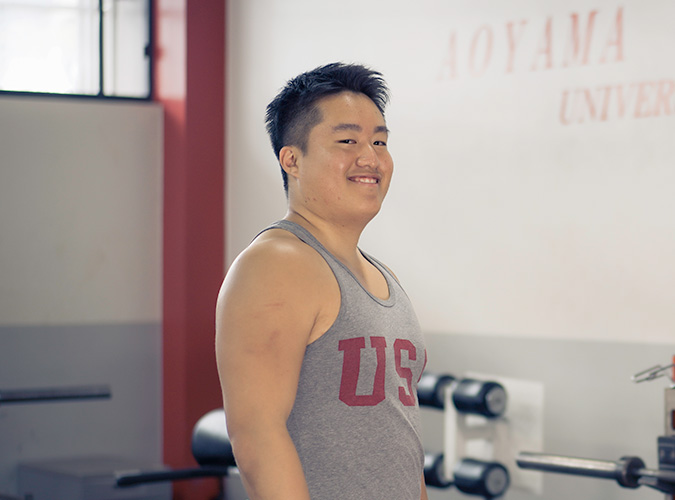
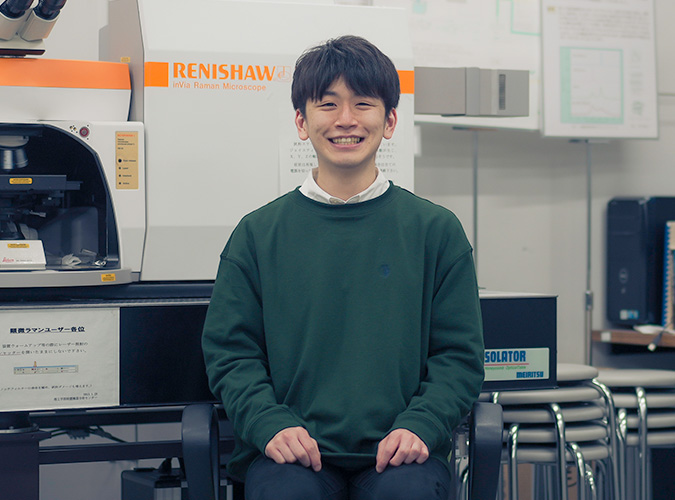
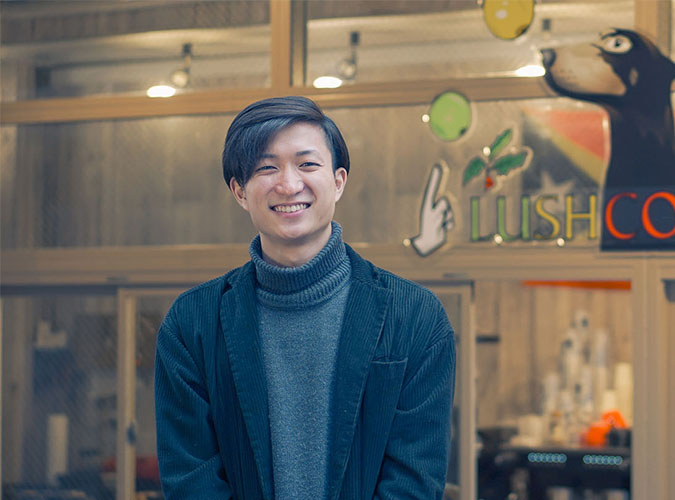
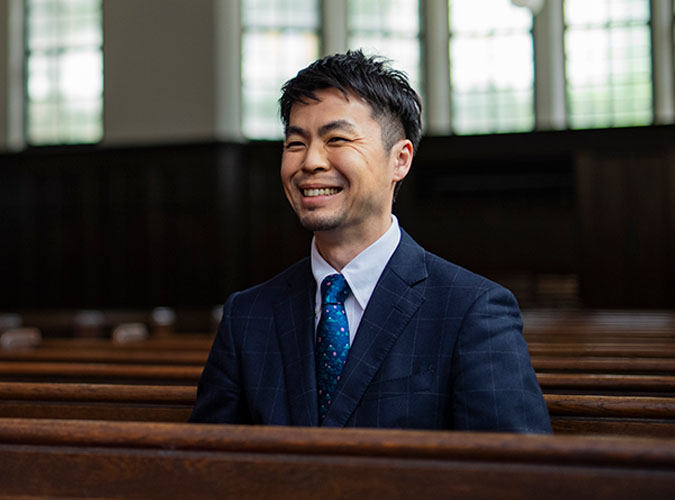
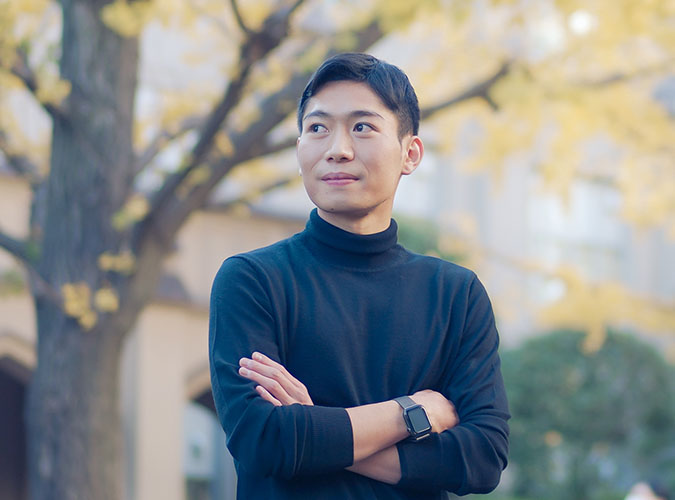
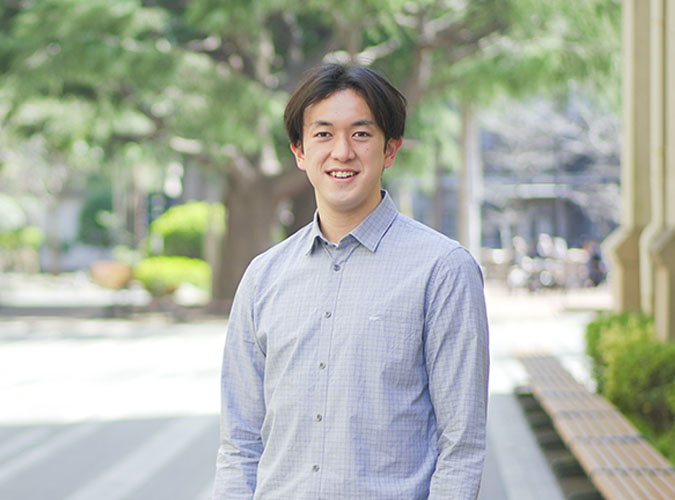
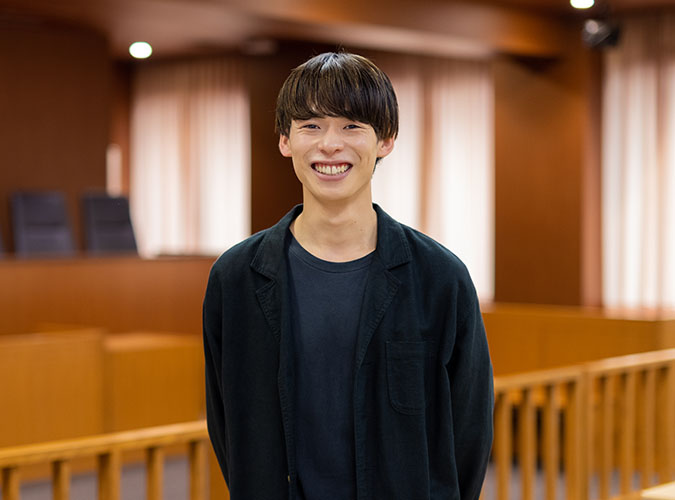
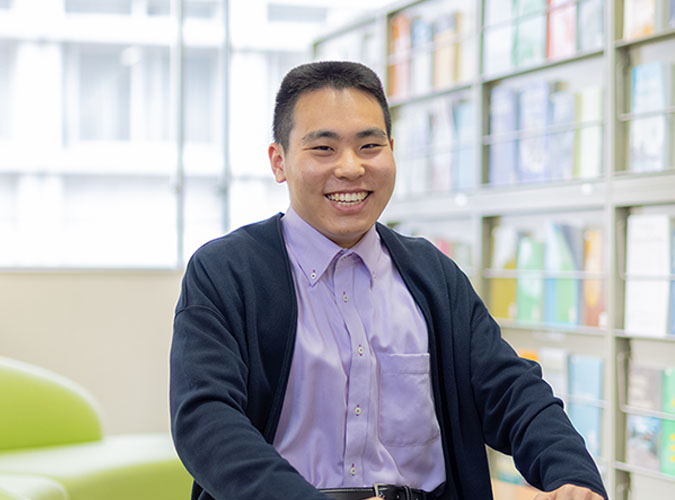
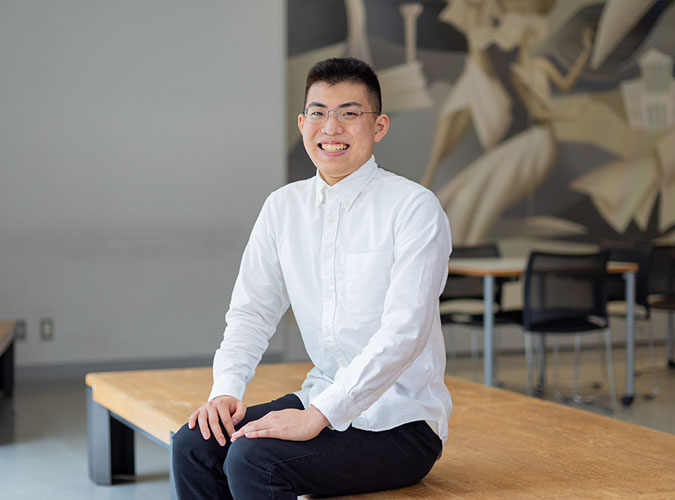
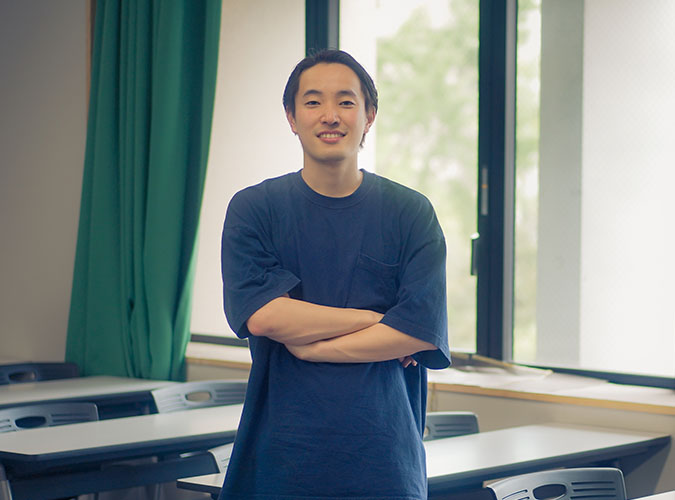
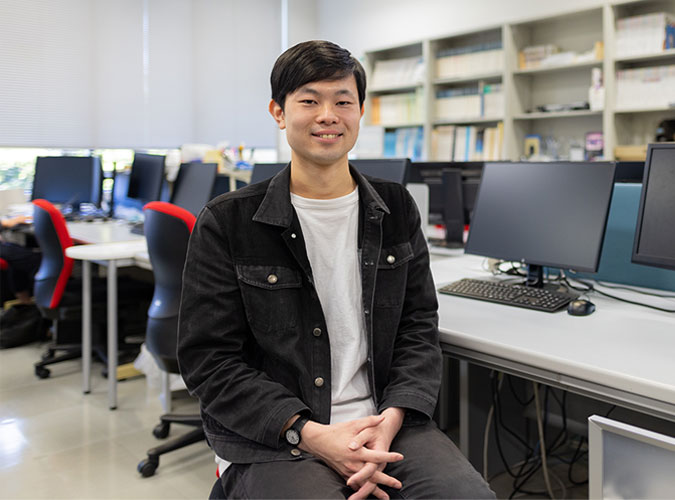
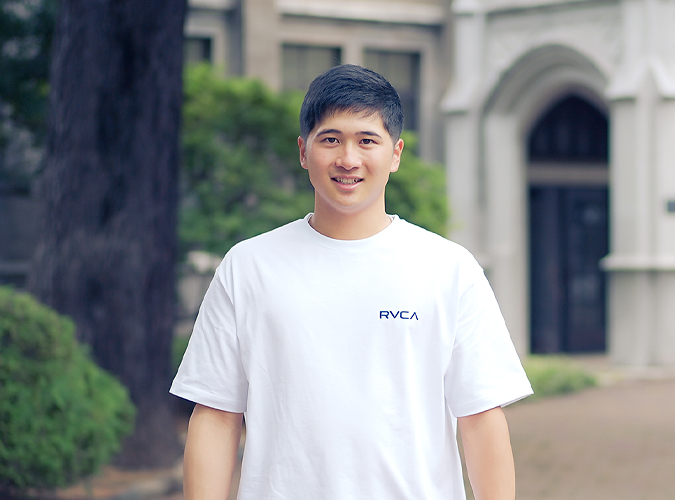
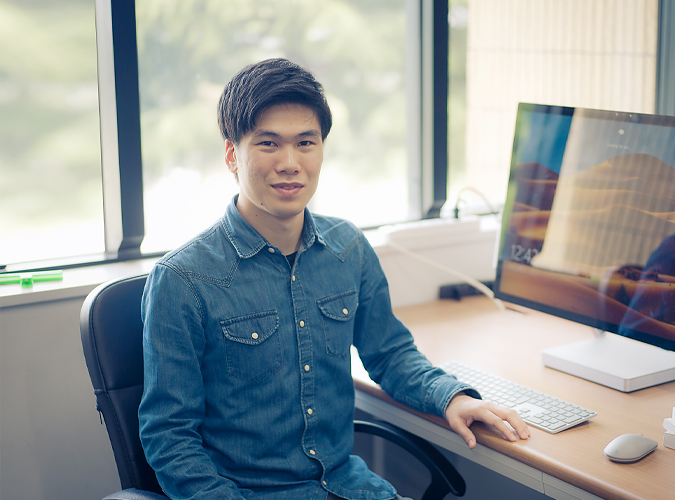
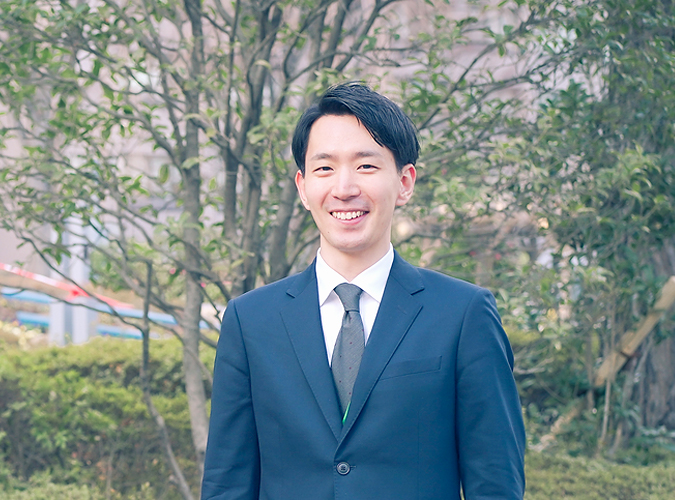
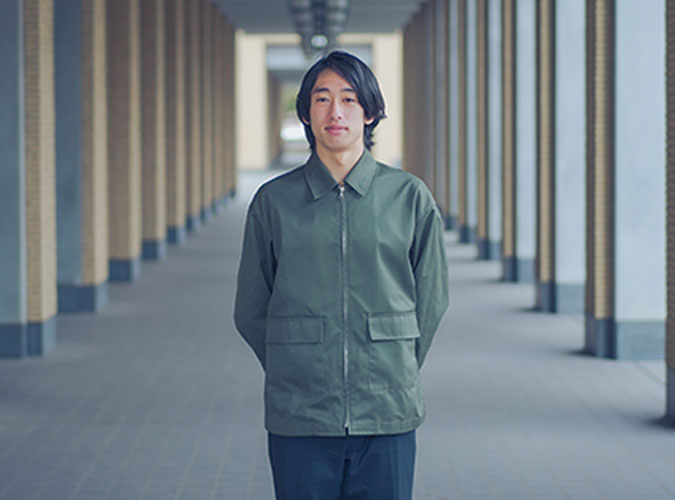
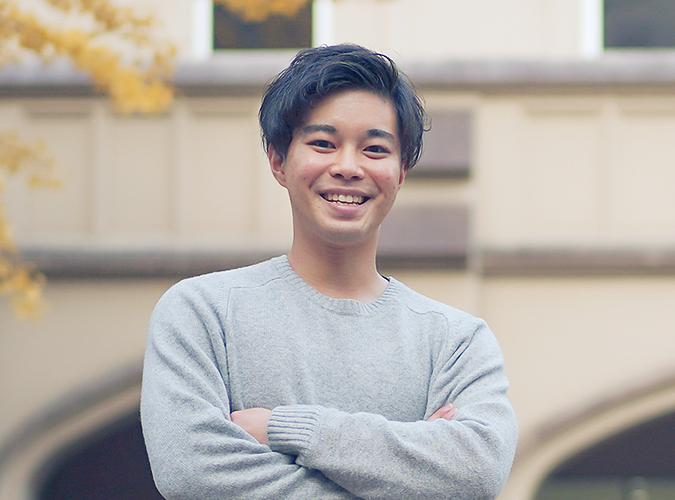
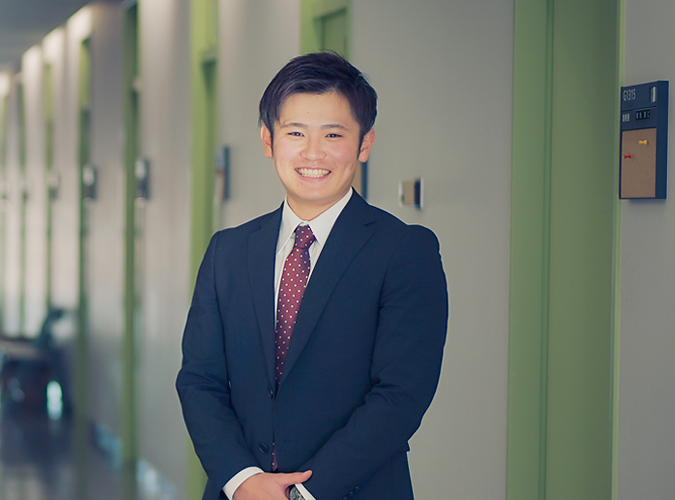
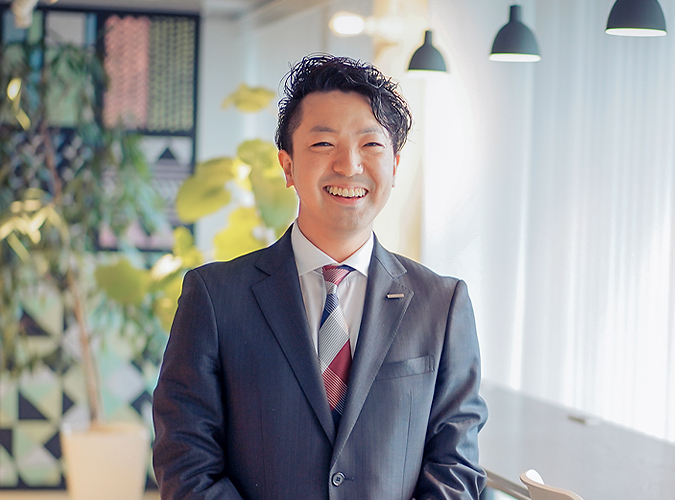
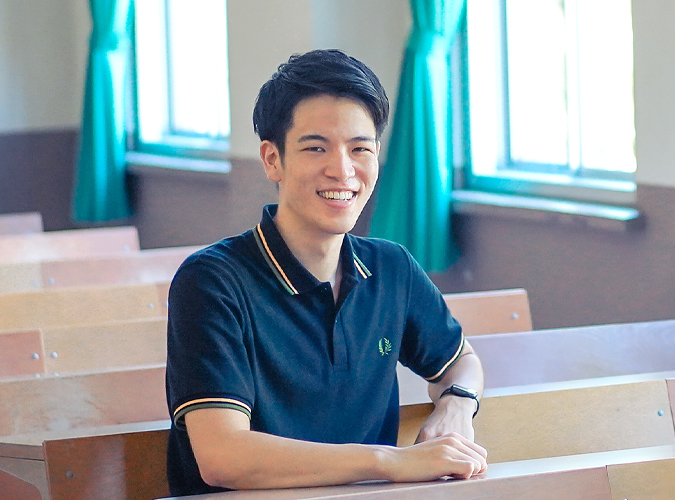
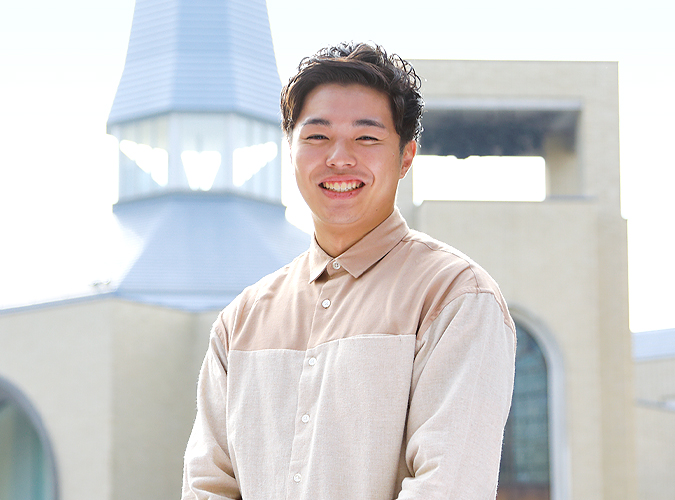
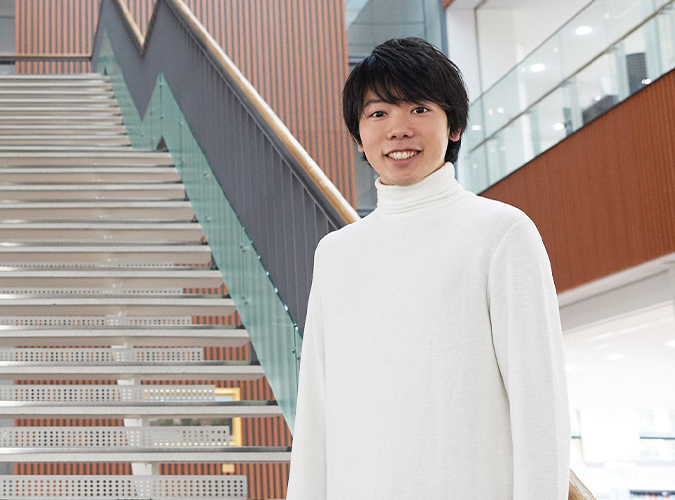
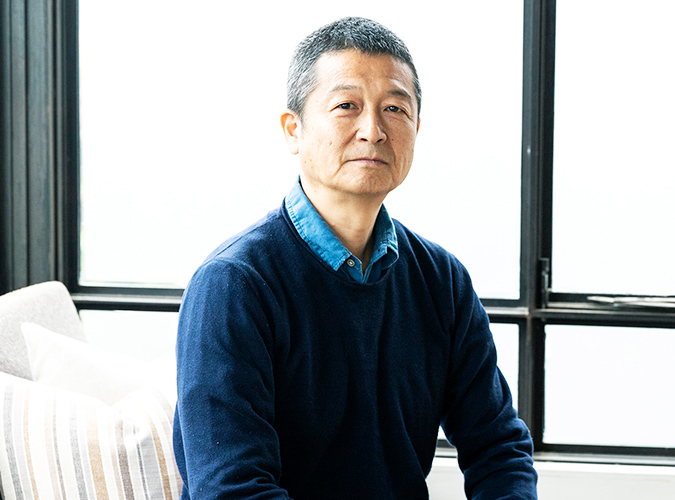
"I was interested in Aoyama Gakuin University School of International Politics, Economics and Communication which focuses on foreign language education to develop global human resources," says Otaki Satoshi. Although he had not yet decided what he wanted to do in the future when he graduated from high school, he decided to go to college, thinking that he would be able to find his dream by learning about economics and society in a broad range of areas. We spoke to Otaki, who is currently spending exciting days engrossed in his major and working hard to become the ideal member of society.
Diverse learning that goes beyond the bounds of economics
The appeal of this department is that you can find a field that interests you during the four-year curriculum. In my first and second years, I solidified my foundation in economics while also touching on law and philosophy, and in elective courses I learned specialized knowledge such as finance and management, and thoroughly discussed topics that interested me, which led me to my current research field. Another feature of this department is that you can study a wide variety of fields without being bound by frameworks, such as politics and international communication. In addition, in the Faculty School of International Politics, Economics and Communication you can choose to have the required course "Introduction to Christianity I" lectured in English. By taking all-English classes taught by native speaker teachers, I was able to improve my English skills in addition to learning about Christianity. We made extensive use of music and animation, and learned about the main themes of the Bible and the relationship between Christianity and society while having fun. The Christian idea of "doing unto others what you would like to be done to you" has now become one of my important values.

In terms of English ability, my speaking ability has definitely improved over the past three years. The environment requires a lot of English, not only in lectures but also when asking questions to teachers and in group work with other students, so speaking ability is acquired naturally. With more opportunities to converse and improved listening skills, I am sure I will be able to use English with confidence even after entering society.
Utilizing the knowledge gained in the department to raise awareness of the SDGs
For me, who had the image that university studies were abstract things done at a desk, the classes in this department were very practical and surprising. In Professor NAKASATO Munenori 's "Corporate Finance I and II," we learned the basic theories of corporate fundraising, investment activities, and the flow of money inside and outside of companies, such as the distribution of profits, capital markets, and securities investment. For example, in a lecture on stocks and securities, we used actual data to verify what domestic and international events were causing the Nikkei average stock price to fluctuate on that day. I used the knowledge I gained in class to actually purchase stocks and experience the joy of making a profit. I think I have grown a step by not just inputting knowledge, but by taking action on my own initiative. I believe that once you become a member of society, it is important to be able to provide something of value, so this class, which gave me a lot of knowledge that I can use in society, was very meaningful.
Faculty-recognized student organization "SANDS"
I am a member of the faculty's official student group "SANDS" and am working to raise awareness of and put into practice the SDGs on campus, in elementary and junior high schools, and in local companies. What I learned in Professor Keiko Kotani's "Business Management I" was useful for this activity. We learned the basics of business strategy, but the class content was very unique. For example, we were given the assignment to "make a plan to run a profitable rice ball shop with a budget of 10,000 yen," and we were free to design the business. The process of coming up with ideas while considering the environmental impact and the situation of other companies, rather than just making a profit, was also useful in my activities at SANDS. In my third year, I was in a position to run the group as an officer, and the ability to consider all stakeholders and the free imagination I developed in this class were useful when thinking about plans to promote the SDGs' philosophy of "leaving no one behind."
Approaching conflicts occurring around the world and their solutions
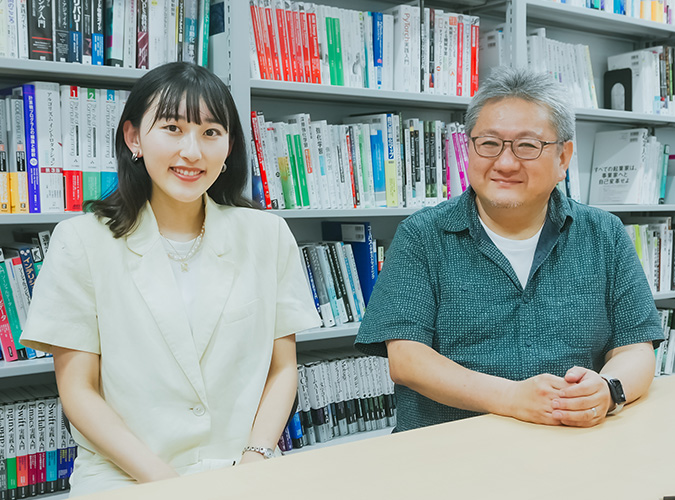
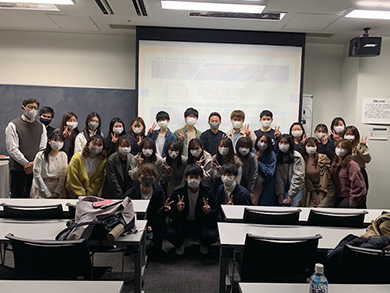
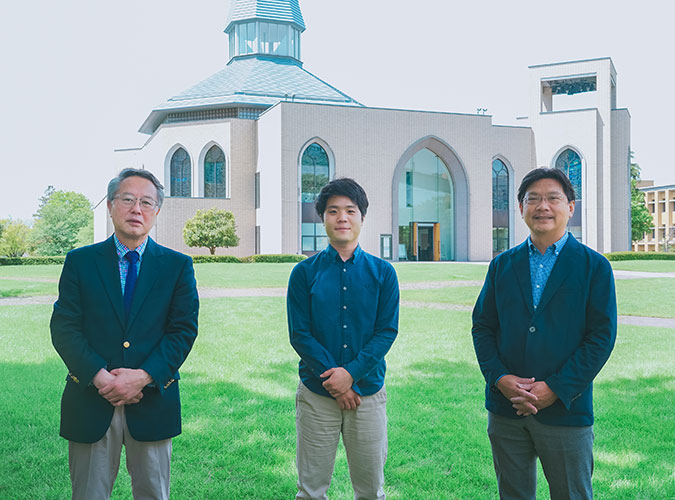
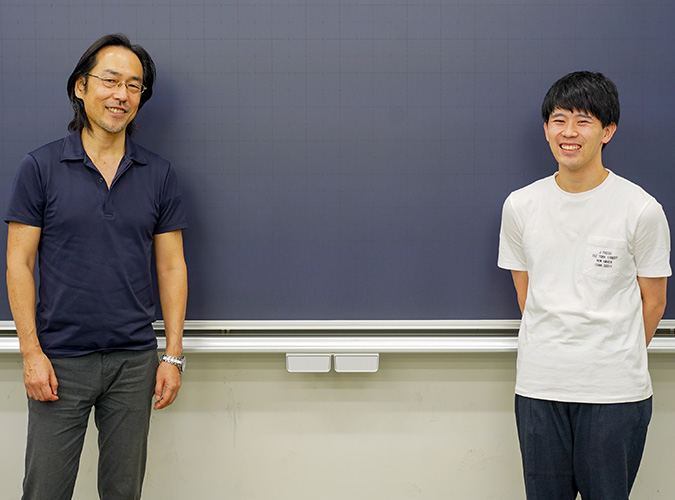
I am currently studying "International Relations and Human Identity" in Professor Takashi Oshimura's seminar. Every human being has an identity, something that "if we lose it, we are no longer who we are," but the way this exists is very different between individuals and organizational units. My goal is to analyze this difference and approach the conflict structures occurring in the world, their reasons, and solutions. What you want to do as an individual and what you cannot compromise on are not necessarily the same as what you are forced to do and what you cannot compromise on as a member of an organization, which is where identity conflicts occur. The same can be said about conflicts between countries. I believe that if we can see through the essence of the issue and deal with it appropriately, the conflict will no longer be a conflict. I am delving into international relations from the perspectives of language, religion, culture, and tradition, and am proceeding with my investigations through repeated discussions.
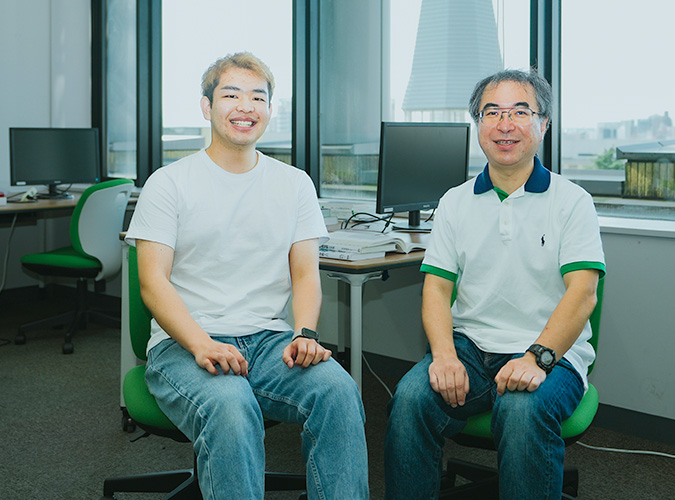
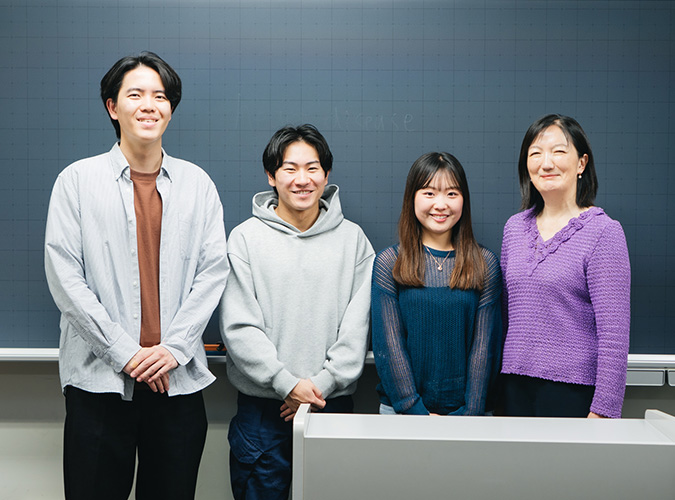
Osamura Seminar
I believe that this research is useful not only in international relations but also when doing business in society. When people with different demands do business together, conflict is inevitable. By identifying the essence of the conflict and seeking appropriate solutions, it is possible to do business that benefits all parties involved. In the seminar, we are in charge of one 30-minute presentation each in the first and second semesters. I read many books about gender discrimination and LGBTQ and discussed "gender and identity." I found it fun and rewarding to thoroughly research and summarize the things I was interested in, and I was also able to gain valuable experience speaking in front of people for 30 minutes. Since the professor was in France for overseas research, there was no senior student during that time, so I think we acquired the habit of acting independently. I have built good friendships with my classmates who engaged in lively discussions and deepened our learning, even after leaving the seminar.
I want to work in the human resources department at one of the world's leading general electrical manufacturers.
After graduation, I have received a job offer from Hitachi Ltd. in the Human Resources General Affairs Department. Based on my experience in organizational management at SANDS and my experience researching identity in my seminar, I wanted to work in the human resources field and lead human resources management and organizational reform when I got a job. Hitachi employs a job-based employment method, and the fact that I was guaranteed a human resources assignment from the first year was the deciding factor. Over the past 10 years, the company has evolved from a general electrical manufacturer to a company that innovates the world by making full use of IT technology. I was also very attracted to the company because it invests in businesses and technologies that are needed in the times, has an overseas profit rate of over 50%, has the opportunity to work overseas, and can work on a global stage.
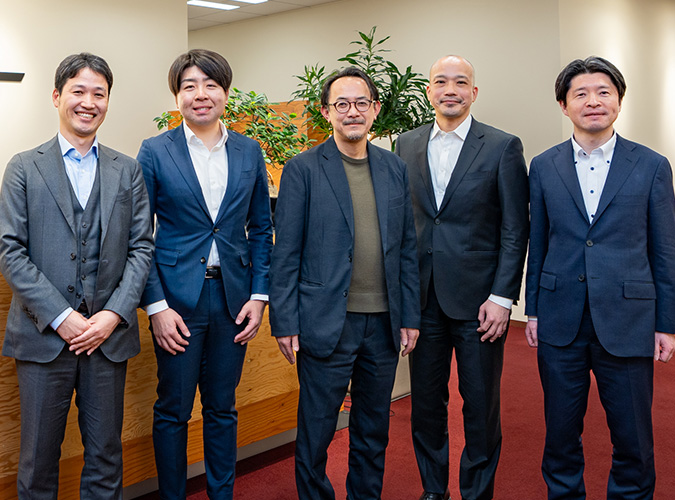
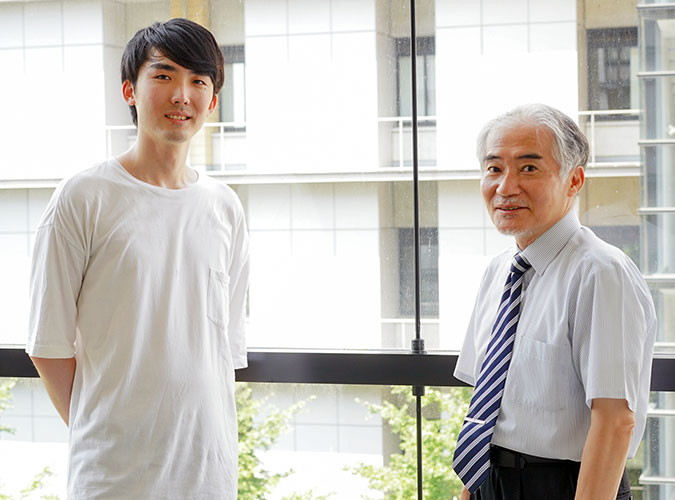
During my job hunting, my professor organized an online roundtable with graduates of the Oshimura seminar. It was a very encouraging experience to have the opportunity to share my job hunting worries and future dreams with seniors working at well-known companies and institutions. In addition, during the spring break, in parallel with my job hunting, my friends and I went back and forth every day to practice interviews and research companies. After about two months of intense practice, we no longer felt uncomfortable about interviews and were able to approach them with confidence. Thanks to that, both of us were able to get into our first choice companies. I am grateful that I was able to decide on my future path because of the foreign language and specialized education in this department, the studies in the Oshimura seminar that opened my eyes to the world, and the irreplaceable friends I met.
Interview video
*The links to each subject's "Course Content Details" are for the year they are published (2022).
School of International Politics, Economics and Communication Department of International Economics
Aoyama Gakuin University 's School of International Politics, Economics and Communication was founded as a pioneering international school with the mission of contributing to the international community. With three departments and five courses, we practice learning that emphasizes expertise, internationality, and on-site experience. We deepen our understanding of global issues and develop the skills to debate and discuss based on evidence. We foster the practical ability to collaborate with diverse people from around the world and create new value.
In Department of International Economics, students learn about global issues, especially international economic interdependence, from the perspective of economics and business, historically, theoretically, and quantitatively, based on a curriculum specialized in international and development economics. Based on each student's interests and career path, we have established the "International Economic Policy Course" and the "International Business Course." We aim to develop talented individuals who can understand and respect different cultures and values, and who can think and act proactively to solve problems.