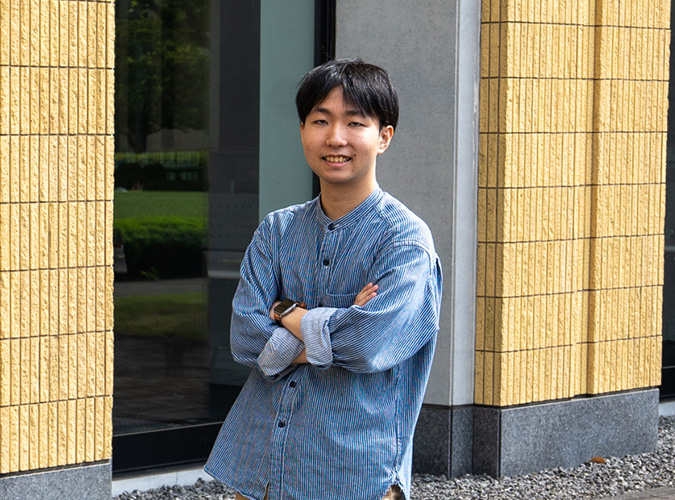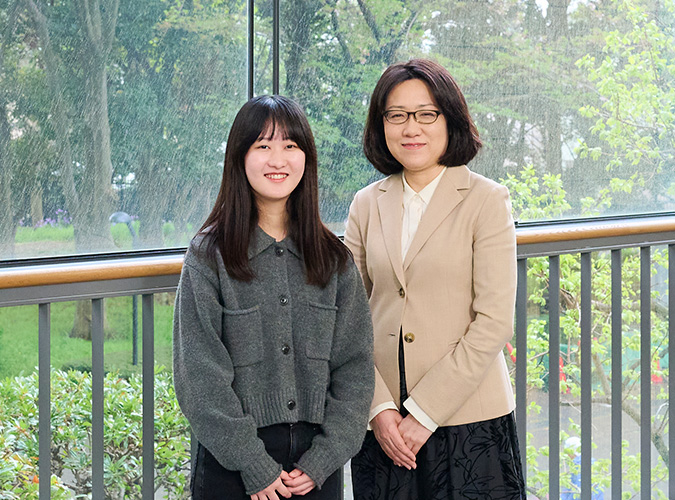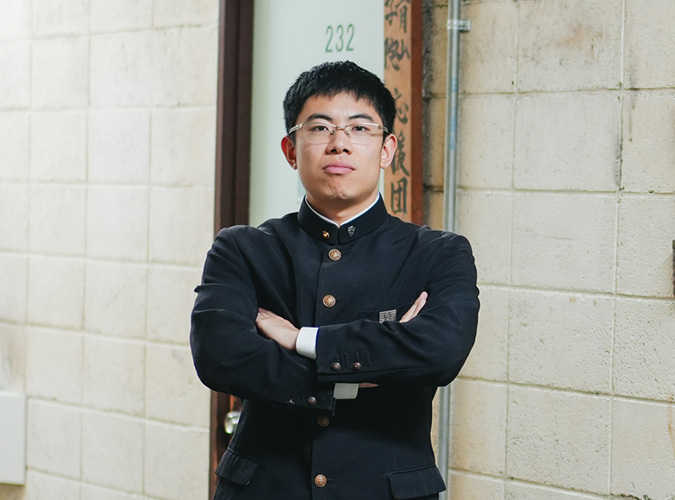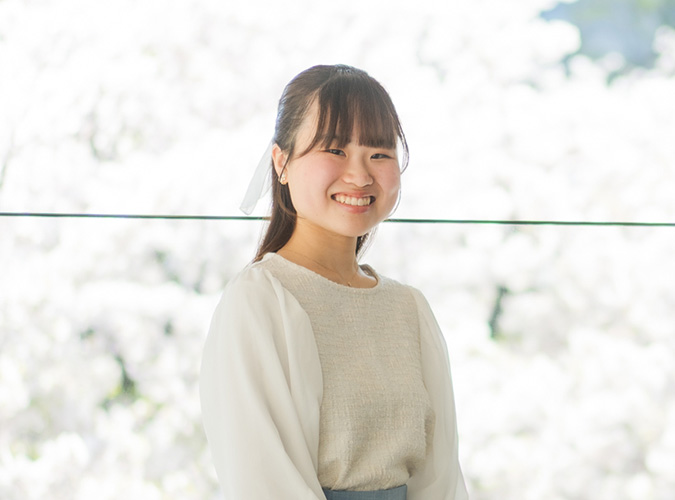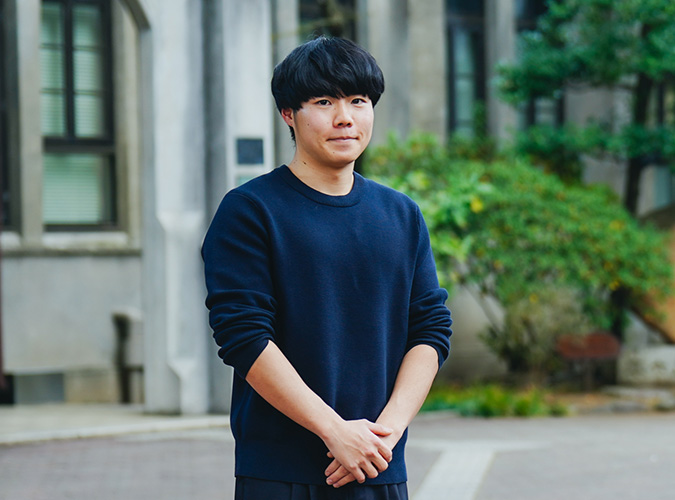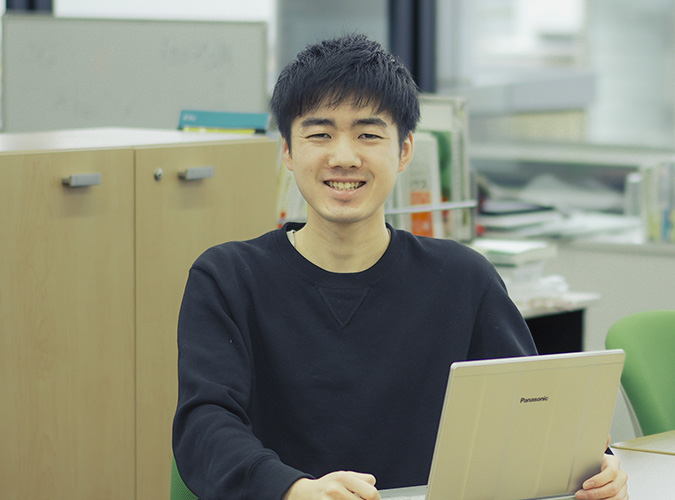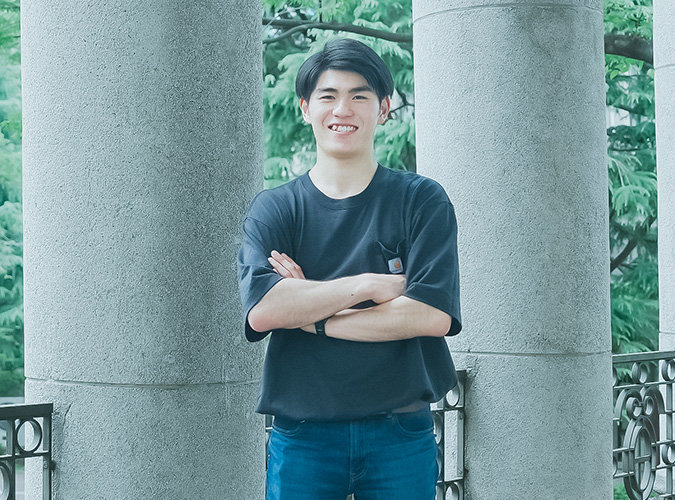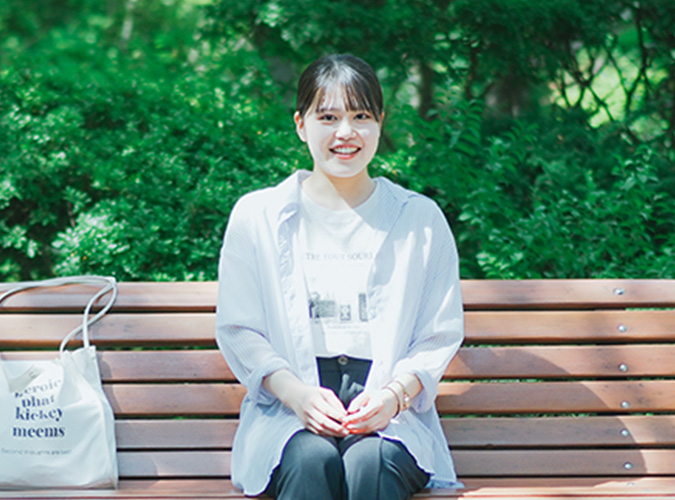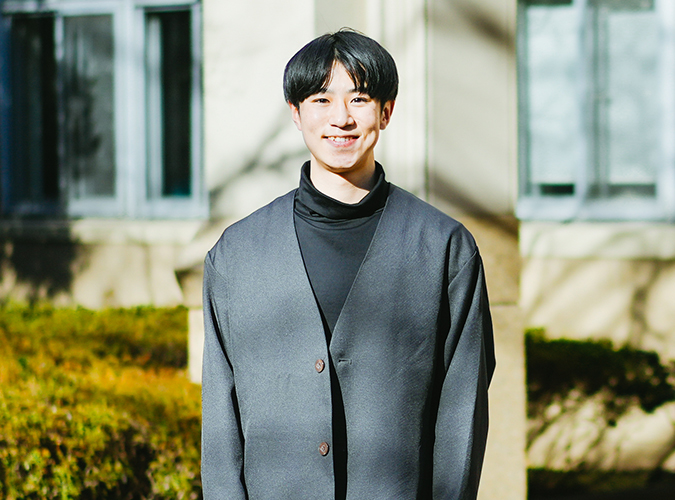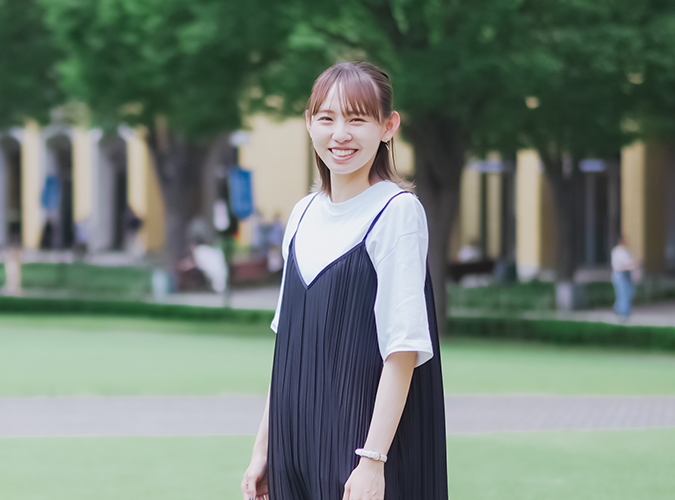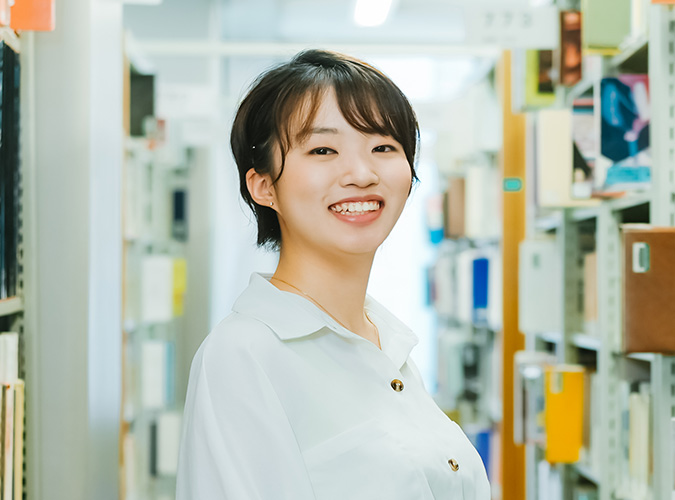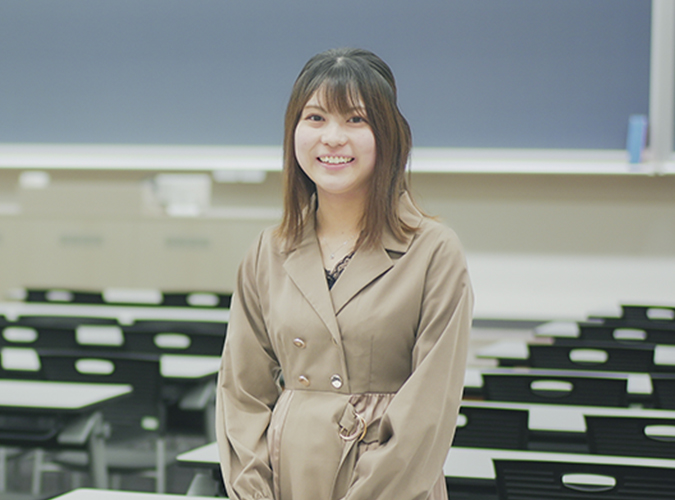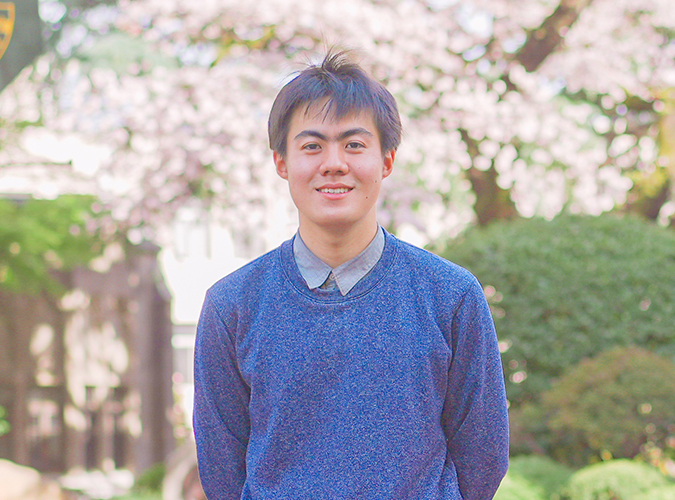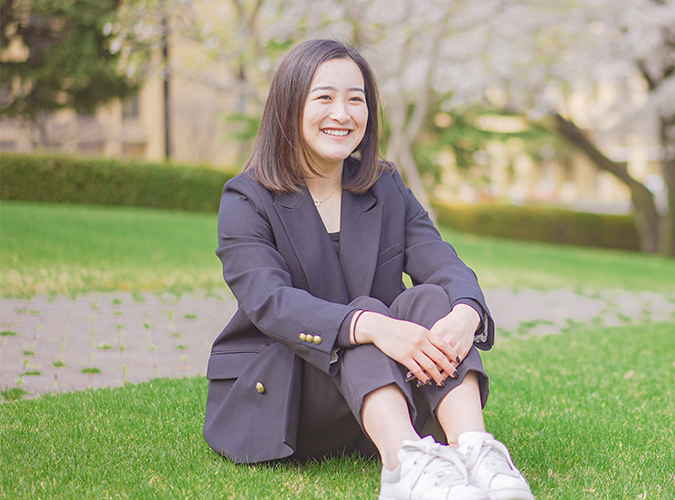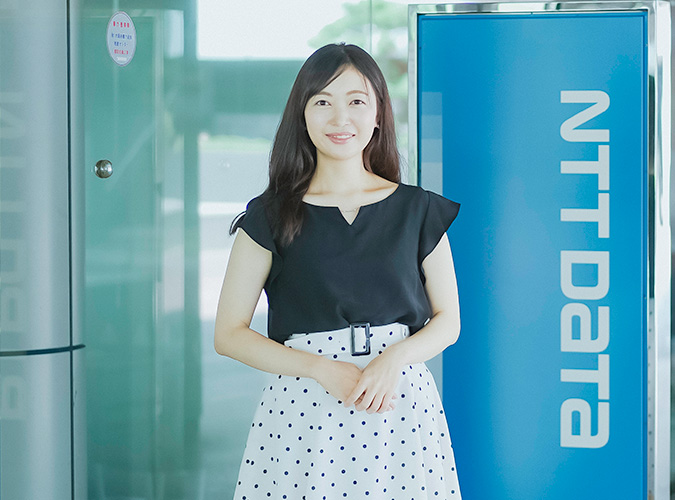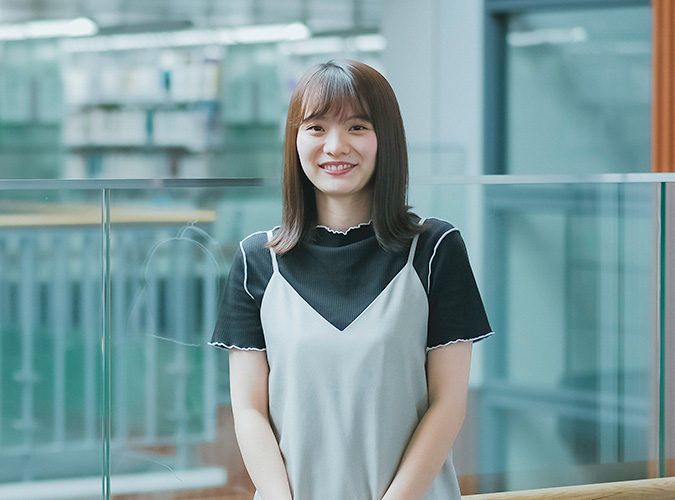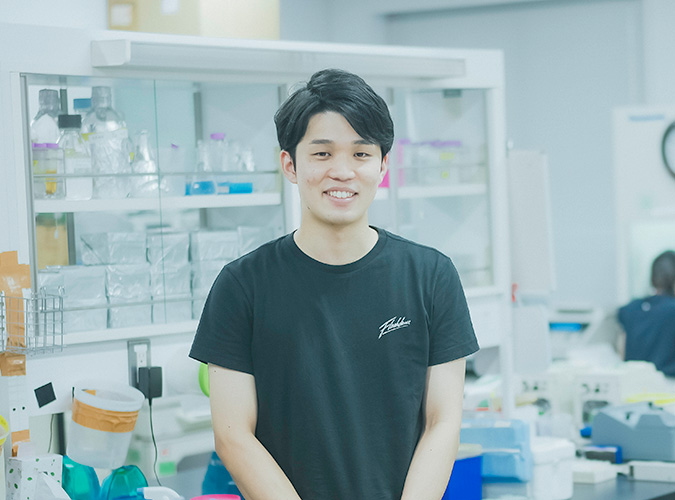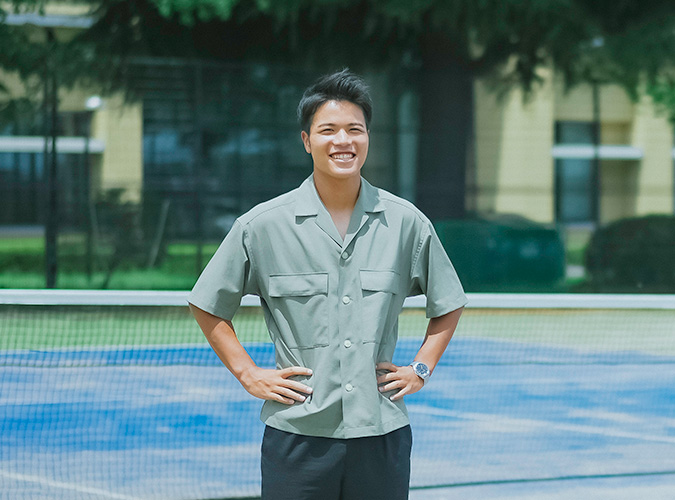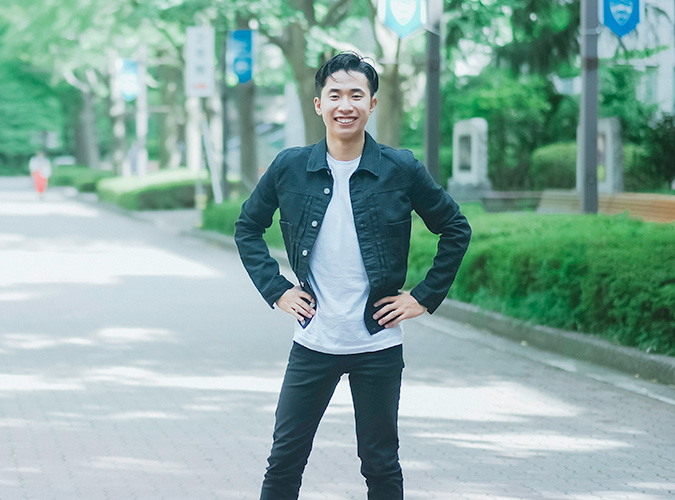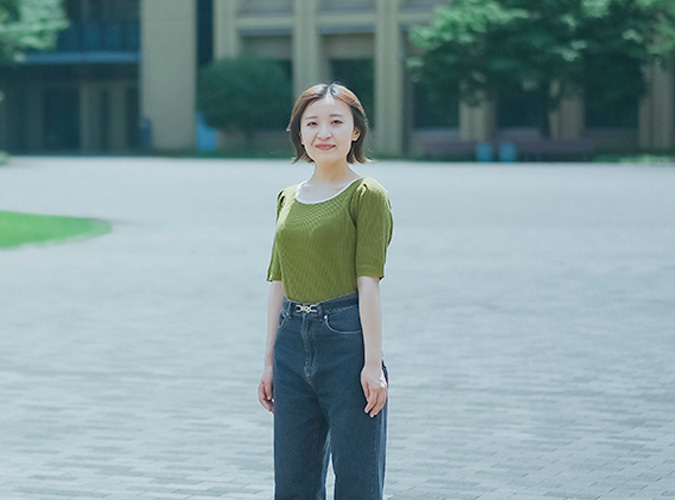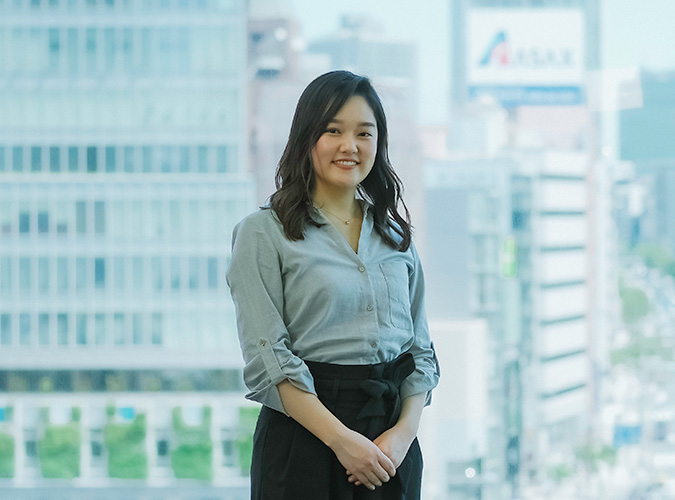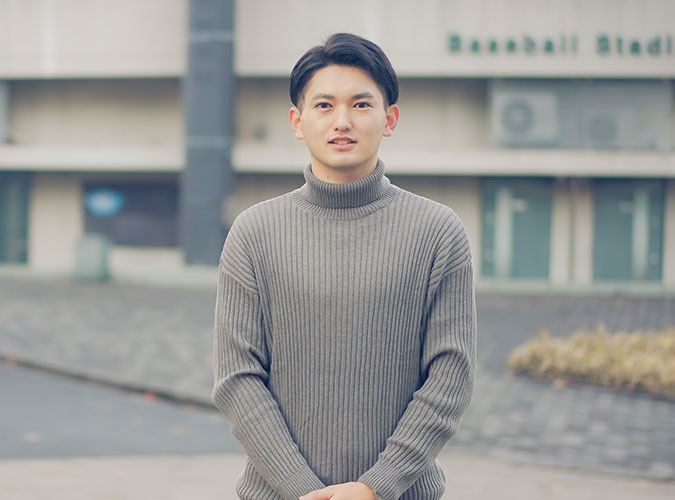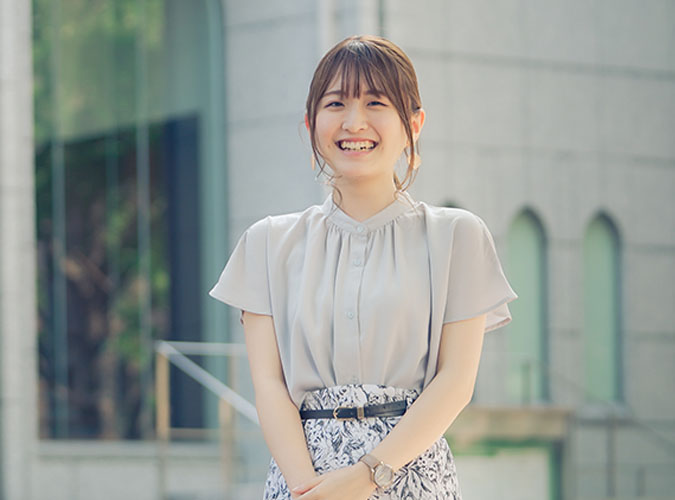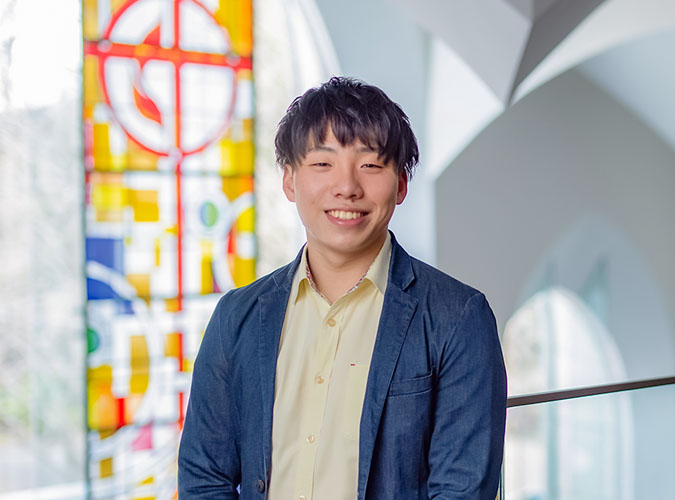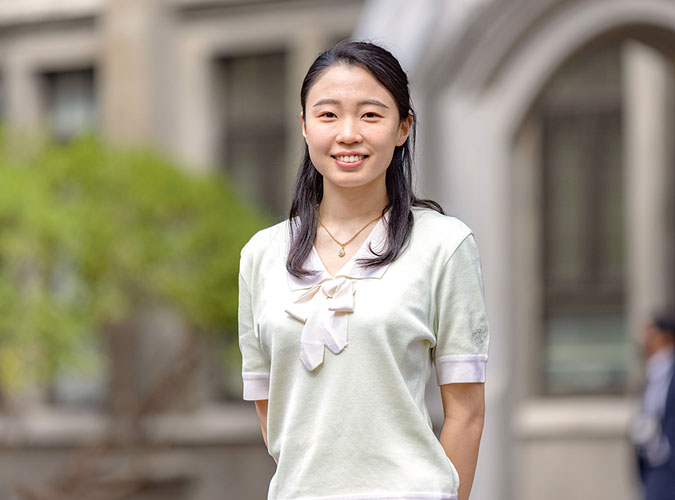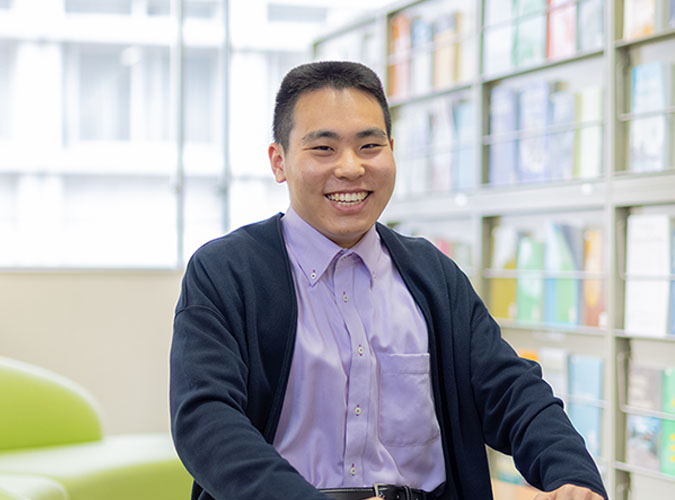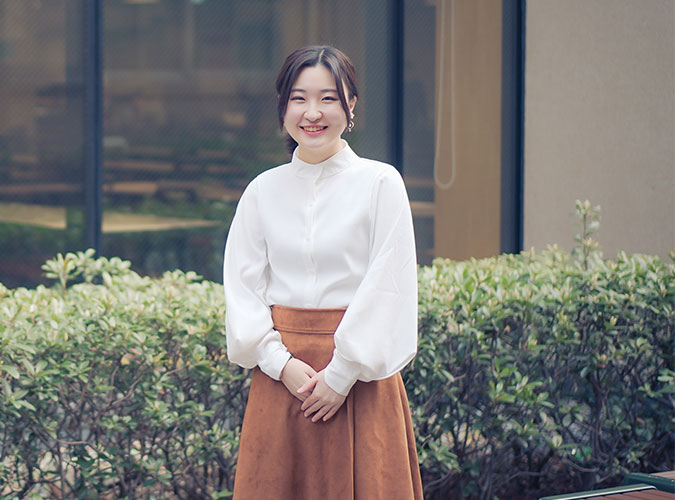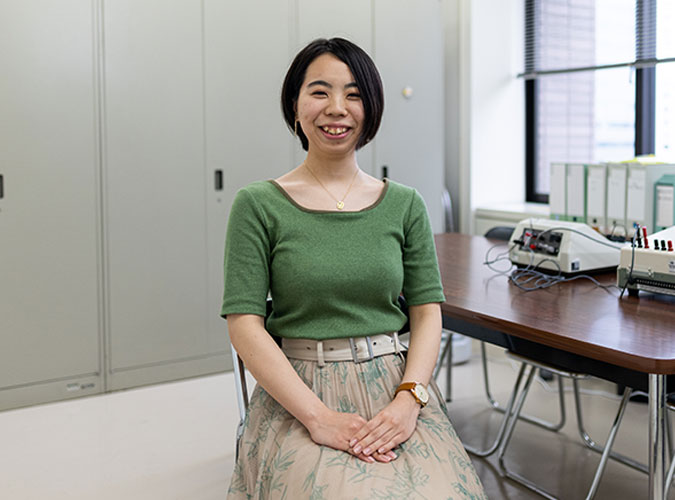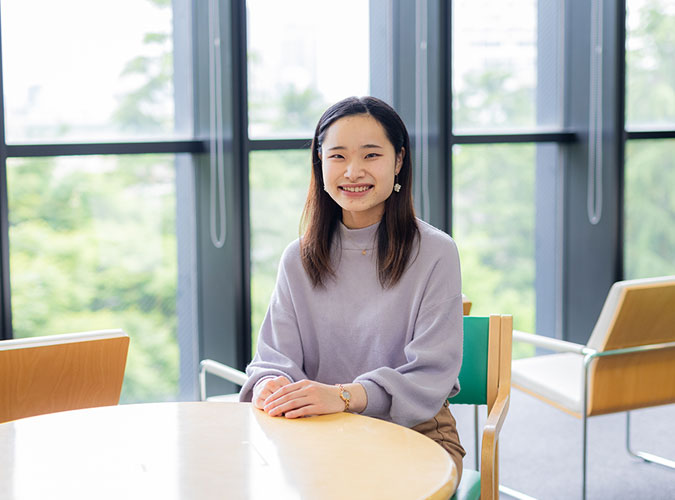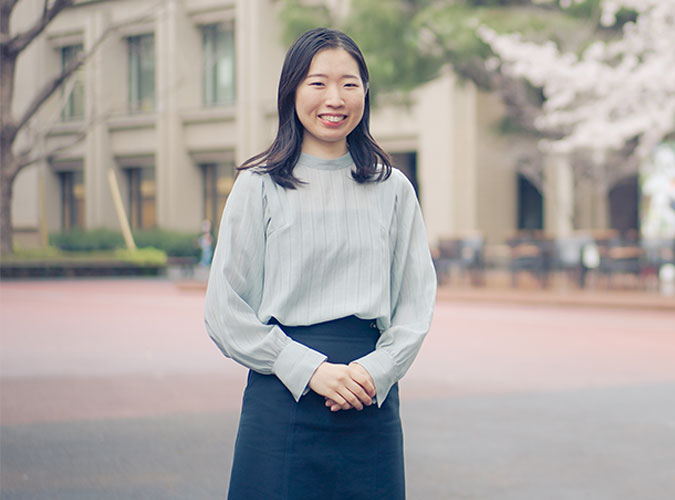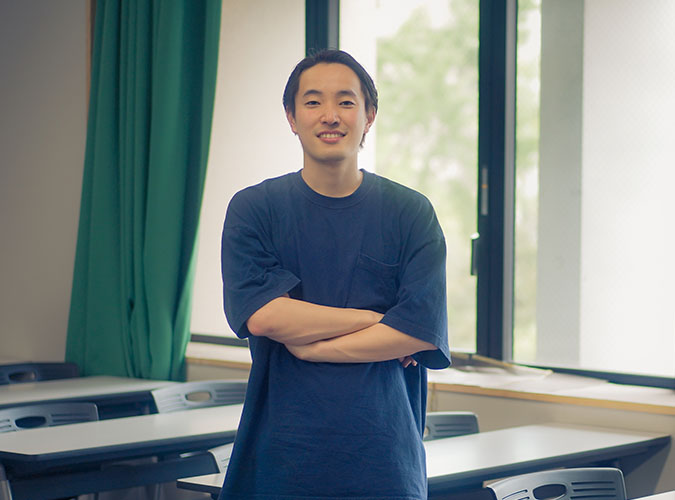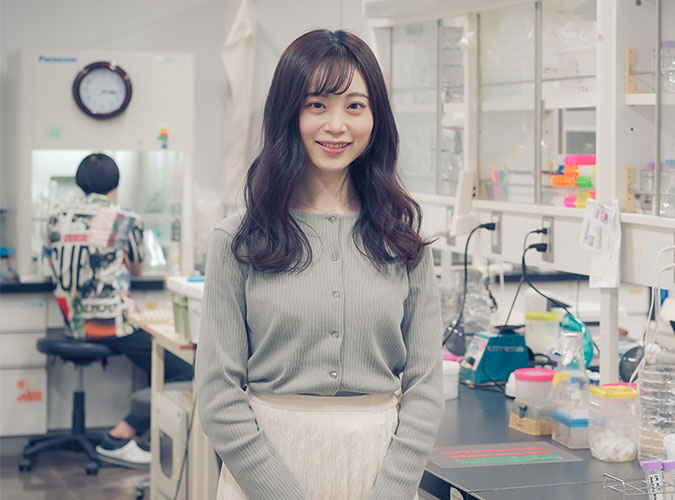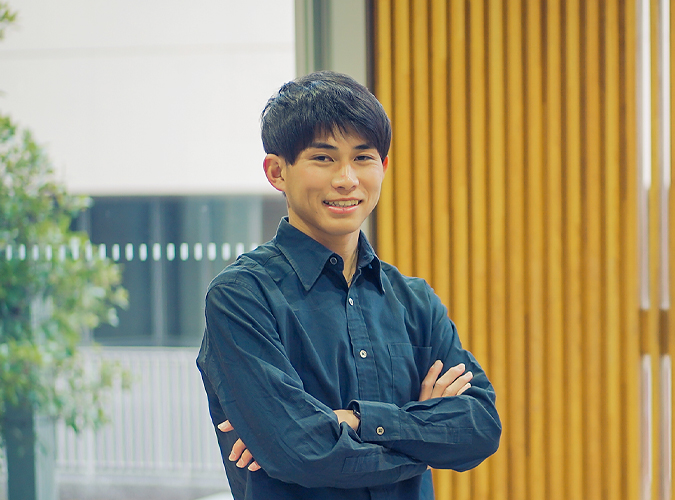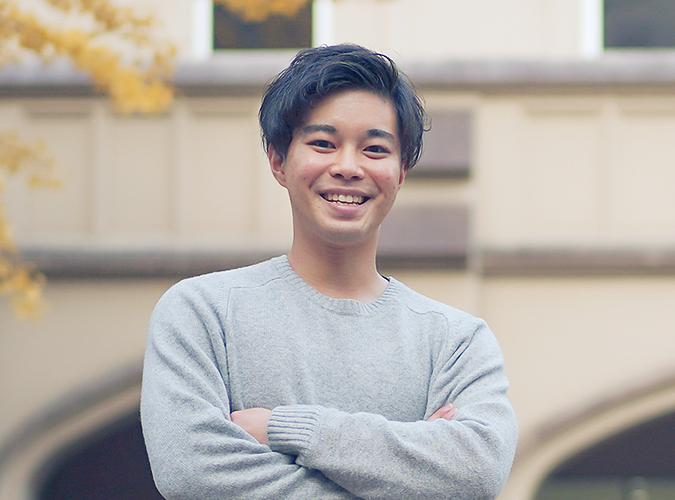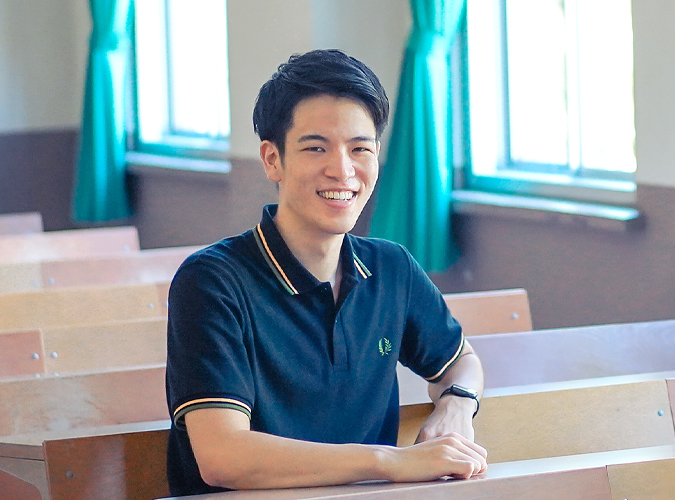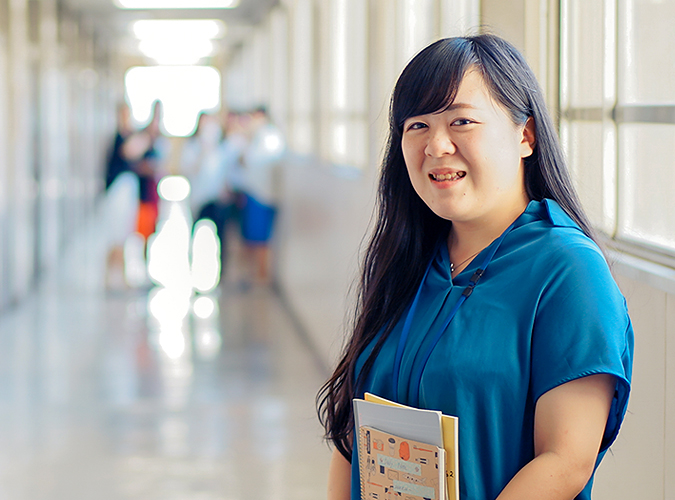
Drawing on his experience living and studying in Asia, he envisions a future in which he will contribute to the development of the international economy in a public capacity

Posted on 2025/02/25
No. 337
4th year School of Global Studies and Collaboration Faculty of Global Studies
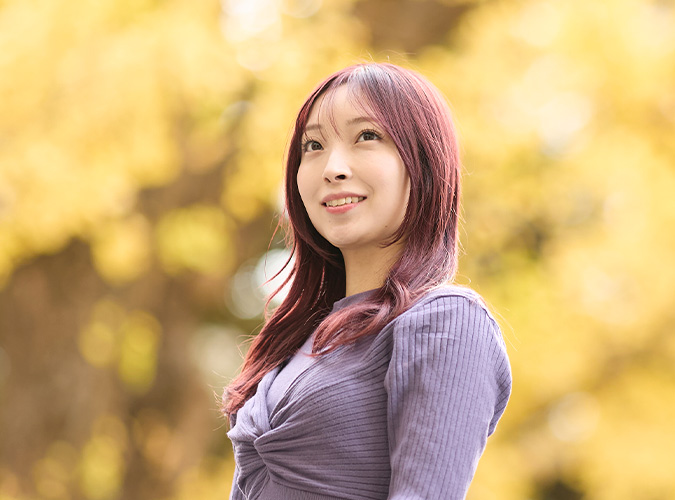
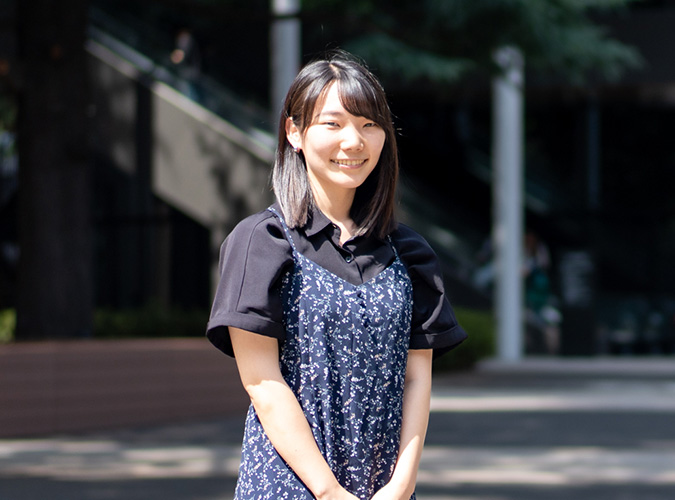
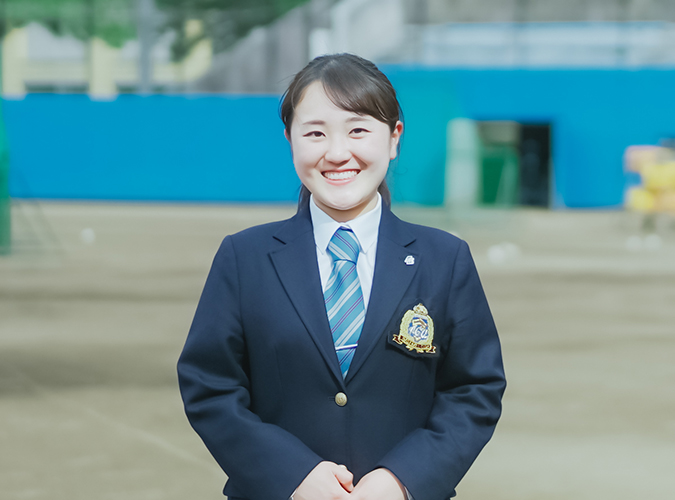
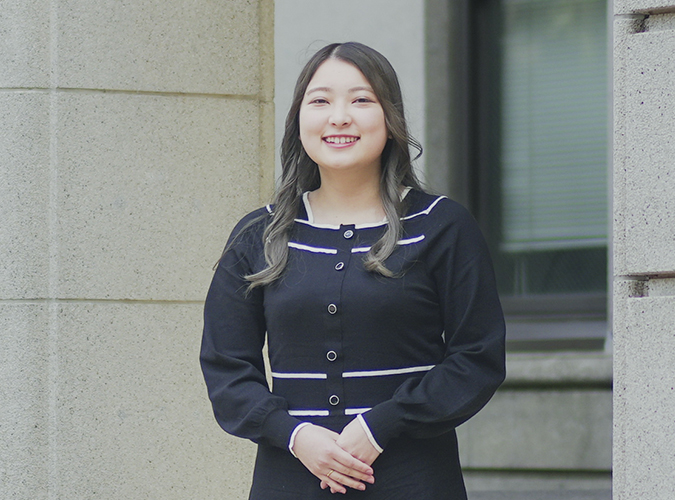
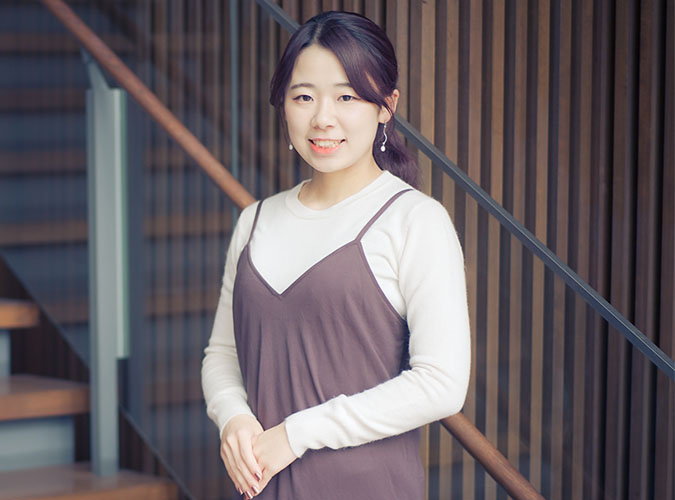
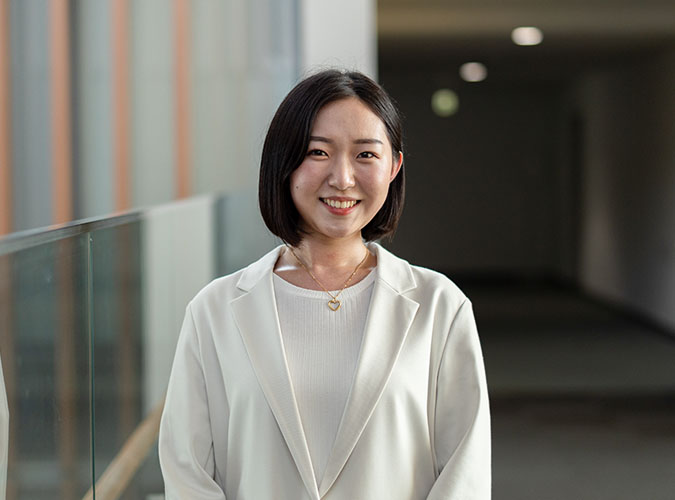
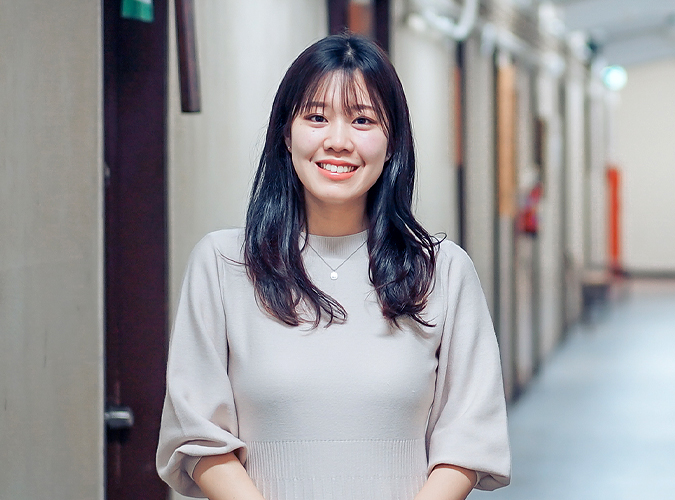
Mao Kikuchi
Graduated from Yamate Gakuin High School, Kanagawa Prefecture

OVERTURE

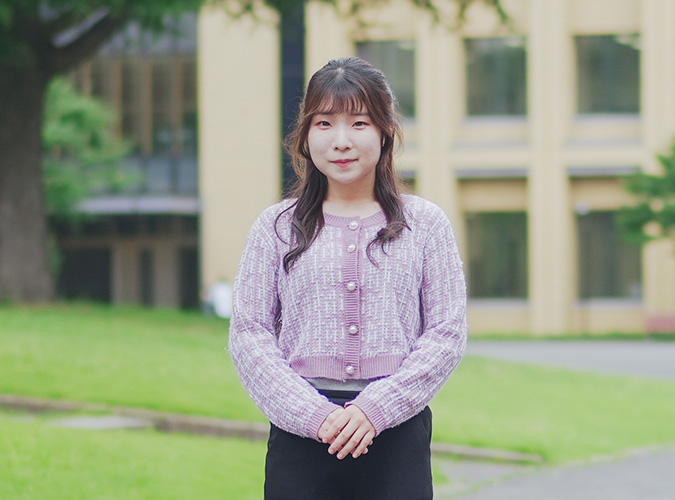
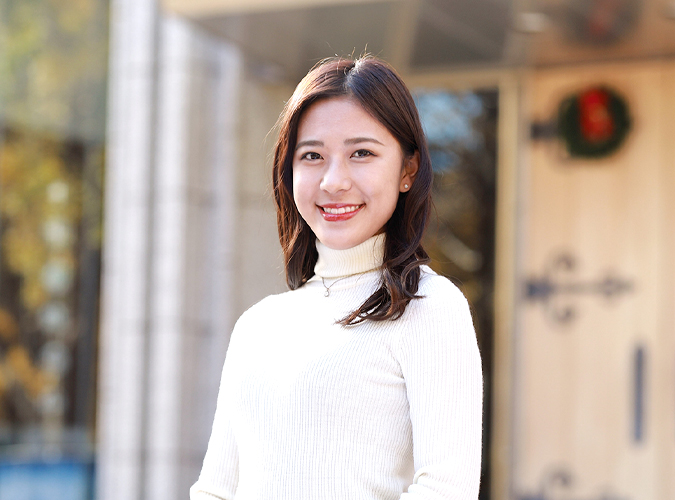
Mao Kikuchi's experience of spending her elementary and junior high school years in China was the driving force behind her studies at School of Global Studies and Collaboration. In her seminars, she acquired the ability to collect and select information from multiple perspectives, and during her study abroad in Thailand, she greatly improved her language skills and motivation. Additionally, as an analyzing staff member for the American football club, she learned the importance of accepting and respecting diversity while supporting the team's victories. After graduating, Kikuchi set her sights on a goal of playing a role in a public role connecting Japan, Asia, and the world, and developing her own abilities. We spoke to her about her journey.

My interest in Asia and my questions about the media that I developed in China were the starting point of my learning

The origin of my inclinations and actions is my experience of spending six years in Shanghai, China, from the fourth grade of elementary school to the third grade of junior high school. When my parents told me they were going to live in China, I honestly didn't want to go. This was because I had seen and heard critical reports about China in the media. However, when I actually lived there, many people treated me warmly and even praised Japanese culture. There were also many famous places where you could feel the history, and it was a wonderful experience beyond my imagination. On the other hand, I learned that there were few reports in the Chinese media that gave a good impression of Japan, and even as a child I felt that "it's sad that bad images are spread through reports without people knowing each other well." And I began to feel that "I want to change negative views to positive ones and become a bridge between countries."

I wanted to study the international community at university, so I chose Aoyama Gakuin University 's School of Global Studies and Collaboration. I was particularly attracted to the semester-long study abroad program in Asia that was part of the curriculum. I had always had an interest in Asia through my experience in China, and School of Global Studies and Collaboration emphasizes "experiential knowledge" such as learning and living in a different cultural society, and its curriculum, which aims to develop global talent who can respond to the challenges of global society, resonated with me.

After entering the university, I focused on studying English. In School of Global Studies and Collaboration, we offer 6 classes a week in the first year and 4 classes a week in the second year to help students acquire the English skills they need for presentations and report writing in preparation for studying abroad in the second semester of their second year. During my junior and senior high school years, I participated in programs to stay in New Zealand and Canada, and I was proud of my positive English conversation skills, but academic English was a different story, and I was motivated to improve my vocabulary. I felt that my writing skills had improved in particular, and I was able to learn the basic structure of writing a report in English. Without the efforts I made at this time, I don't think I would have been able to handle the report assignments I had to complete while studying abroad.

To judge things,
Learning that it is necessary to have the ability to collect information from multiple angles and make selective choices

School of Global Studies and Collaboration has professors who are active in a wide range of fields, so I feel that this is a faculty where I can encounter new learning opportunities more than I had imagined before enrolling. In "Special Lecture C (Ⅴ) / Human Security," I was able to hear from Professor Masanobu Horie, a former UN agency employee, about his experiences in the field of international cooperation, which was a very interesting class. During the period I was taking the course, the Noto Peninsula earthquake occurred, and I was reminded that security, such as protecting human rights during disasters, is an issue that is closely related to our daily lives.

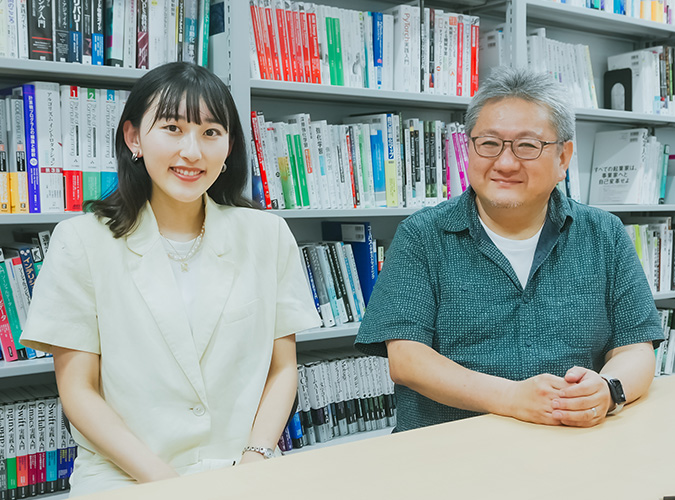
The person who left a particularly strong impression on me was Professor Naoki Fukuhara, whom I met in the "Basic Seminar I and II" in my first year. Professor Fukuhara, who changed from being an overseas correspondent for a newspaper to being a university professor, would talk about the conflicts he had covered in Somalia, Rwanda, the former Yugoslavia, and other places that he had covered in world history classes. Through his stories, the world that I had previously thought of as events in textbooks suddenly became more real, and I was drawn into his classes. Since I had felt the influence of the mass media in China, my interest in media and reporting had continued, and Professor Fukuhara's background overlapped with my interest, so I chose Professor Fukuhara's seminars from my third year without any hesitation.

In the seminar, we read books by American journalist David Halberstam and learned about the role of media in historical events. In addition, we had time to discuss English news articles from overseas media that Professor Fukuhara distributes every week, which helped us to deepen our understanding of current affairs. Recently, we compared how the Republican and Democratic media reported on the US presidential election and analyzed the results, and we also looked into how the Japanese House of Representatives election was reported overseas. There were many interesting topics to learn, and we never ran out of things to learn.

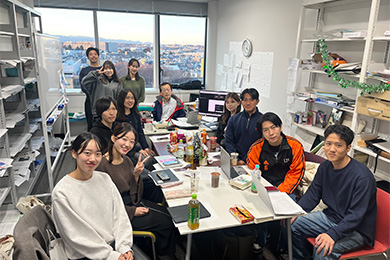
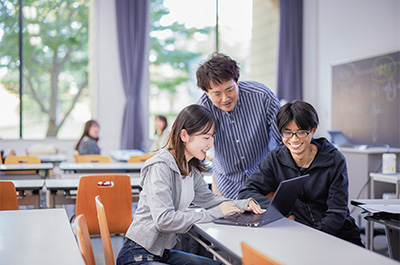
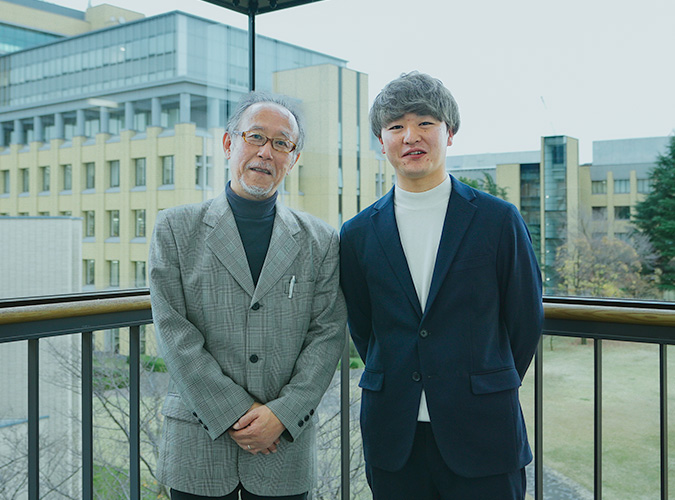
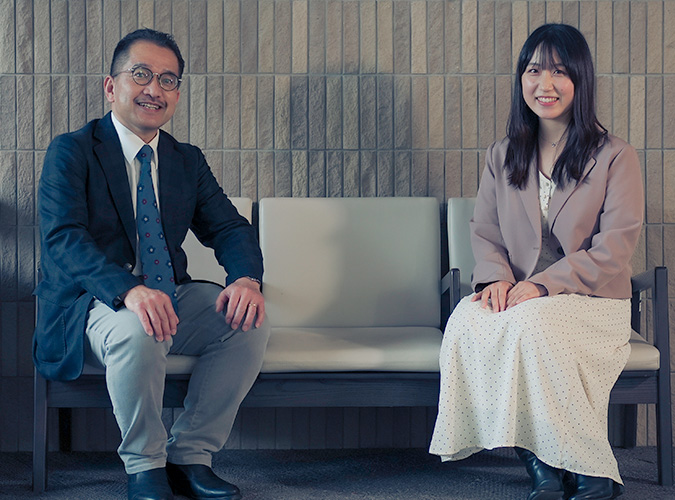
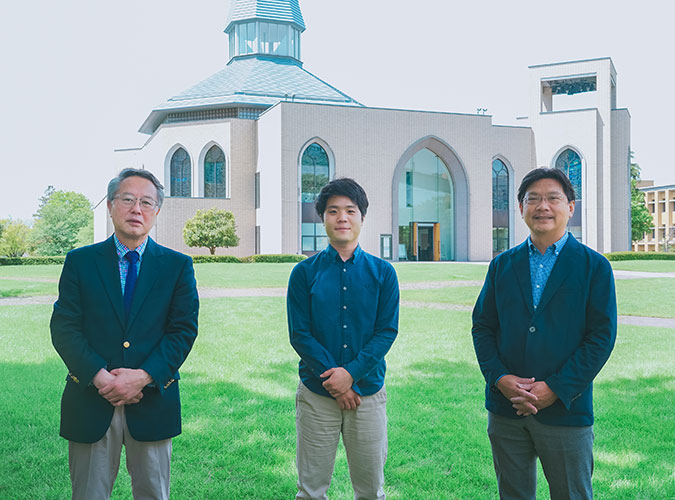
Professor Naoki Fukuhara (back row, center) and his fourth-year seminar students (Mr. Kikuchi is to the left of the professor)

I think the most important skill I acquired in this seminar was how to interpret the news. I learned that one issue is reported from various angles by the media, and I learned that when making a judgment, it is necessary to gather information from multiple angles and be able to choose for yourself. I also had many opportunities to give presentations to members who are interested in international affairs. Thanks to this, I have gotten into the habit of not being vague about things I don't understand, but researching thoroughly until I am satisfied and then explaining them.

My attitude changed to "If I'm interested, I'll try it"
My study abroad experience greatly improved my ability to take action

When I went to study abroad, which I had been waiting for, in late 2022, it was a time when the Corona disaster, which had severely damaged the global tourism industry, was finally over. For my study abroad destination, I chose Chulalongkorn University, which is said to be the most difficult school in Thailand, located in the capital city of Bangkok, because of my interest in seeing for myself the actual situation in Thailand, a major tourism country, and my desire to deepen my studies in a high-level environment.

When I studied abroad at Chulalongkorn University, I was overwhelmed by the high level of English proficiency of Thai people and how hard they studied outside of class. The level of the classes was very high, and it was assumed that I had a complete understanding of the content of the reading assignments, so even completing the minimum amount of preparation was a struggle. I was confident that I had been studying English actively up until then, but there were many times when I was painfully aware of the difference in level.
There were more reports and presentations than I had expected, and I also worked on group presentations with Thai students. I felt pressured to "not hold everyone back," but my group members helped me rehearse many times and kindly gave me specific advice such as "Try to speak at a faster pace here!" so that we could create a presentation that showed unity as a group. It was hard to keep up, but now I have fond memories of studying with my Thai friends at the university library, which is open 24 hours a day during exam periods.

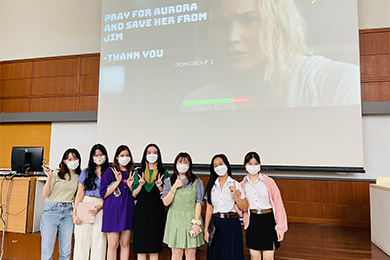
With fellow Thai students who gave a group presentation in a gender-related class (Kikuchi on the far left)

One of the most memorable classes I took while studying abroad was the group project we worked on in "Media Histories." The theme of this class was to consider the evolution of media, so together with British and Chinese students, we interviewed families to find out how 9/11 was reported in Japan, the UK, and China at the time, and then wrote a presentation and report. The opportunity to consider media from a different perspective and angle than I had in my classes at Aogaku was a very fresh and interesting experience.
I often struggled to express my opinions in English, but I will never forget how the two team members encouraged and supported me by saying, "Let's do our best together." I also took on a report assignment with a volume of over 4,000 words in English (equivalent to about 8,000 characters in Japanese), and I feel that my language skills have definitely improved.

In the limited time I had, I wanted to experience many things besides studying, so I followed my interests and participated in the university's running club, traveled around Thailand, and stayed active. I was the only foreigner in the running club, but the local students took me to delicious restaurants, and I had fun experiences that are unique to studying abroad.
During the trip, I also visited the suburbs, where I saw that there were areas where foreign tourists had not returned and transportation had stopped due to the effects of the COVID-19 pandemic. I heard from a local taxi driver that some of his friends had lost their jobs and even taken their own lives. I was able to experience the serious reality of the COVID-19 pandemic, which I would not have been able to experience while on campus, and I strongly felt that "there are things that you can only see by taking a step outside." I think the biggest growth I saw through studying abroad was that my ability to take action has increased, as I have adopted a more proactive attitude of "trying new things if I'm interested in them."

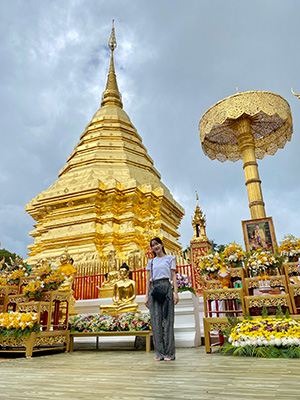
At the golden temple "Wat Phra That Doi Suthep" in the ancient capital of Chiang Mai in the north, which I visited on a trip

I worked hard to help my team win
The experience of our analyzing staff is a valuable asset

Along with my studies, serving as an analyzing staff member (AS) for the American Football Club was a major pillar of my university life. The role of an AS is to analyze opponents and support the team from a tactical perspective. In high school, I was a member of the tennis club, but due to the COVID-19 pandemic, I was unable to participate in satisfying activities and had regrets about not being able to participate in club activities. When I became a university student, I was looking into club activities in the athletics club with the feeling that "this time I want to devote myself to something seriously," and I was moved by the sight of the AS seniors trying their best to contribute to the team's victory, so I decided to join. I went to the grounds of Sagamihara campus five days a week.

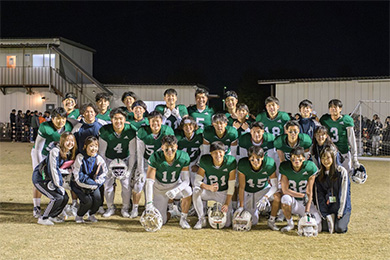
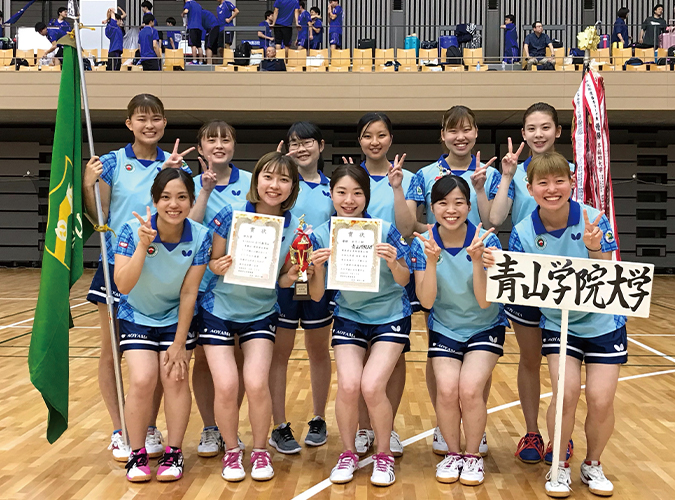
Group photo after the Kanto Student American Football Division 1 League match (Kikuchi is on the far right in the center row)

I started from scratch, not even knowing the rules of American football, so with the support of my seniors and coaches, I watched a lot of game footage and made an effort to gain knowledge. Since there is no right answer in analysis, it is not easy to provide information to players and coaches with confidence. That is why the joy I felt when my strategy was spot on or when a player said "thank you" was exceptional.

In my fourth year, I was in charge of managing the entire club as the club manager, and it was a year in which I felt a great sense of responsibility. The American football club has about 100 members, and in addition to players, there are also staff members who support the team in various roles. Although differences of opinion arose and there were times when we clashed, in the end, everyone shared the same desire to "aim for victory." I learned that the important thing is to understand the other person's position, listen carefully to their opinions, and respect each other. I believe that this experience will be a valuable asset that will definitely be useful to me as a member of society.

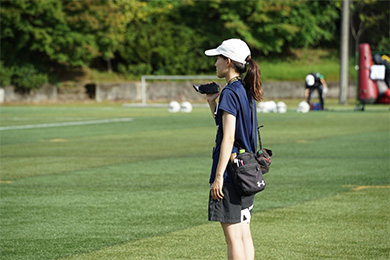
The analyzing staff also film each practice session and share the footage with the players and coaches.

Finding an aptitude for a job supporting people in a public capacity rather than pursuing profit

After graduation, I plan to work for a government agency that helps Japanese companies expand overseas and attracts foreign companies to Japan.
When I first entered university, I didn't have a clear goal for the future, but my experience studying abroad in Thailand gave me the opportunity to clearly visualize my goal of "conveying the charms of Asia to Japan and becoming a bridge to spread the greatness of Japan to the world." Through my interactions with students from various countries with diverse personalities during my study abroad, I was reminded that it is a mistake to generalize countries and their people with a fixed image. This realization is linked to my experience living in China.

Wanting to work in a position where he could promote the appeal of each and build win-win relationships that benefit both sides, he initially considered working for a company with a strong network in Asia. However, through his experience with the American football club, he began to feel that "rather than pursuing profits, a job that supports people in a public capacity would suit me better." In the end, he decided to work at the government agency, as he was deeply sympathetic to the idea of pursuing "knowledge" and making it a shared asset, based on the mission of analyzing cutting-edge information from overseas and delivering it to the Japanese business community.

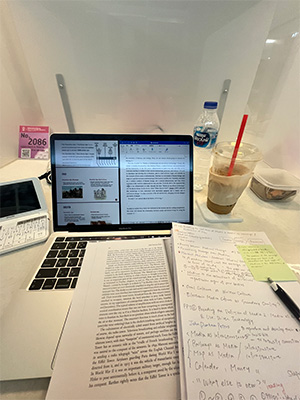
During my time studying abroad in Thailand, my favorite place to study was the university library, which also had a cafe and snack vending machines.

I will continue to learn, never forgetting my humble attitude, and aim to become a valuable member of the organization. In order to broaden my horizons, I would also like to gain experience working in a domestic regional office or an overseas office. I will continue to work hard to achieve my goal, utilizing the English skills and ability to interpret social phenomena I have acquired at university as my strengths, while keeping an eye on the ever-changing international situation.

*The link to the course's "Course Content Details" is for the year it is published (2024).

School of Global Studies and Collaboration

The School of Global Studies and Collaboration Studies and Collaboration (GSC) aims to develop talented people with the specialized knowledge and ability to live together with people from around the world, find value together, and jointly create a better society. With a view to a rapidly changing world, we offer a wide range of learning that exposes students to the diversity of "global society" and deepens their understanding of different cultures. With "coexistence" with people from around the world as our keyword, we cultivate a "coexistence mind" that allows us to work together to solve global issues, focusing on four specialized fields: collaboration, economics and business, media/spatial information, and sociology.
Department of Global Studies and Collaboration society that transcends national borders in its education and research. With a multifaceted perspective, empathy for different cultures, and communication skills backed by language proficiency, we explore solutions to various global issues and ways to create a sustainable society.

VIEW DETAILS

Back Number

SEARCH