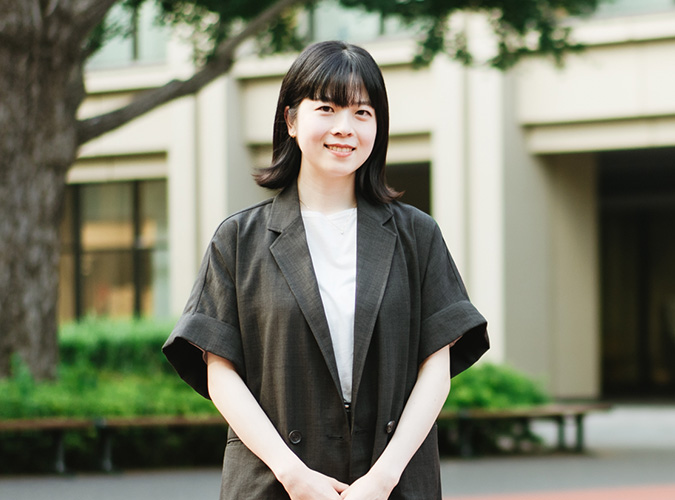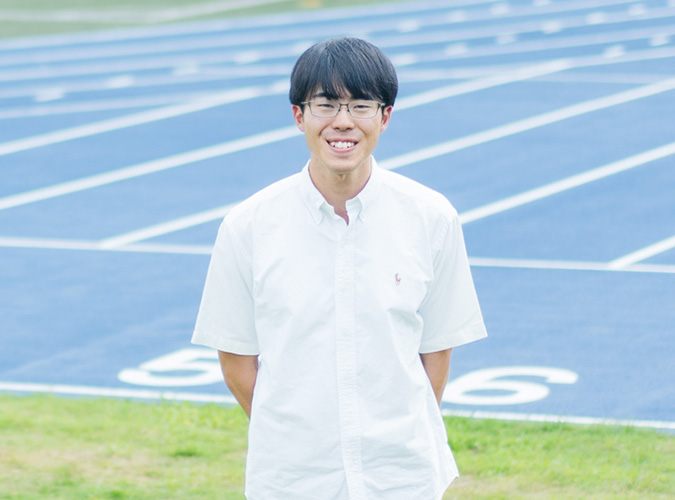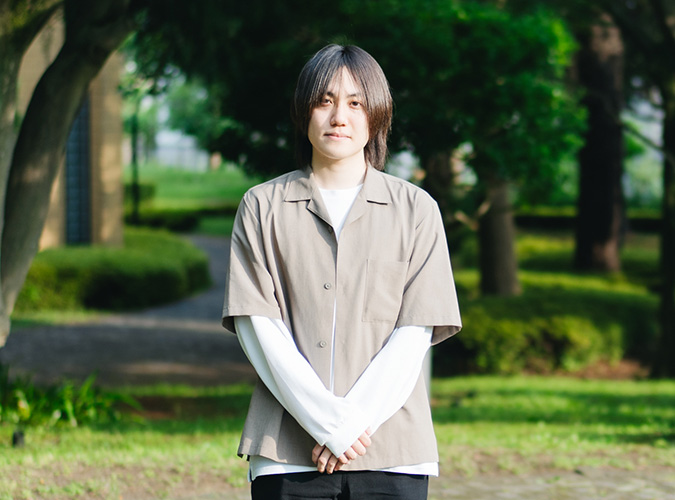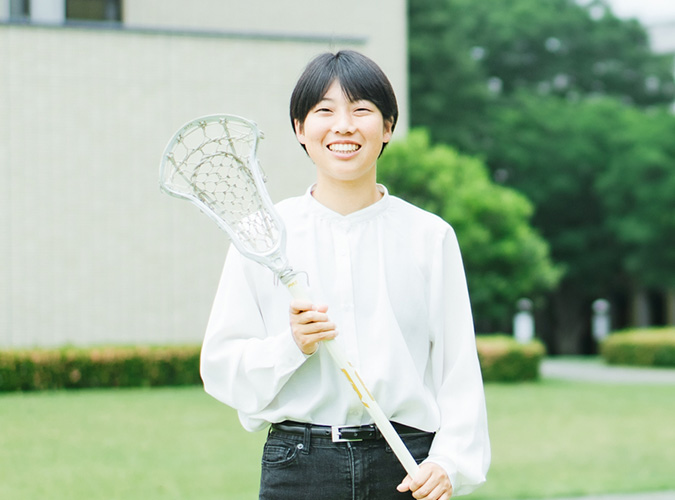
The hackathon was an unexpected success thanks to teamwork. The experience will be applied to satellite development.

OVERTURE
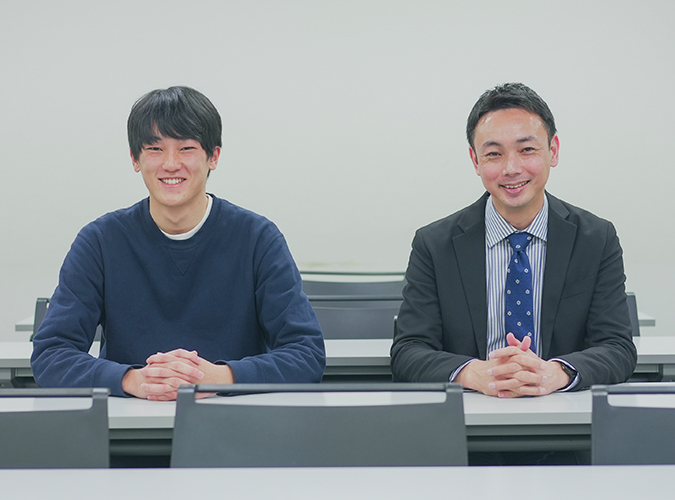
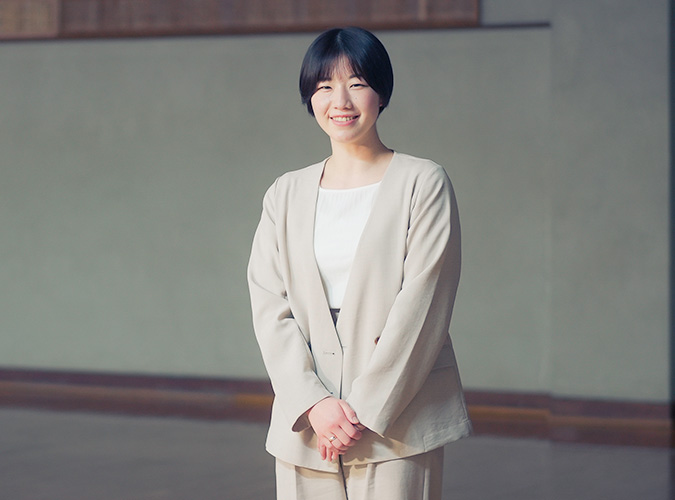
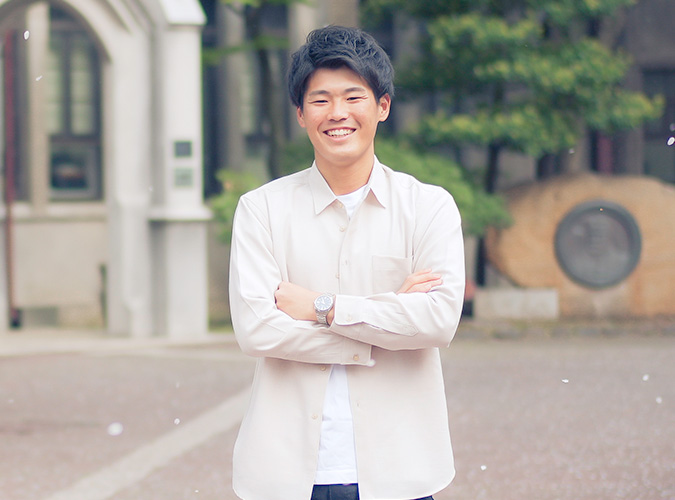
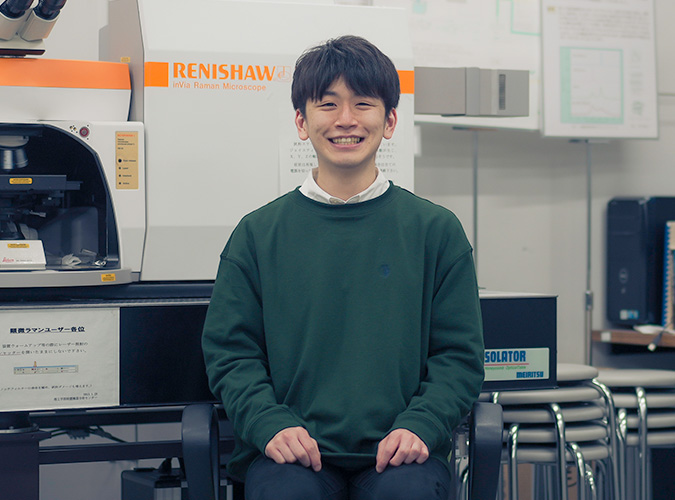
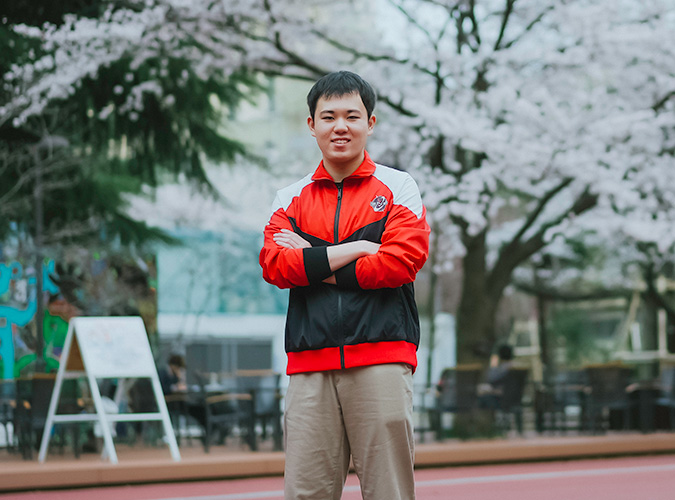
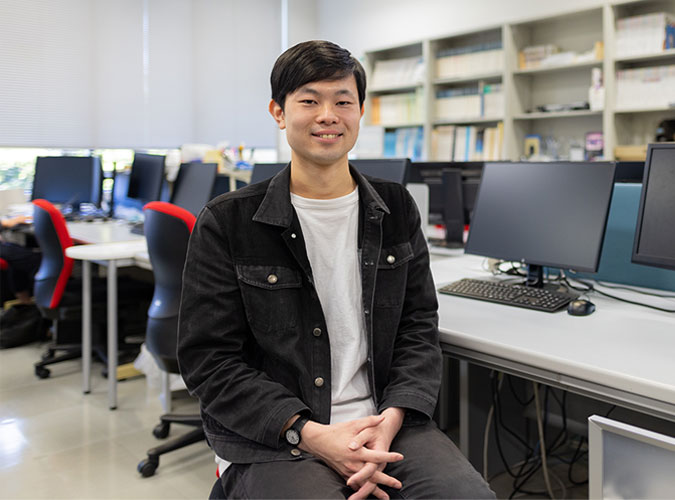
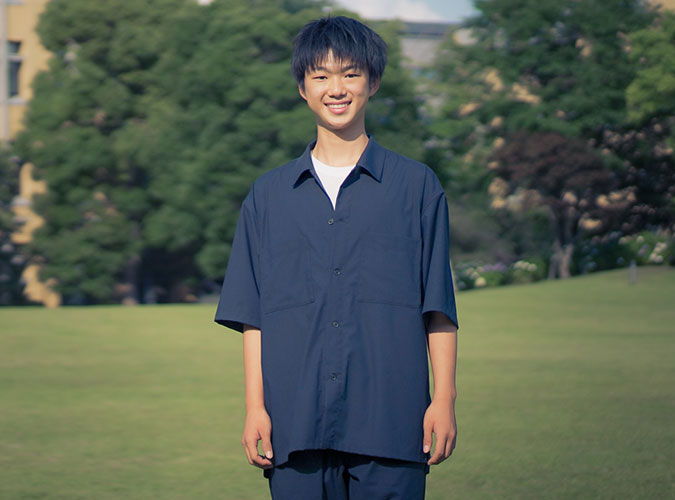
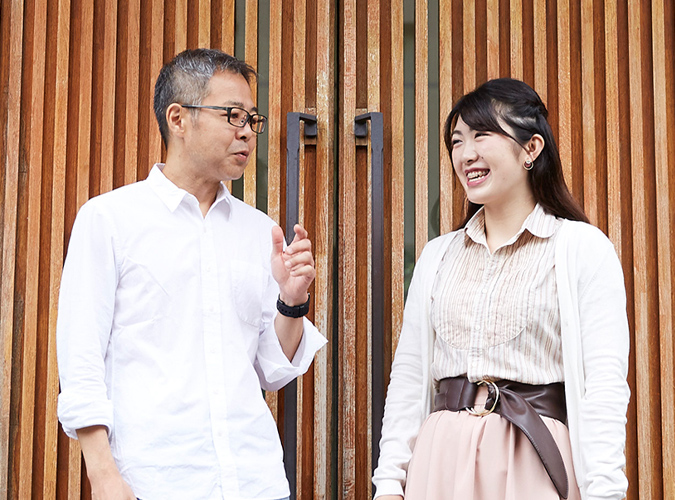
At the Sensing Solution Ideathon Hackathon 2023 presentation held on December 17, 2023, the Painters team, a team of fourth-year students from the Sakamoto Takanori Laboratory in the Department College of Science and Engineering and Mathematics, Faculty of Science and Engineering*, won the Excellence Award and the Accessibility Award. The winning work was a system that allows paralyzed patients with diseases such as amyotrophic lateral sclerosis (ALS) to communicate with caregivers by blinking. Two team members talked about the struggles they faced to win the award and the ongoing development of a satellite.
*From the 2021 academic year, the Department of Physics and Mathematics will be reorganized into the Department of Physical Sciences and Department of Mathematical Sciences.
System development using AI technology to solve social issues, surprising with unexpected award
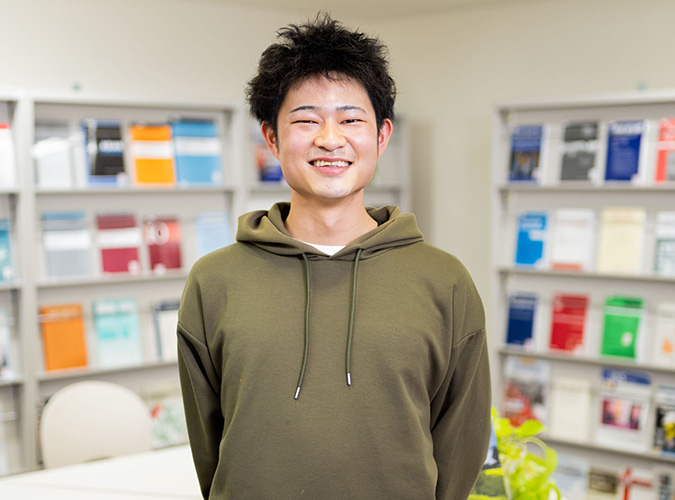
Hiroshi: The "Sensing Solution Ideathon Hackathon 2023" is a contest for students from universities and vocational schools nationwide. In this contest, participants compete for ideas to solve social issues using the latest technologies such as IoT devices and AI. We participated in the Hackathon category. The condition was to use a small computer called "Spresense", an IoT device, so we focused on supporting patients with intractable diseases from the theme of solving social issues and created a system that performs image recognition using Spresense's AI function. We submitted a work called "Blink-based communication system using Spresense's image recognition function (commonly known as AI's system)" and received the Excellence Award and the Best Accessibility Award.
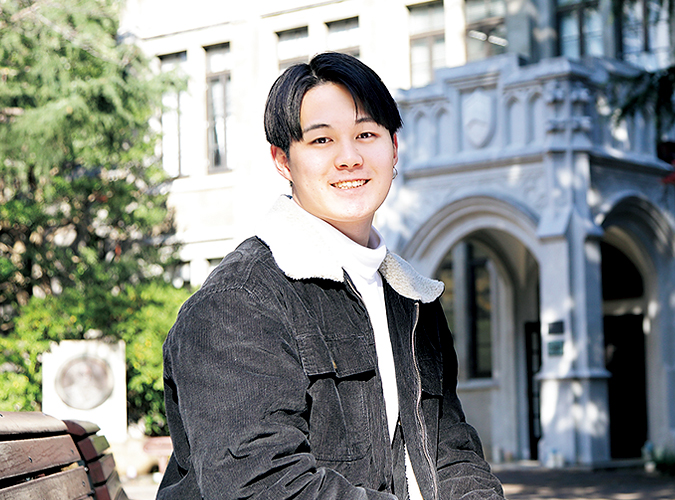
On the day of the event, we gave an online presentation, and as I listened to the other teams' presentations with admiration, thinking, "They all had amazing, high-level ideas," I never expected to receive an award, so I was truly surprised when my name was called at the award ceremony.
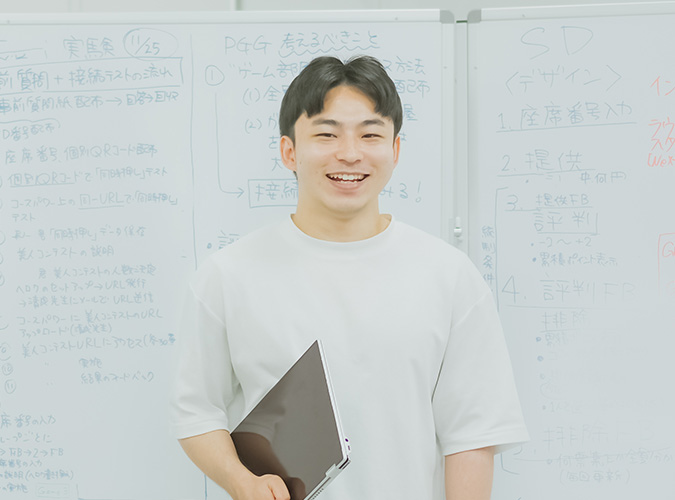
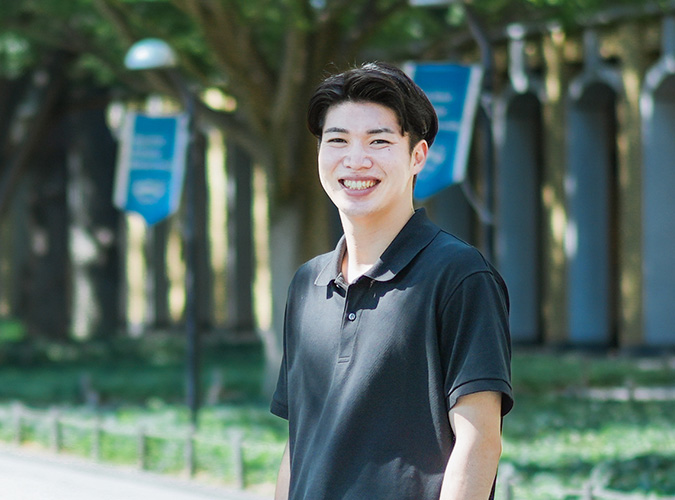
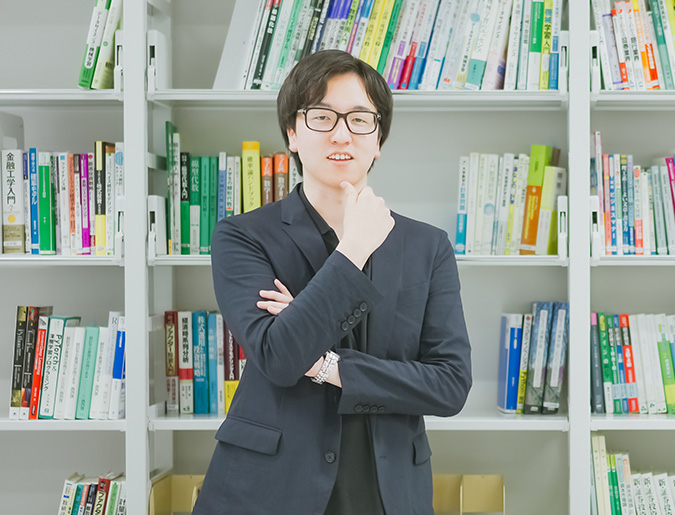
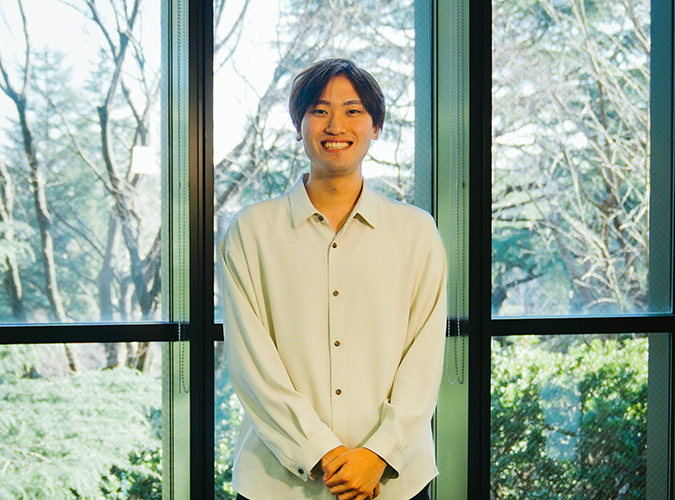
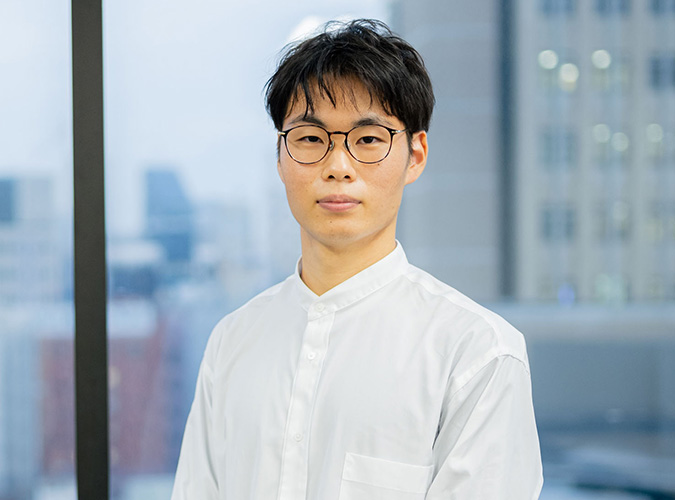
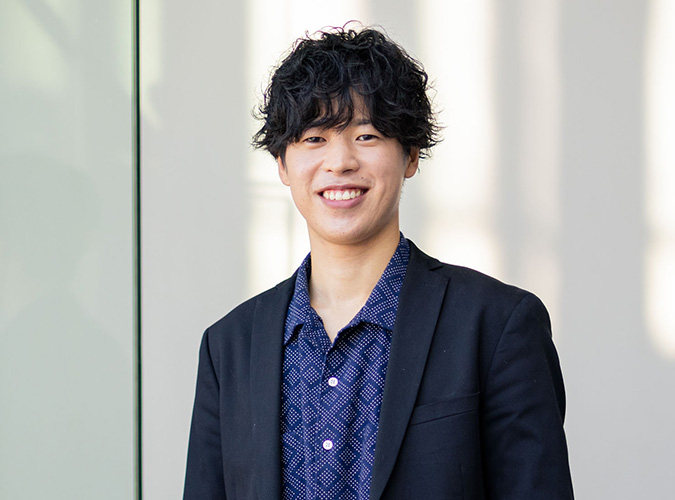
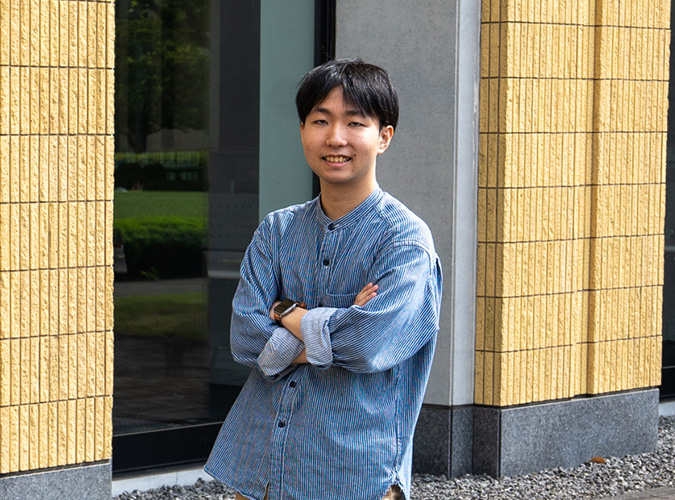
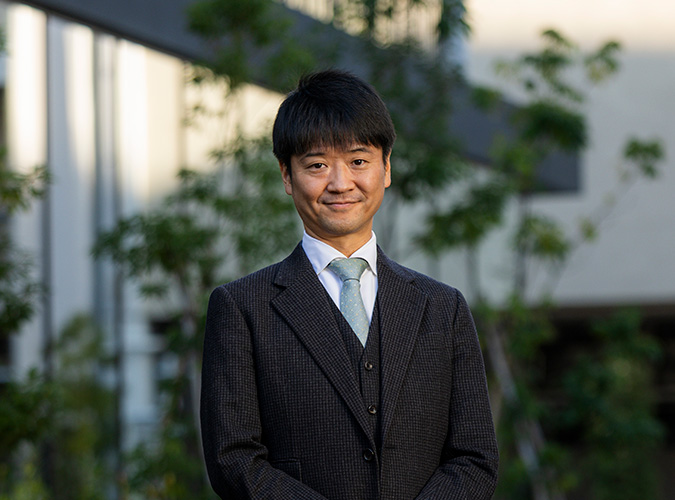
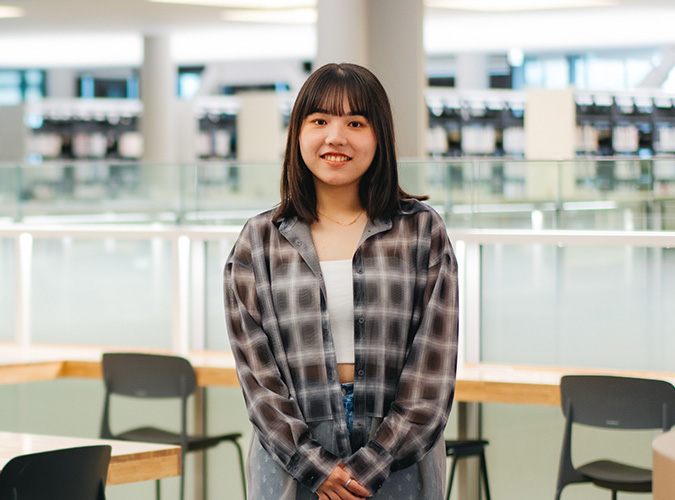
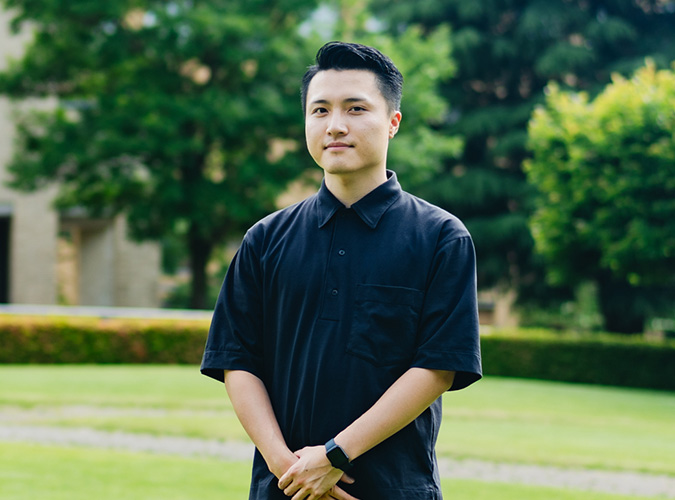
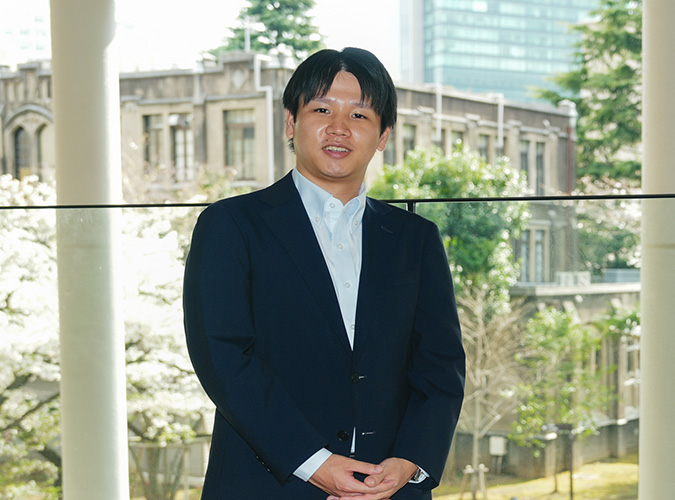
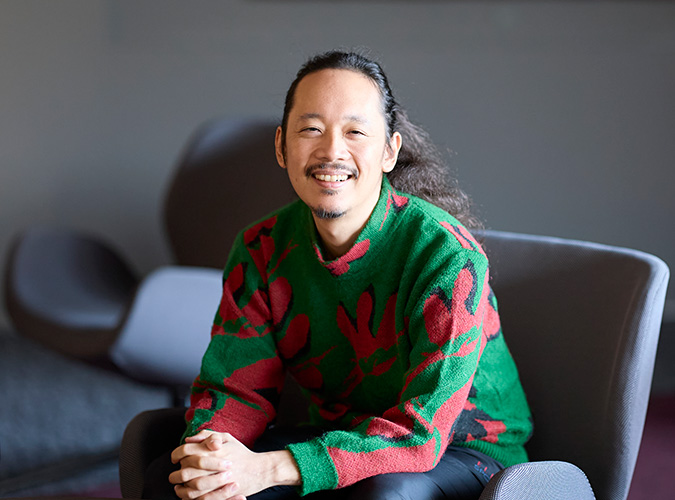
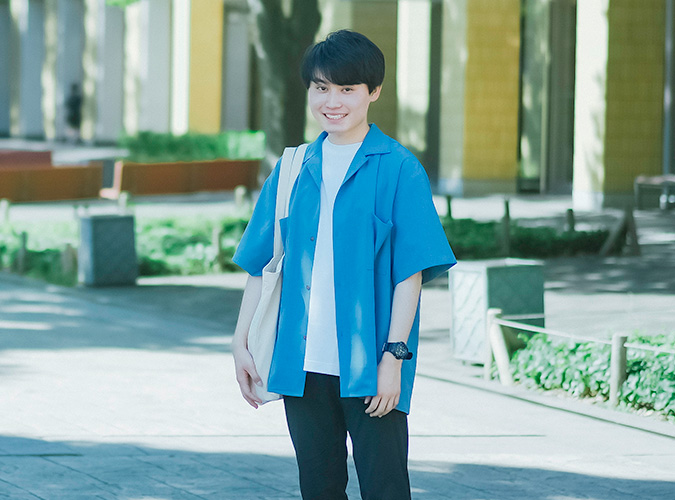
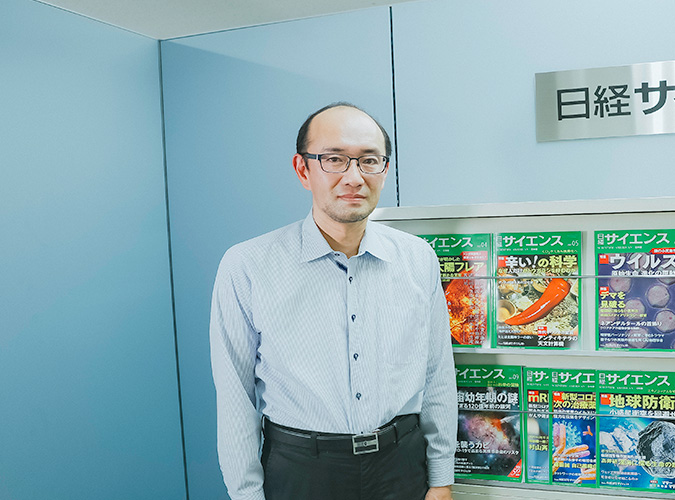
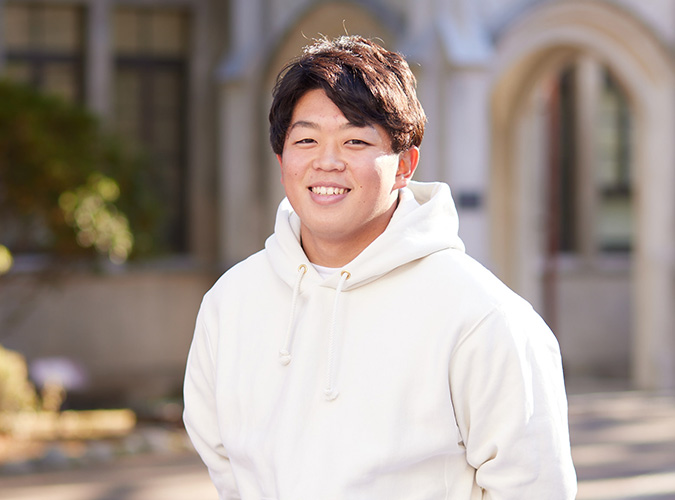
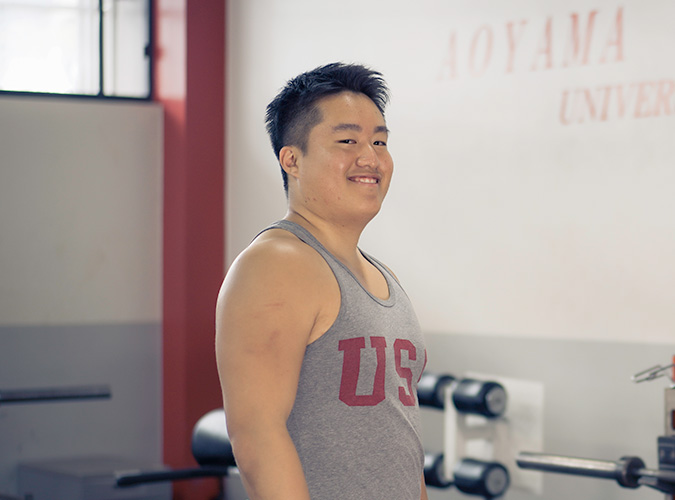
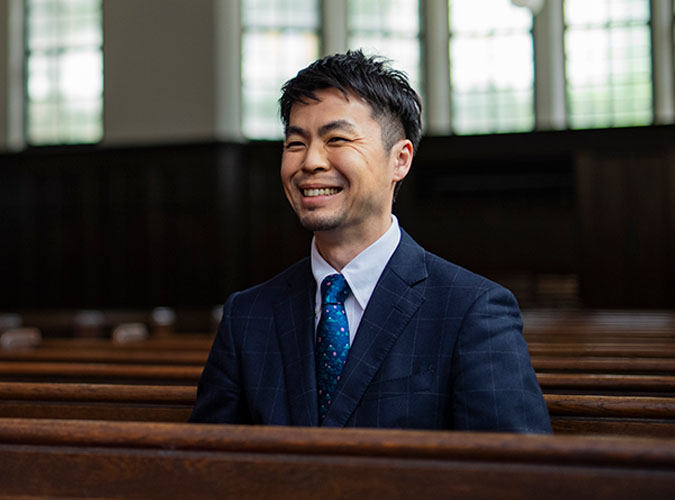
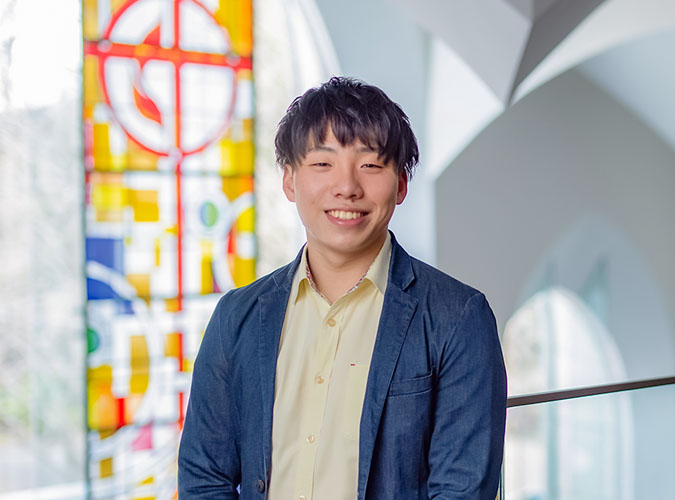
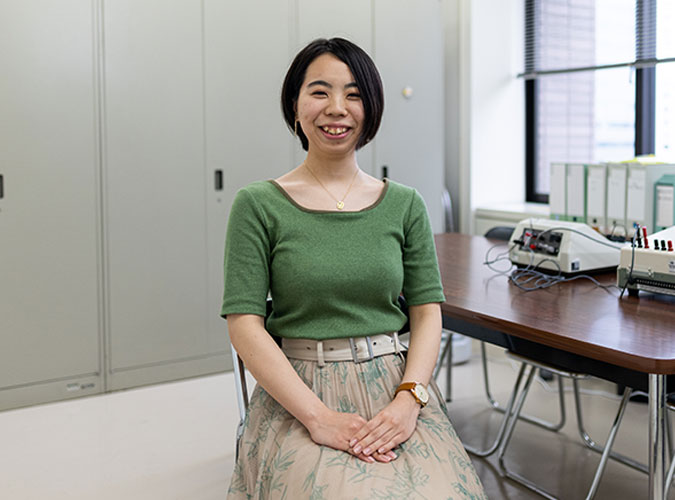
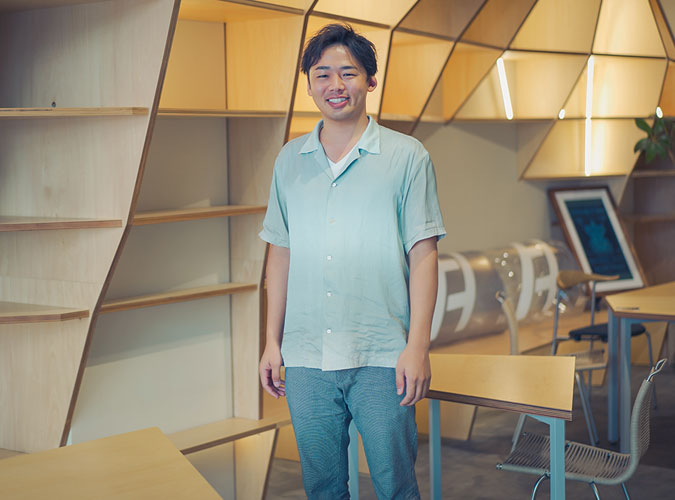
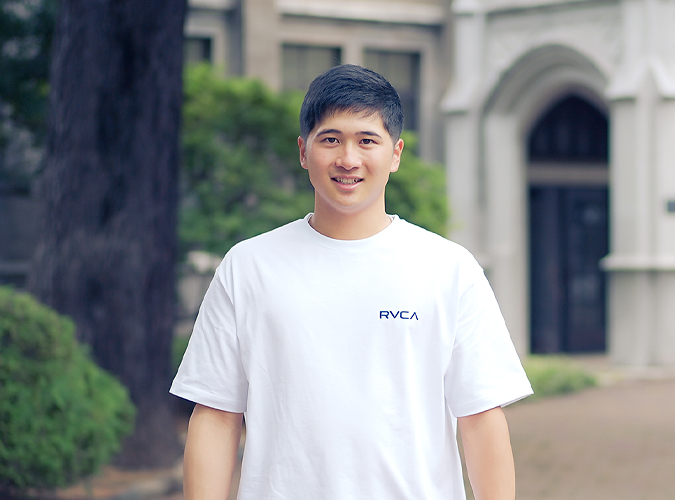
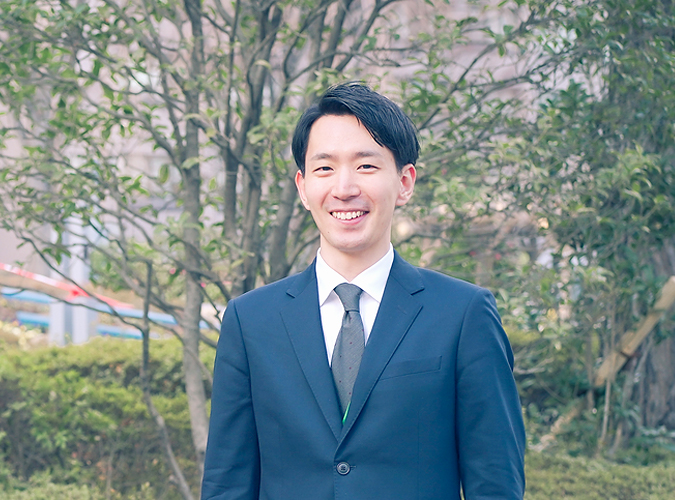
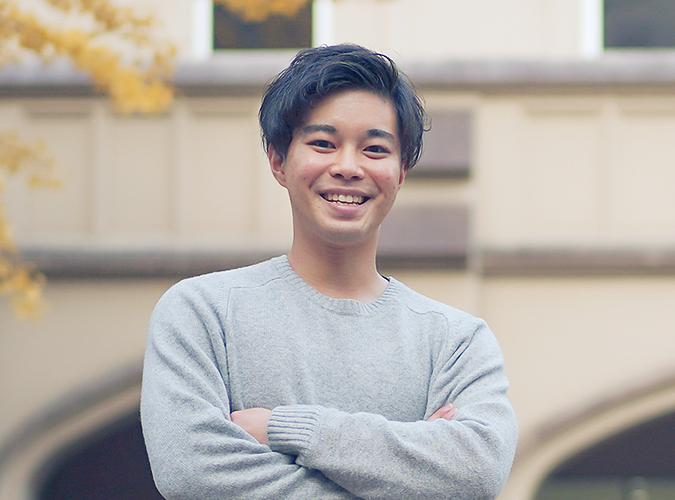
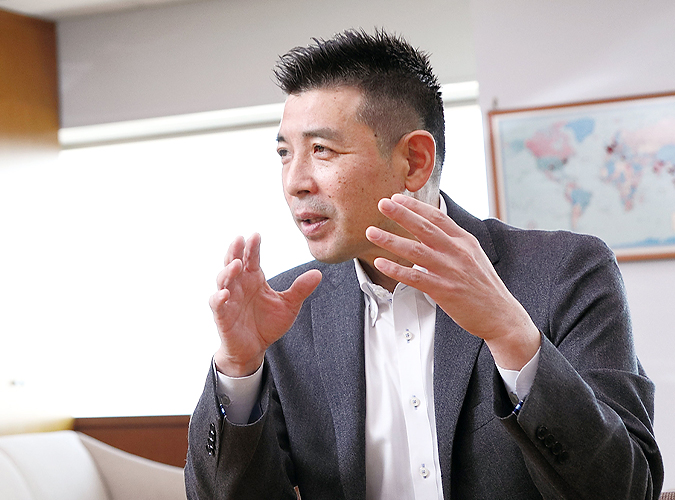
Hiroshi Tomomasa
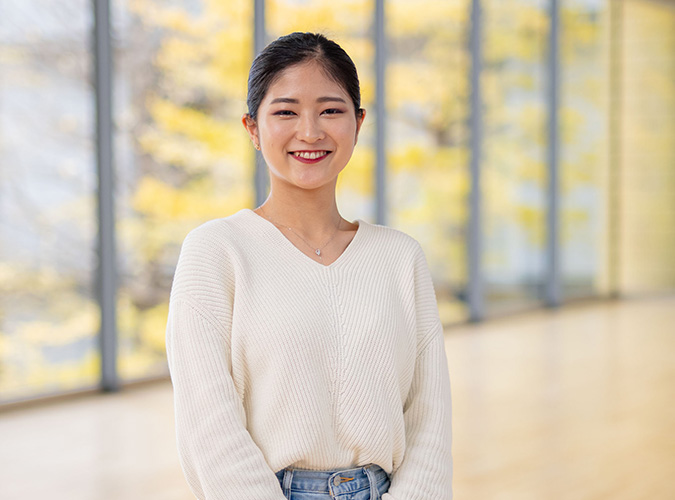
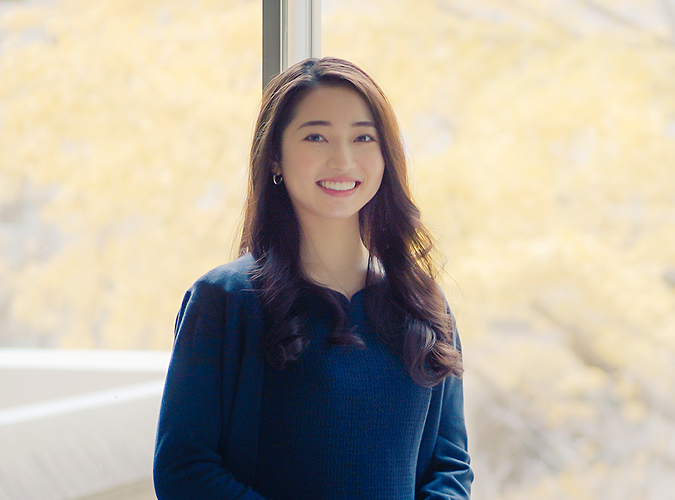
Takagi: As Hiroshi said, I couldn't believe it at first either, thinking it must have been some kind of mistake. The three of us in our team participated online from the lab, but it finally started to sink in after the award ceremony, and I was totally excited.
The AI's system I created allows communication between ALS (amyotrophic lateral sclerosis) patients, whose muscles are wasting away and who find it difficult to move or speak, and their caregivers. When deciding on the concept for the work, I interviewed my mother, who is a care worker, to see if there were any problems she wanted to solve, and she gave me some hints.
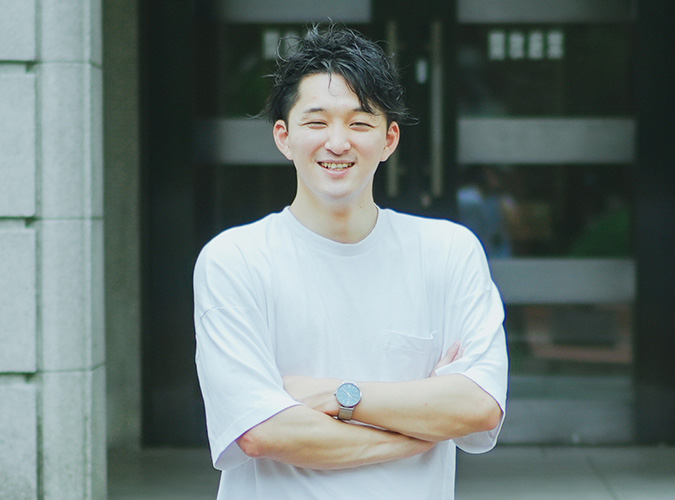
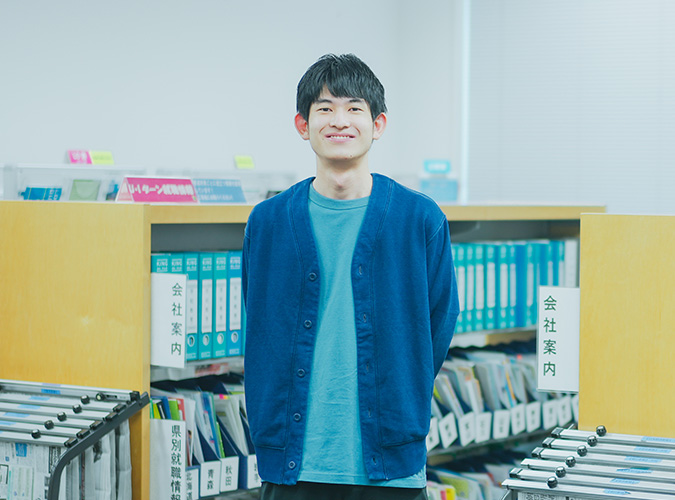
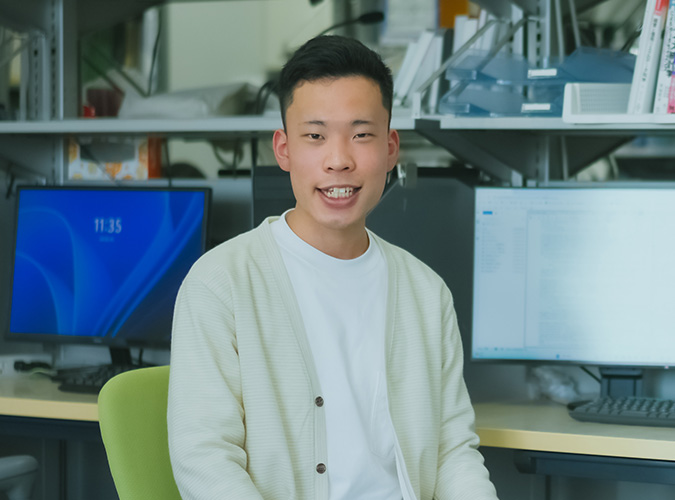
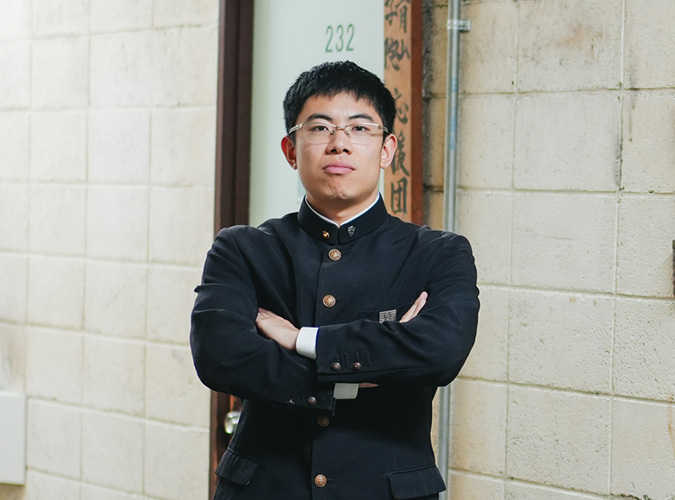
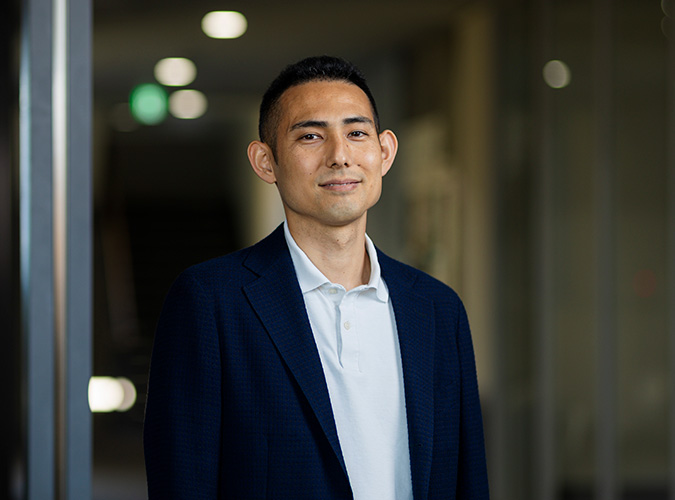
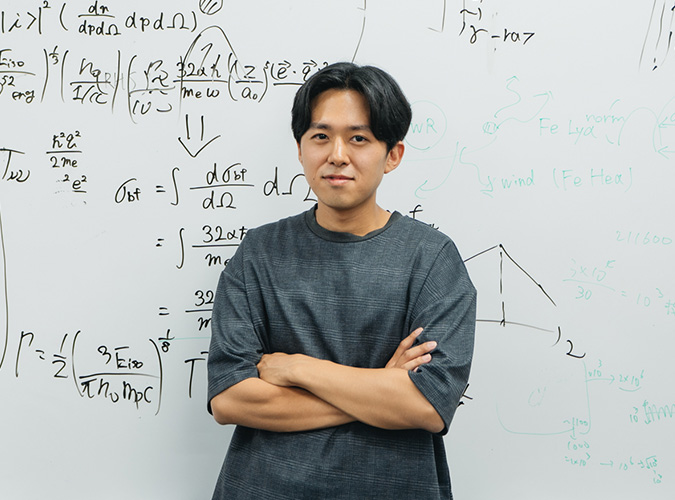
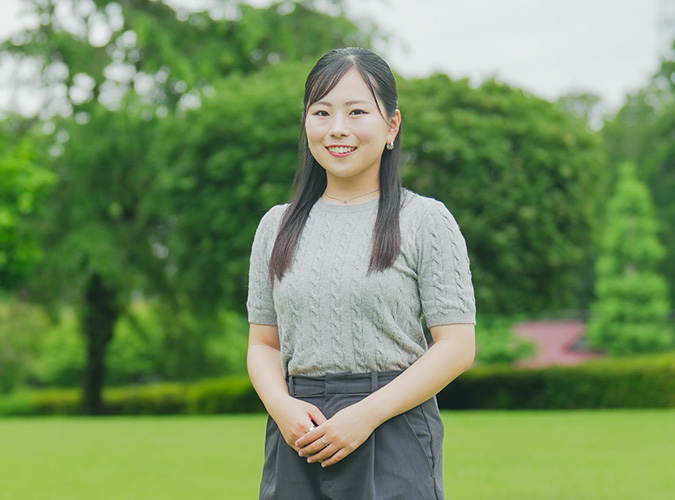
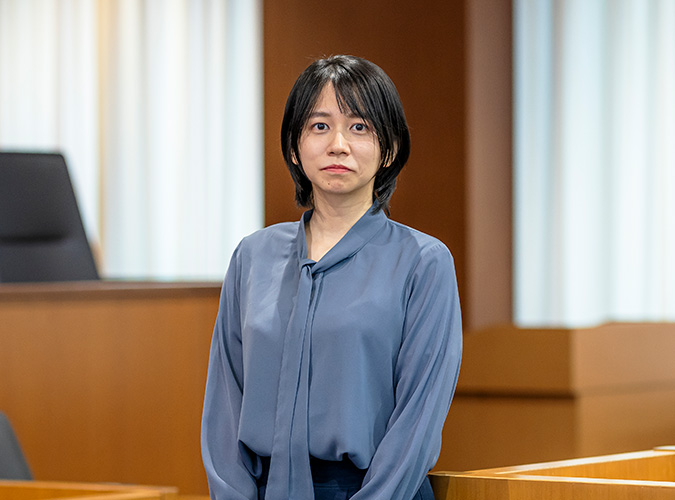
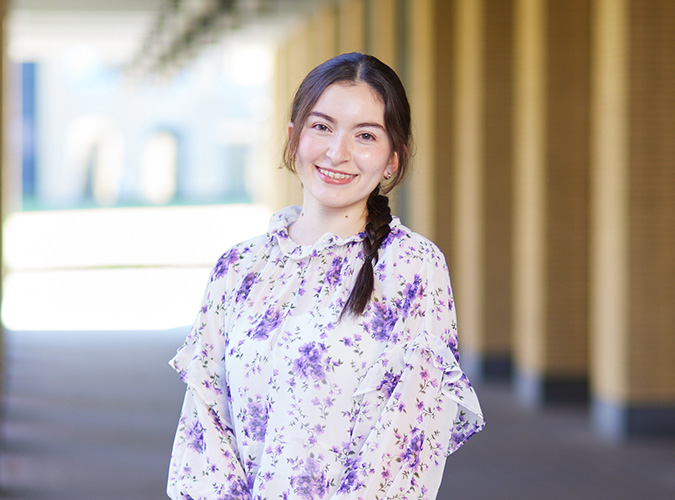
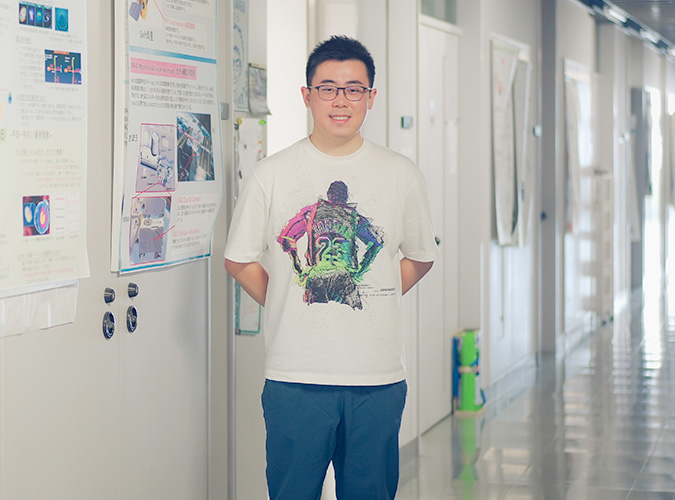
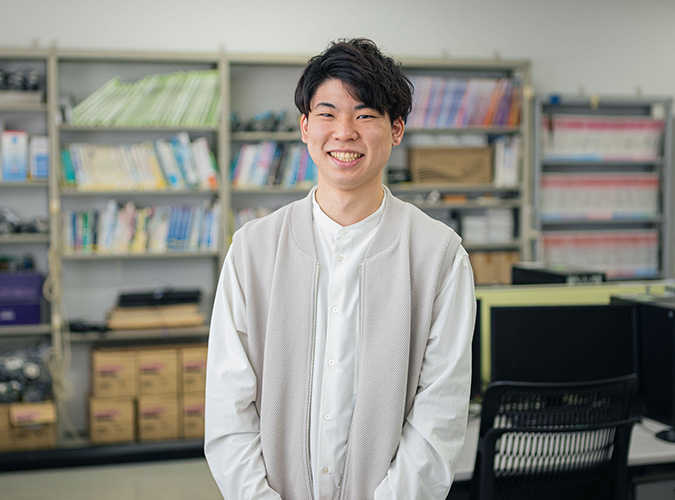
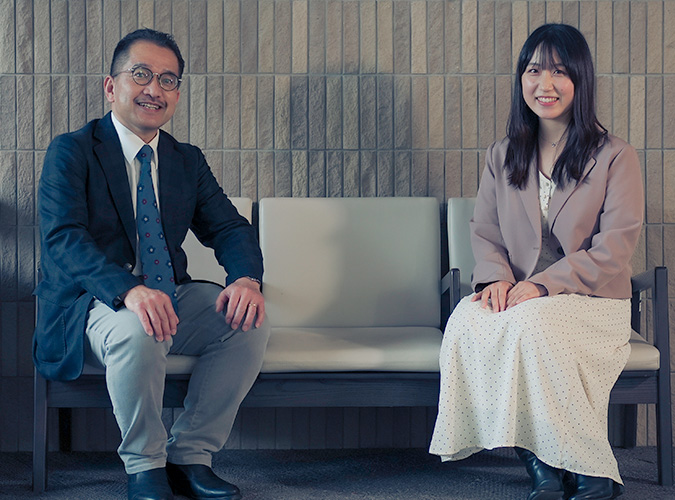
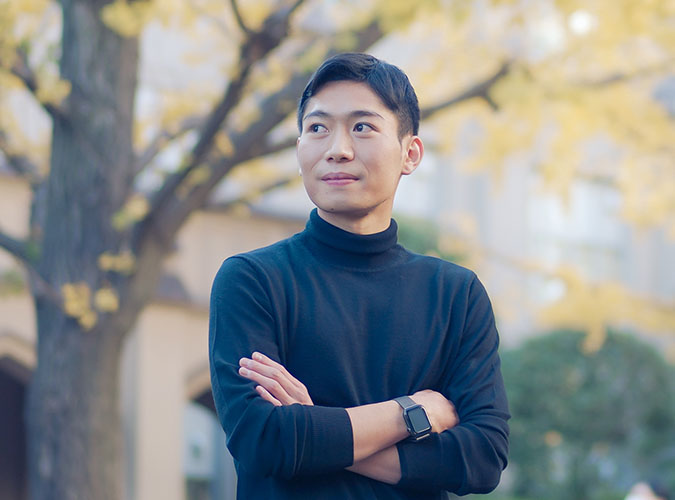
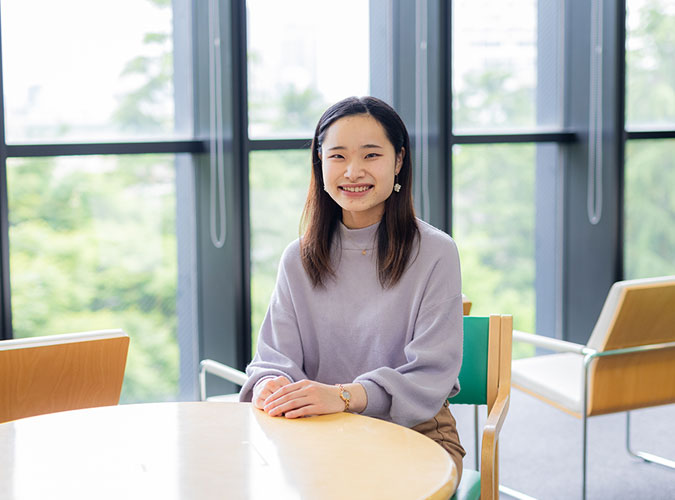
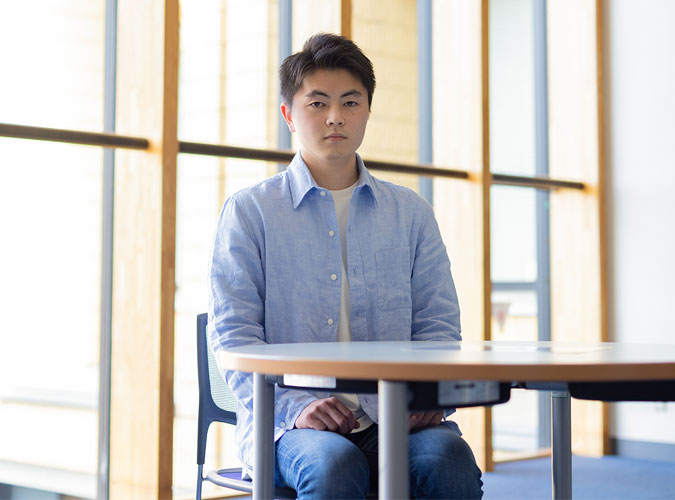
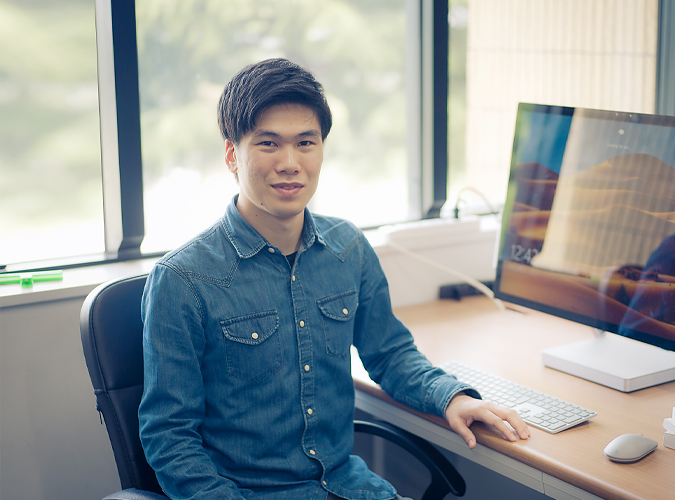
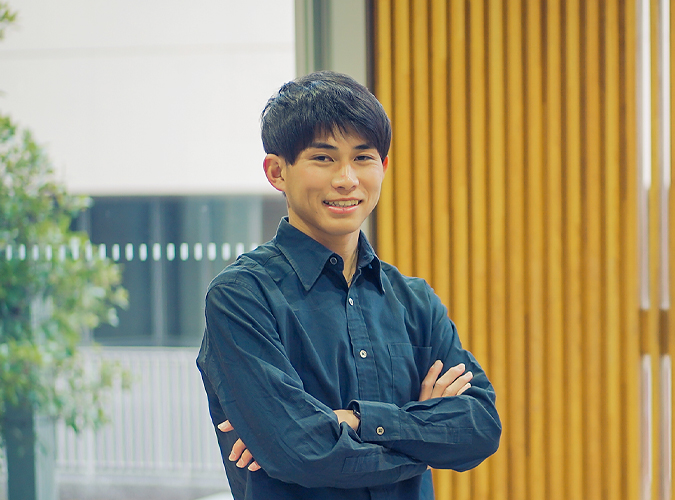
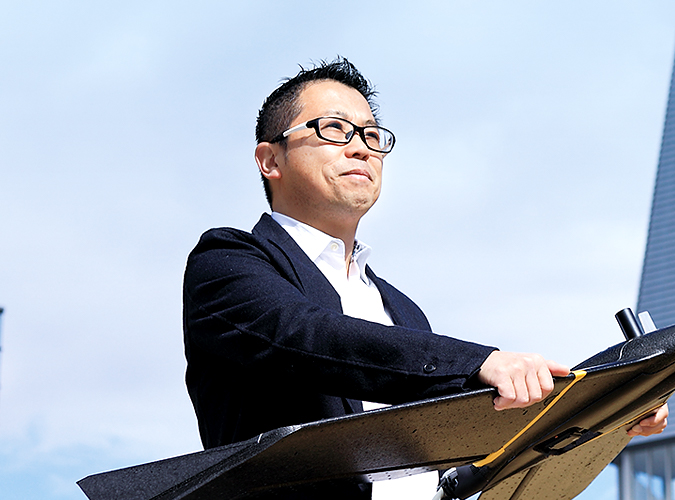
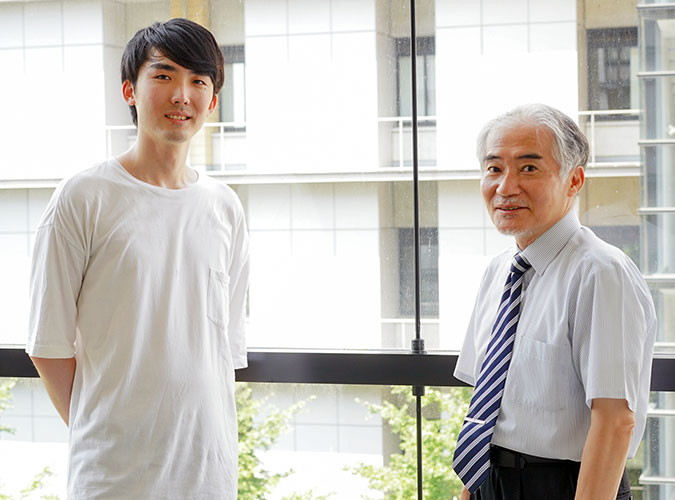
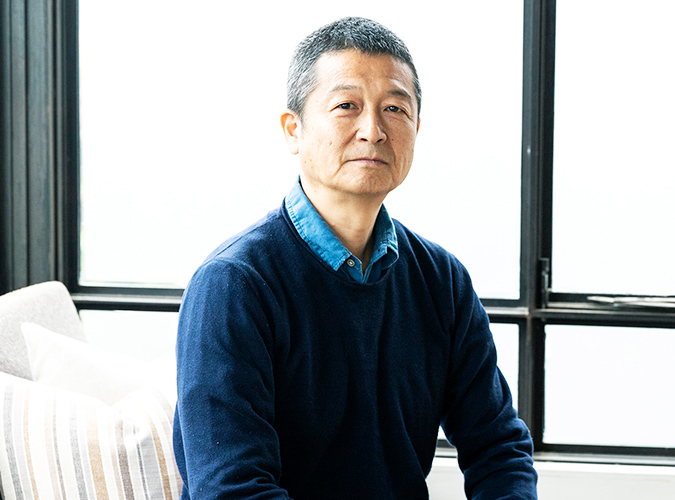
Mr. Hidehiro Takagi
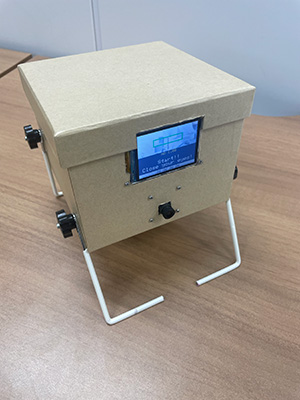
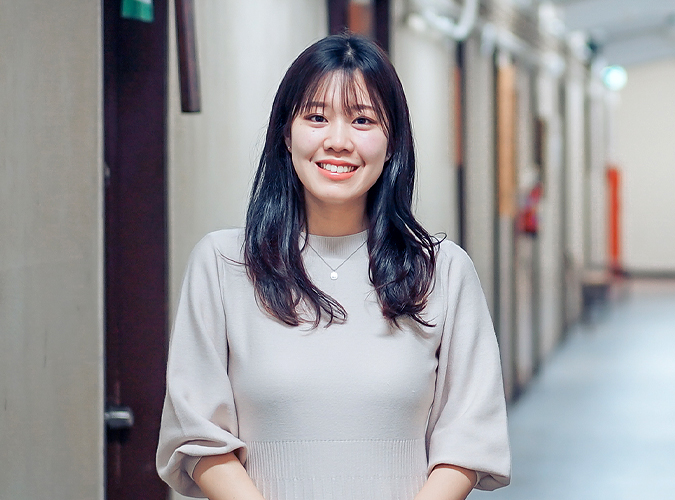
Koji: We have prepared six commands, such as "nurse call" and "diaper change," and the command is switched by closing/opening the left and right eyes. The camera that reads the blinks, the screen that displays the commands, and the communication device are all housed in a single box, and the whole thing is controlled by Spresense, which was a task in the hackathon. To distinguish the type of blink, we conducted machine learning using more than 10,000 images of blinks.
We are currently using Spresense to control the microsatellite "ARICA-2" that is currently under development in our laboratory, but when we decided to participate in the Hackathon, we knew nothing about Spresense and started studying the basics from scratch. The schedule was tight and we barely had time to complete the project, but the overall evaluation of the contest said that it was a work that "made good use of Spresense's functions."
Takagi: As a result of this development and winning this award, I was also able to receive the 2023 Student Award, and the award ceremony where I stood alongside people who will represent Japan in sports was an unforgettable experience of my life.
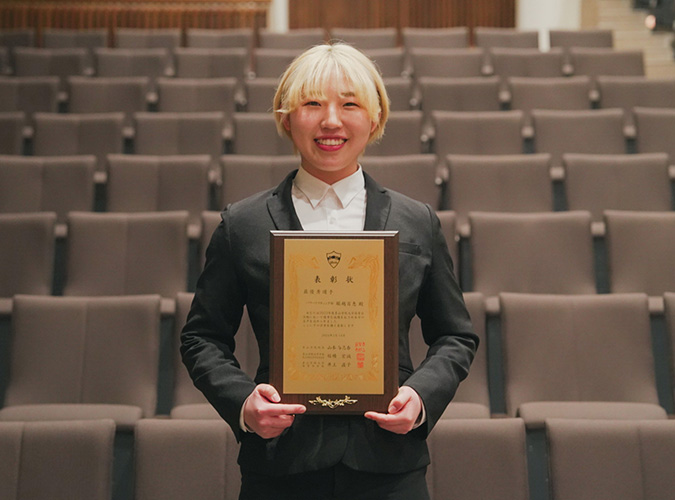
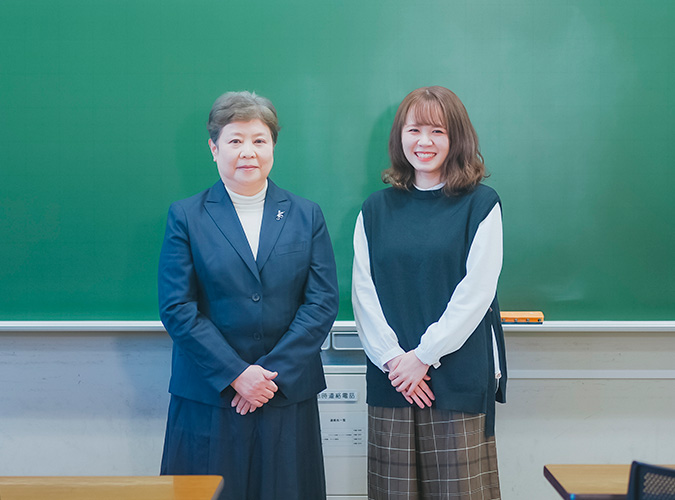
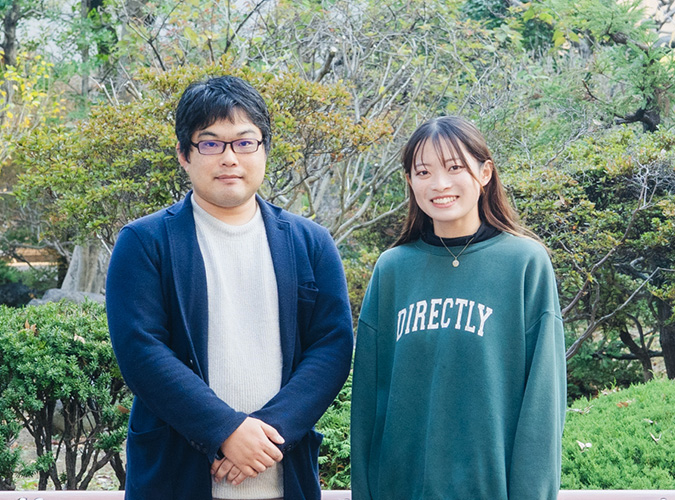
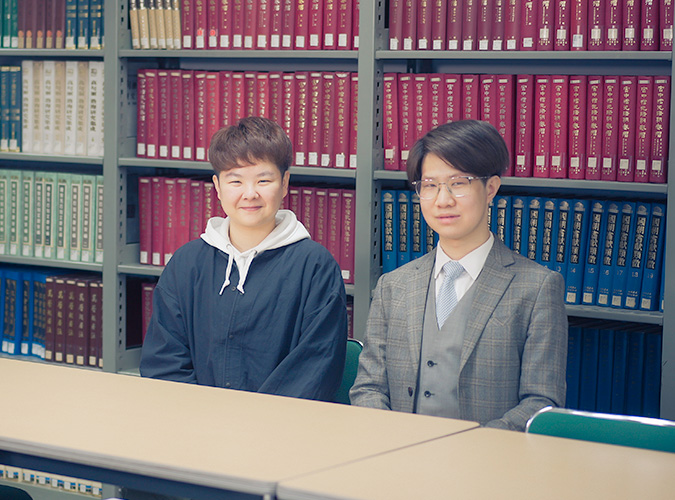
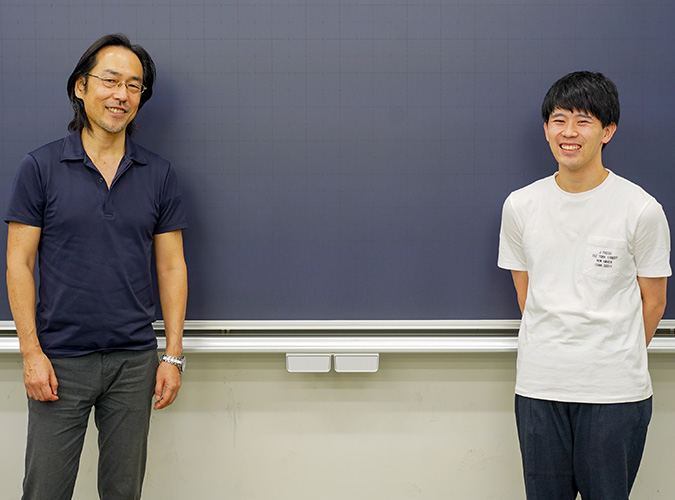
A commemorative photo of the student award ceremony (Hiroshi is on the left, Takagi is on the right)
Using each other's strengths, we will work as a team to reach the finish line
Koji: This time, we were a team of three, including Mr. Asano from the same lab, but all three of us are actually members of the ARICA-2 satellite project, which is scheduled to be launched in 2025. We were in charge of development mainly on Spresense, so we decided to participate in the hackathon after being encouraged by Professor Sakamoto.
Takagi: I thought that by participating, I could deepen my knowledge of Spresense, which will be necessary for future development. In the ARICA-2 project, we proceed with guidance from teachers and seniors, but in the hackathon, we had to devise, build, and implement the system from scratch, which was difficult.
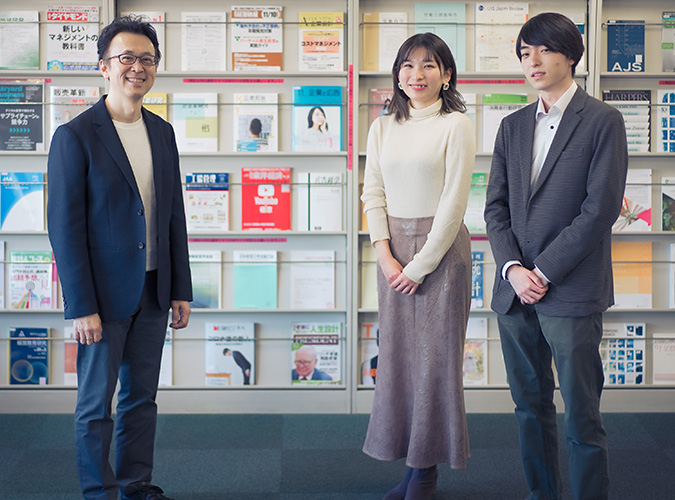
The three of them together right after receiving the award. They were delighted, but also found it hard to believe (from left: Hiroshi, Asano, Takagi).
Koji: It was really tough. I didn't have any knowledge at all.
I was particularly bad at programming, so I struggled with it. Many of the other teams were from mechanical engineering departments, specializing in programming, system construction, and machine work, but we were from the physics department, and up until that point we had mostly studied physics theory.
Takagi: I also liked analog until I entered university, but the programming classes I took in my first to third years (Information Processing Practice, Computer Programming Exercises, and Computer Application Exercises) were very interesting, and I improved my skills by independently working on not only the required assignments but also the advanced assignments. However, the programming language used this time was different from the one I learned in class, and although the basics and ideas were useful, I had to study from the beginning, which was difficult.
We decided to use an image recognition system because we wanted to make the most of our strengths despite our lack of knowledge. Asano-san is in charge of cameras and images in the development of ARICA-2, so we decided to utilize his experience.
Koji: We divided the work between us: Asano was in charge of image recognition and machine learning, Takagi was in charge of communications, and I was in charge of screen display.
The main unit of the winning system. Commands are displayed on the screen, and blinks are read by a camera located below the screen.
Takagi: Hiroshi also integrated the systems that each of us had developed.
Hiroshi: I guess I was the one who coordinated the integration. When it came to creating materials, I was good at collecting various elements and creating a rough framework from nothing, so I took the lead in the "0 to 1" part. Takagi-san was good at fleshing things out and arranging them.
Takagi: It takes a long time to create something from scratch, so I was in charge of evolving it from 1 to 2, 3...
Hiroshi: All three of us are different types, so we made up for each other's shortcomings and became a good team. Asano-san is very smart and talented, but he's also a very funny guy, and even though we were on a tight schedule, he didn't rush and kept the atmosphere lively.
Takagi: I think that because Asano-san was there, we were able to proceed without any tension. Participating in this hackathon was great not only because it gave us the experience and knowledge to think about, create, and complete a system from scratch, but also because it fostered the sense of cooperation that will be important in the development of ARICA-2 in the future. It also gave us the strength to decide on a schedule and work hard until we reach the goal.
Hiroshi: It was really good to have the experience of working as a team and devoting ourselves to one thing. The three of us were able to make the most of our strengths and have fun, and we learned the fun of programming and became stronger, which was a great benefit.
With programming, you think about how to achieve your goal of "how I want it to work," write it down, and when you can actually make it work, it's very satisfying and gives you a sense of satisfaction in solving the problem. At first, I thought, "I want to study physics, so why bother with programming?" But when I tried it, I realized that the way you put together your own logic and solve things you don't understand is similar to the fun of physics. I think that if you don't prejudice yourself at university and try a variety of things, you will be able to open up new paths.
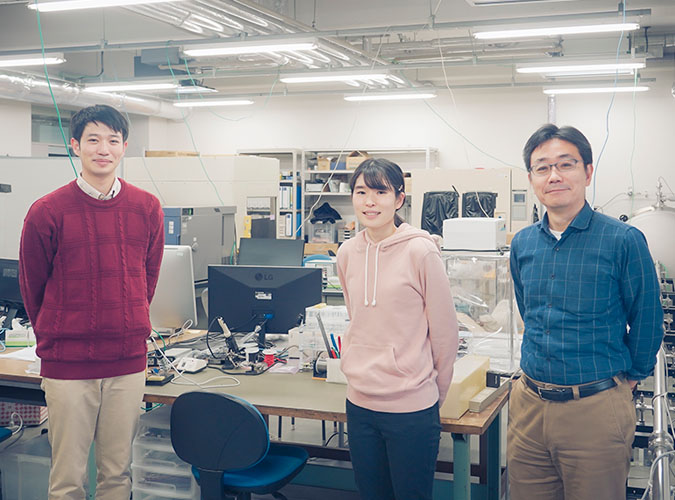
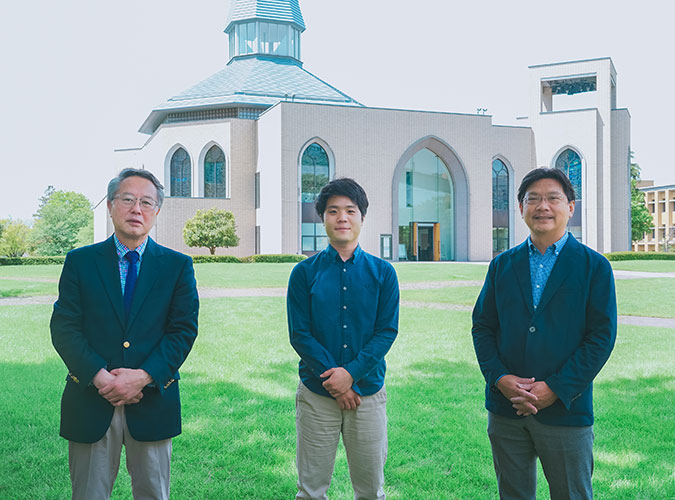
During the development process, we also developed the ability to work together as a team. From the left: Asano, Takagi, and Hiroshi
Attracted to Aogaku due to its rich space research field and wide range of study options
Takagi: I have a strong desire to learn about a wide range of fields, without being limited to a particular specialty, and I am looking for a place where I can acquire a diverse range of knowledge. The Aoyama Standard" course is a major reason why I chose Aogaku.
He was the head coach of the General Manager block in track and field during his first year. Hara Shin The teacher's Career Design Seminar" was an inspiring experience for me, as I was able to hear from people at the forefront of various fields, including sports and journalism. Professor Hara's words, "At university, I want you to value the 'T-shaped' learning that values both studying each field in depth and acquiring broad knowledge," left a strong impression on me, and even now I keep the 'T-shaped' in mind as I study.
Hiroshi: I've been devoted to baseball since Aogaku school, and I had a strong impression of sports, such as the fact that many professional baseball players graduated from Aoyama Gakuin University and their success in the Hakone Ekiden. Since I was a child, I watched the Aogaku University track and field team members practice hard in my neighborhood and pick up trash in the city, and I was always cheering on the Ekiden.
The reason I decided to go to university was because I was interested in space research, and the fact that Aogaku has connections with JAXA and is advanced in the aerospace field was a big factor.
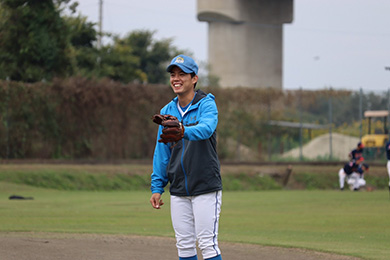
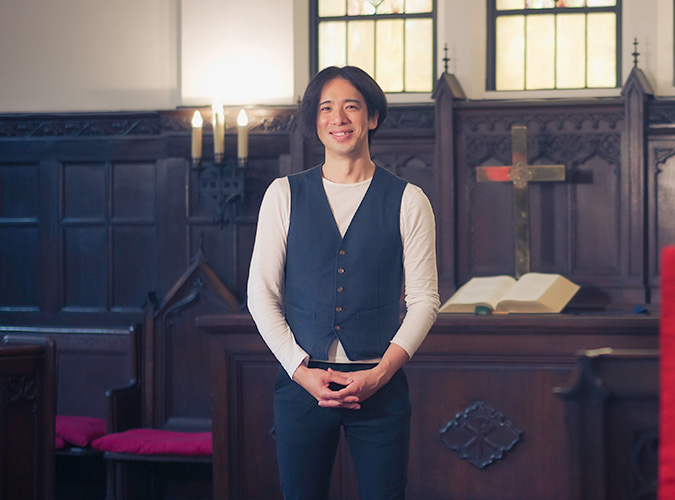
Hiroshi played an active role in the Science and Engineering baseball club from his first to third year, and also served as captain.
Takagi: I've been interested in space since I was a child, but I hadn't narrowed it down that much by the time I entered university.
Hiroshi: I enrolled in the university because I wanted to study astrophysics, and when I took the "astrophysics" class, the content was of course interesting, but I realized that in order to study astrophysics, I had to understand many other fields of physics. Also, in the "Latest Physics Lectures," I learned about the latest themes in the world and learned about various experiments, and I found fields other than astrophysics interesting as well. In that sense, my horizons have broadened since I enrolled, even though I had already decided to study astrophysics.
Takagi: Professor Sakamoto's "Astrophysics" class was really interesting. He would chat with students between classes to keep them interested, so I was able to tackle difficult topics in a fun and positive way. I think this class sparked my curiosity about the universe. I chose the Sakamoto lab because of the professor's personality, the interesting research presentations by the seniors, and the fact that students could take the lead in their research.
Hiroshi: After I entered the university and studied astrophysics and other fields of physics, I became more interested in space development than in theoretical research. Professor Sakamoto is frank and treats students on the same level, and he takes students' opinions seriously, saying, "I see, that's one way of thinking about it." I thought it would be fun to go to school if I could join the lab, and that's exactly what happened.
Takagi: Professor Sakamoto is a reliable mentor who is always willing to give me advice when I have a problem. I am enjoying a fulfilling research life.
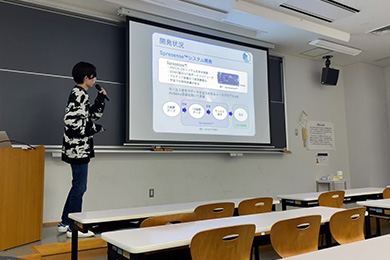
Takagi giving a presentation on his graduation research
Working together towards the goal of developing the microsatellite ARICA-2
Takagi: The lab is divided into several teams, and the ARICA-2 team we belong to is the largest. ARICA-2 is a 10cm x 10cm x 20cm ultra-small satellite. It is a demonstration experiment project that detects gamma-ray bursts, a sudden celestial phenomenon that shines brightly at the moment of the birth of a black hole, and reports that information to the ground. Although the first unit, ARICA, was successfully launched in 2021 before I joined the lab, communication has not been possible to date. ARICA-2 is an improved version of this, scheduled for launch in 2025.
Hiroshi and I are in charge of the communications field. We are working hard on our research, with the desire to make communications, which has not been successful in ARICA, a success at all costs.
Koji: I am in charge of the communication route where data is sent from ARICA-2 to a private communications satellite used for satellite phones, etc., and then transmitted from the private communications satellite to Earth. This is the same method that was used for ARICA, and we have made some improvements based on our reflections from the previous mission. People today who communicate on a daily basis, including myself, tend to think that this is something they can do without thinking. However, communication on Earth and communication in space are completely different, and it is really difficult and requires a lot of trial and error.
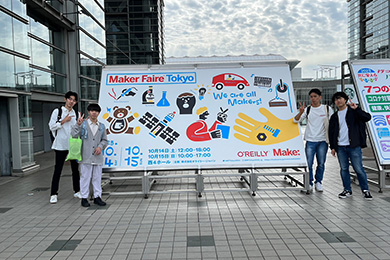
The ARICA-2 development team participated in the exhibition "Maker Faire Tokyo 2023". They exhibited ARICA-2 models and parts, and introduced how to use Spresense. Takagi is on the left, and Koji is second from the right.
Takagi: I am in charge of the UHF communication system, which was newly added to ARICA-2. This is a communication method that uses amateur radio, and sends data directly from ARICA-2 to the ground using radio waves.
Although things don't always go as planned, we enjoy working together to create something. We are a great team, and I feel reassured knowing that I can ask for advice even when I get stuck.
Koji: I chose the ARICA-2 team because I thought I would be able to work harder if I were to work with people who have the same goal as me than if I were to work alone. I feel that it is very easy and fun to work in a team atmosphere. The way we use Spresense is quite different between the hackathon and ARICA-2, and my experience in the hackathon did not directly lead to ARICA-2, but the experience of working together in a team is useful.
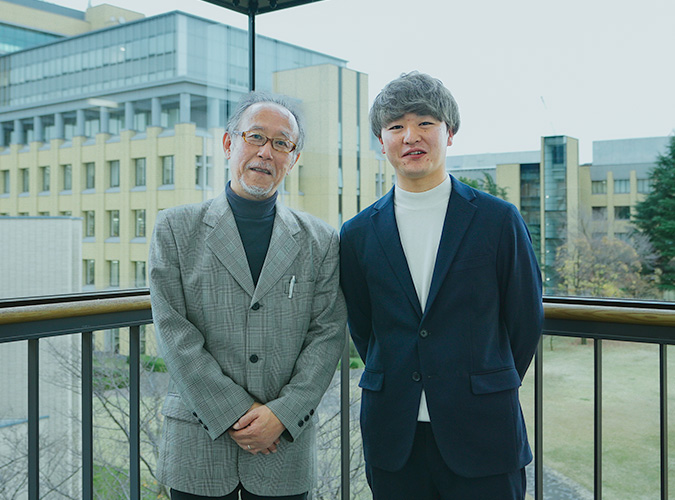
Commemorative photo with members of the Sakamoto Laboratory. From the left in the front row, Takagi-san, Asano-san, and Koji-san, and second from the right in the back row, Professor Sakamoto
Takagi: I will be entering graduate school and will be a senior from 2024, and will be the most senior member of the team in 2025 when the launch is scheduled. I would like to liven up the team with the teamwork I learned at the hackathon. It is rare to have the experience of launching a satellite in one's life. I will work hard on my research and make sure we succeed in the communication that we were unable to achieve in the last launch.
Koji: After I enter graduate school, I will work hard for the success of the launch and communication during the two years of my master's course. I don't have a clear goal beyond that yet, but through my experience at the hackathon and the development of ARICA-2, I learned the joy of creating things and systems, so I hope to contribute to the world through such development in the future.
Related links
The Microspacecraft Research Institute's Rapid Response Demonstration Satellite ARICA-2 Selected for JAXA's Innovative Satellite Technology Demonstration Program | Aoyama Gakuin University (aoyama.ac.jp)
The ARICA rapid-report demonstration satellite, developed by the Sakamoto Laboratory (College of Science and Engineering), was launched on Tuesday, November 9, 2021, as one of the demonstration themes of JAXA's Innovative Satellite Technology Demonstration No. 2. | Aoyama Gakuin University (aoyama.ac.jp)
A look back at the development and launch of the ARICA Rapid Response Demonstration Satellite | AGU LiFE (aoyama.ac.jp)
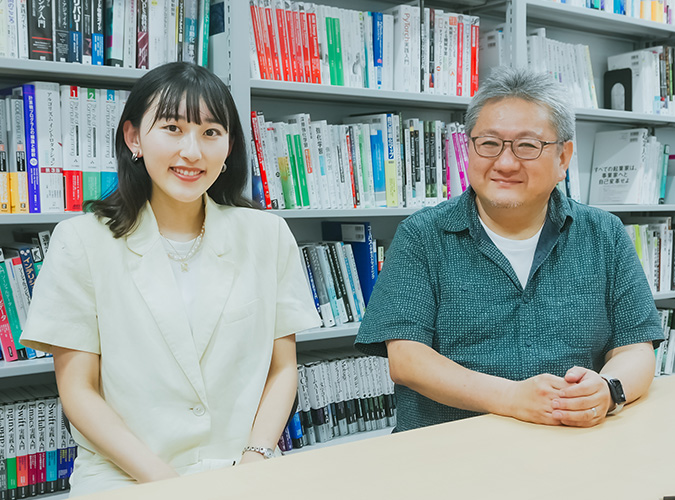
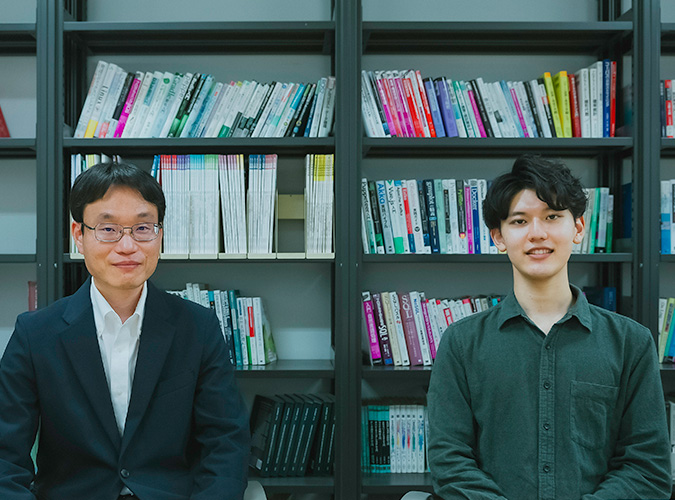
From Professor Takanori Sakamoto
Message

The Sensing Solution Ideathon Hackathon is an event that invites students to propose solutions to social issues and new entertainment using IoT, and awards the best works. The judges are made up of 23 business people and university professors, and it is necessary to proceed to the first round, second round, and final selection, so it takes a lot of effort to win. Takagi, Hiroshi, and Asano came up with very interesting works, despite my unreasonable requests at the beginning, and actually implemented their ideas on the board computer Spresense, achieving two crowns: the Excellence Award and the Best Accessibility Award. I was not involved at all in the process of actually building the system from the idea of the work, so I think it was only the ability and effort of the three people that earned them this award. Congratulations. I hope that they will use their experience here to contribute to the development of ARICA-2.
*The links to each subject's "Course Content Details" are for the 2023 academic year.
College of Science and Engineering Department of Physical Sciences
Aoyama Gakuin University 's College of College of Science and Engineering provides an environment for learning science, including mathematics, physics, and chemistry, as well as the latest in technology. Under the guidance of professors who are engaged in world-class research, we provide a place for experiments, exercises, and research activities using the latest equipment, and we also implement a unique English education system across all seven departments. Our future-oriented curriculum greatly expands the dreams and possibilities of each individual student.
Physics is a field of study that can be applied to a wide range of scientific fields by understanding its simple fundamental principles. Department of Physical Sciences covers physics at various levels and scales, from basic physics to more specific fields such as solids, the universe, and biology, and even cutting-edge application fields such as superconductivity and nanotechnology. Through experiments and exercises in a well-equipped environment, students can deepen their understanding and improve their practical skills.