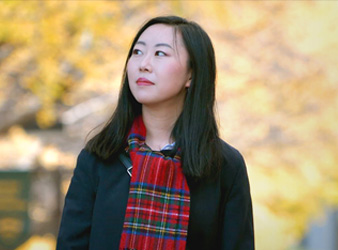
For an objective study of history
A broad perspective is essential

Posted on August 12, 2022
No. 169
College of Literature
Department of History Oriental History Course, 3rd year
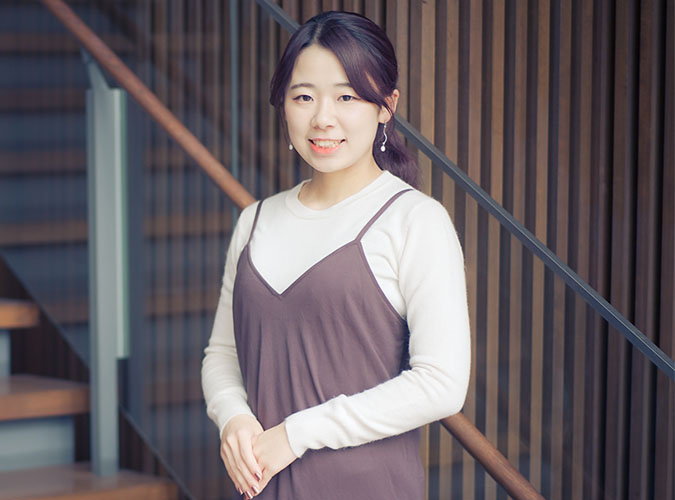
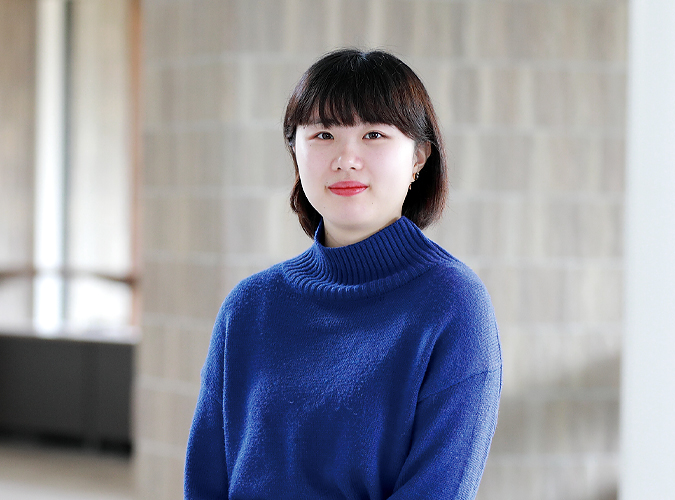
CHOI JIIN
(Choi Ji-in)
Born in Incheon, South Korea

OVERTURE

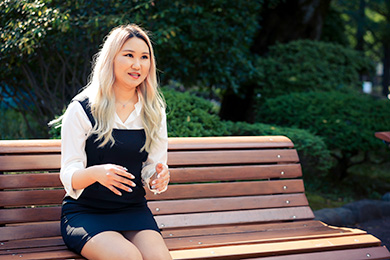
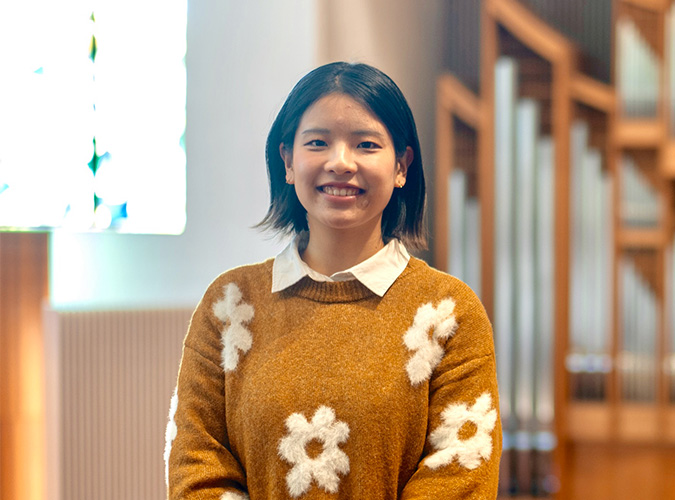
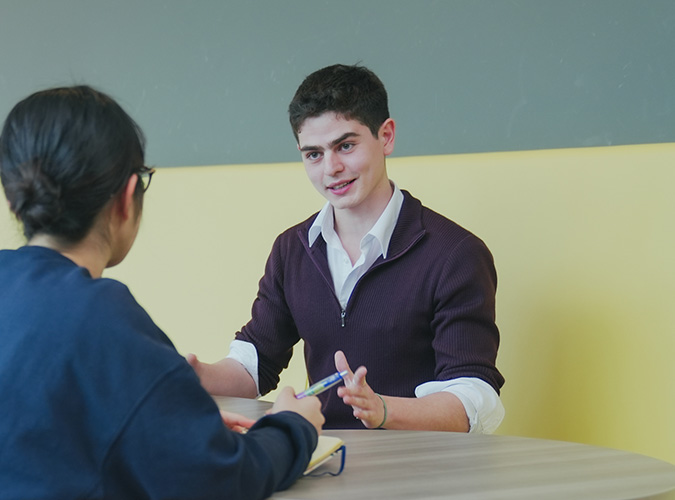
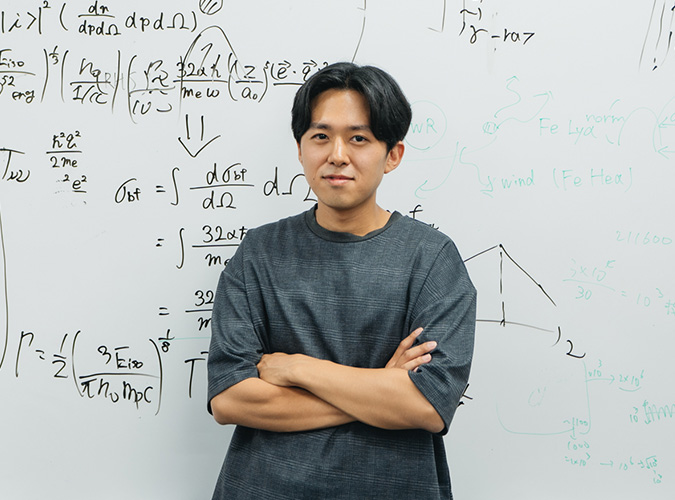
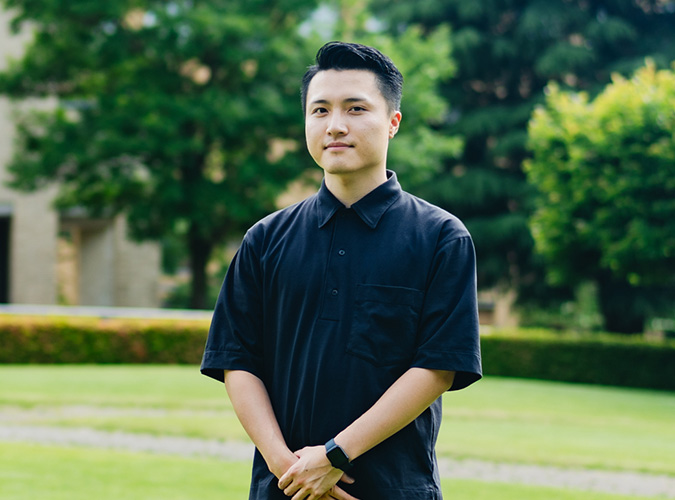
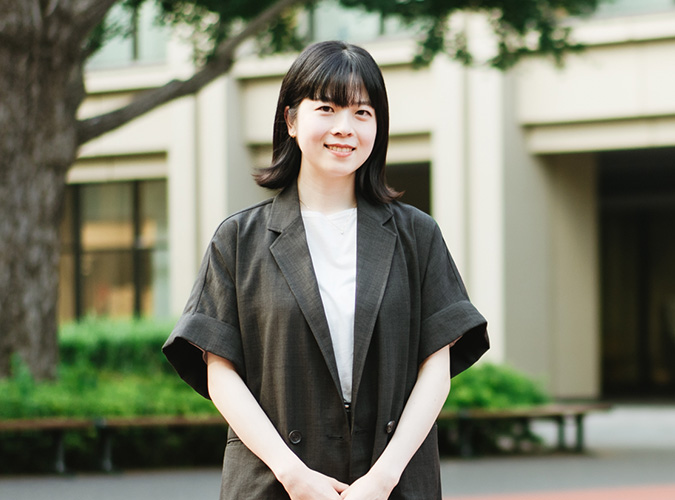
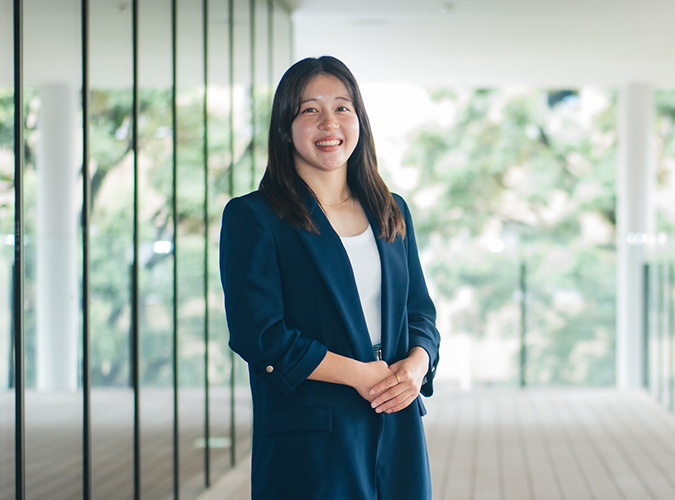
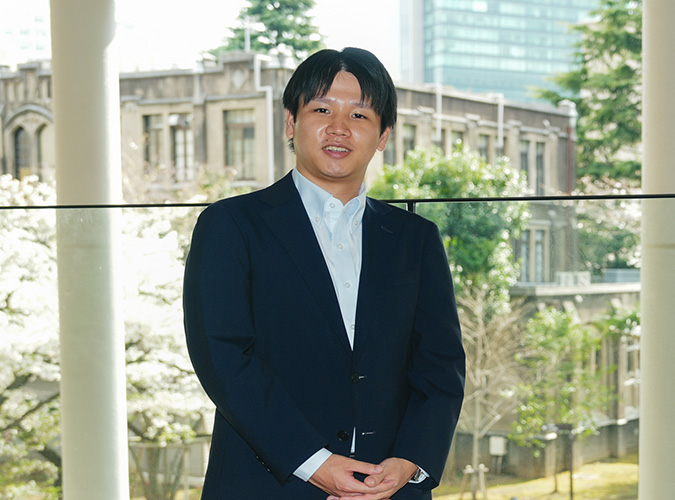
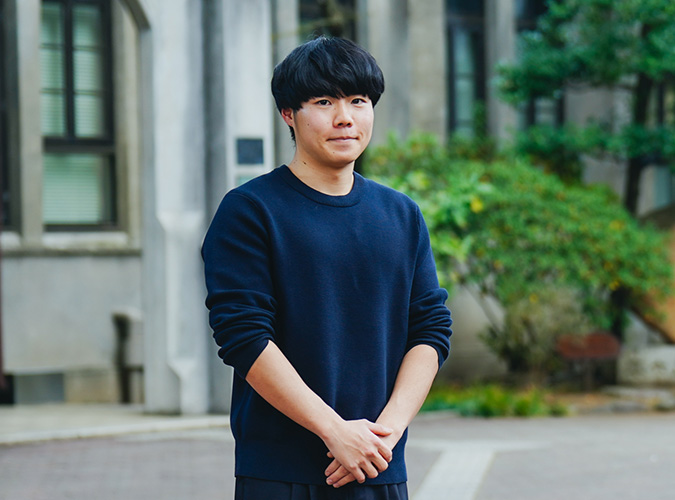
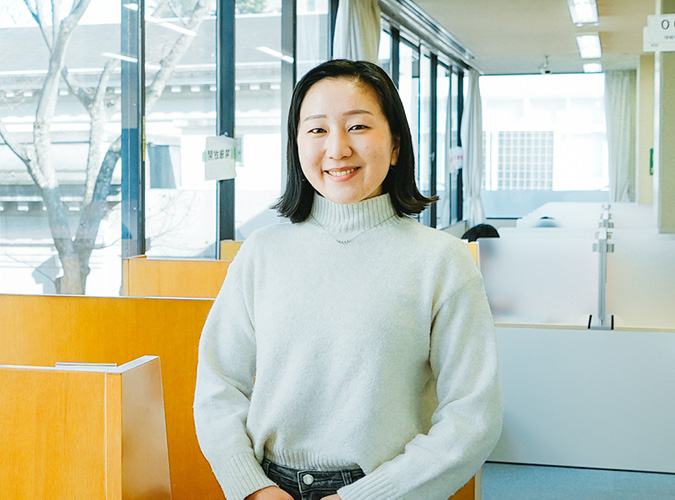
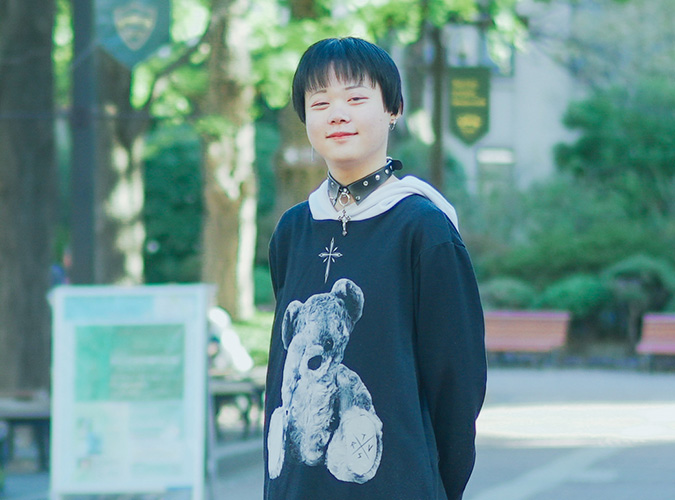
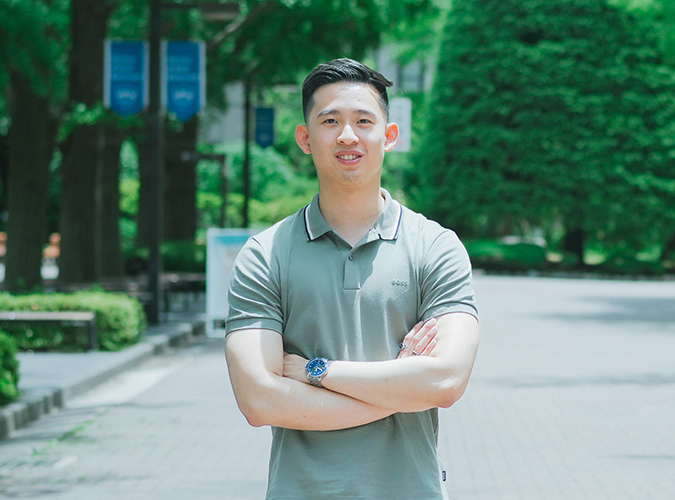
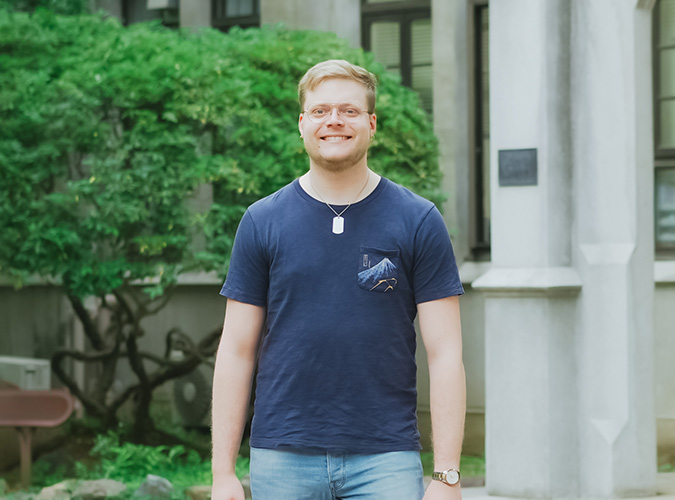
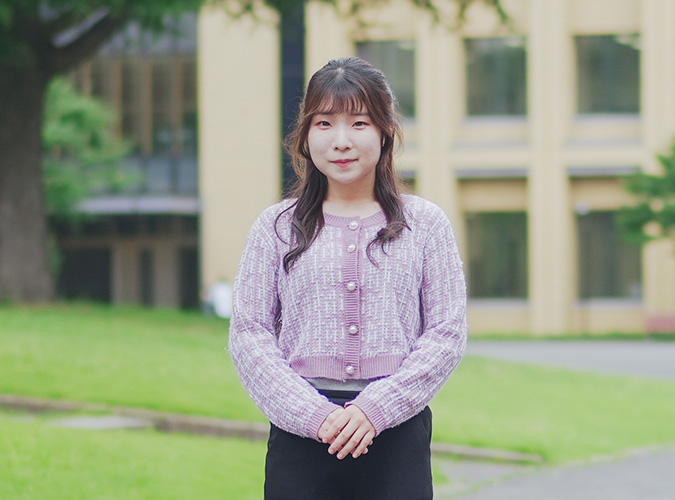
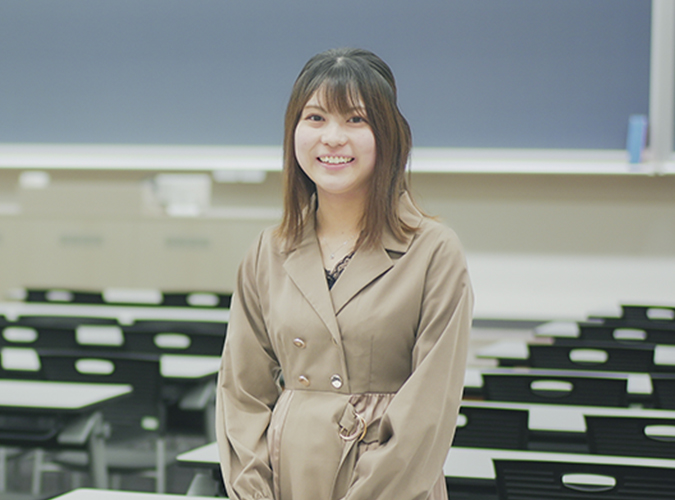
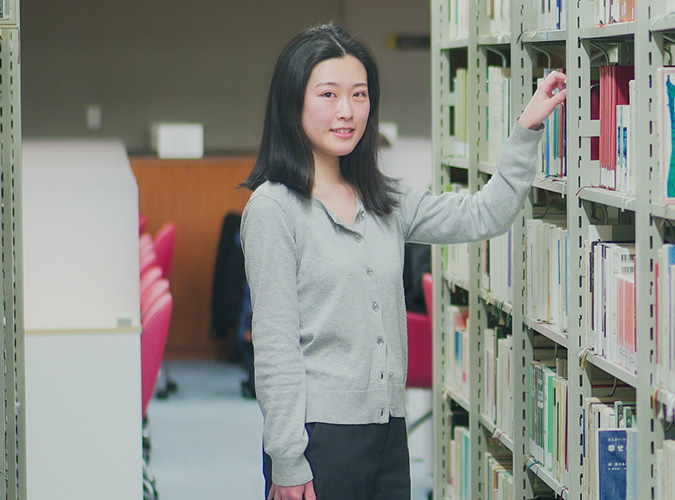
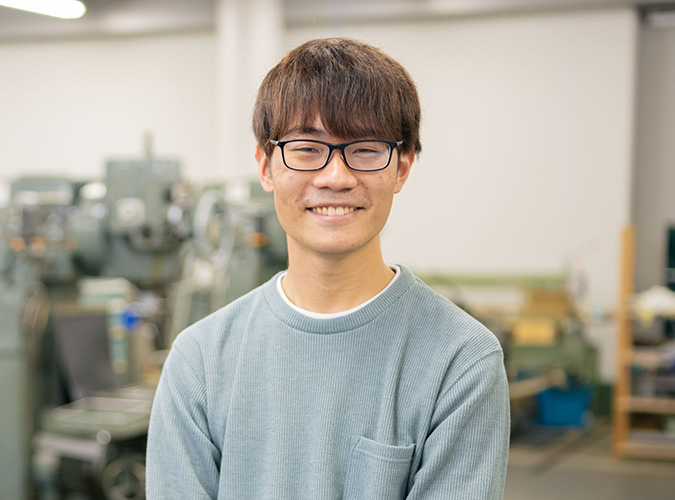
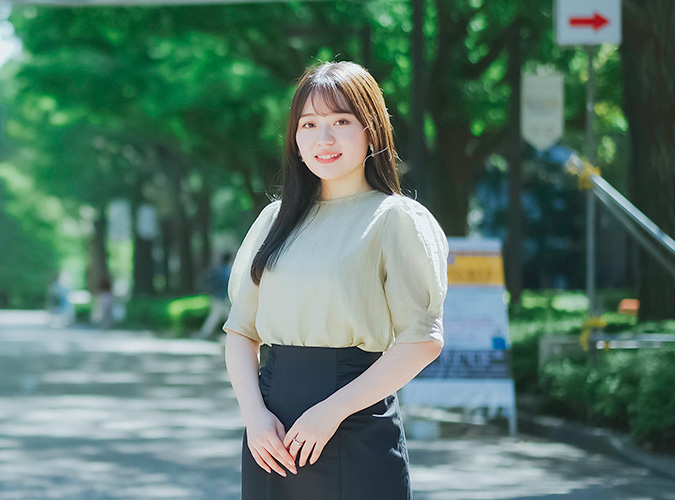
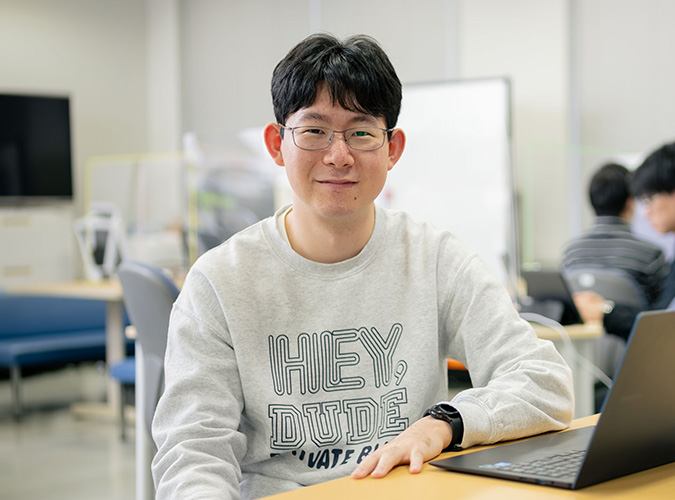
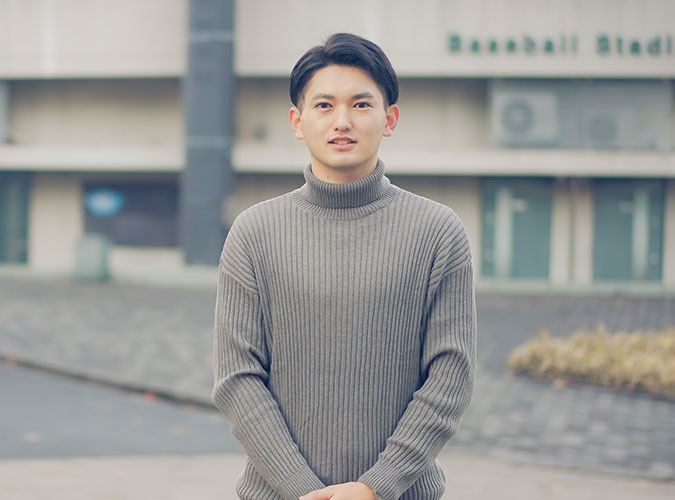
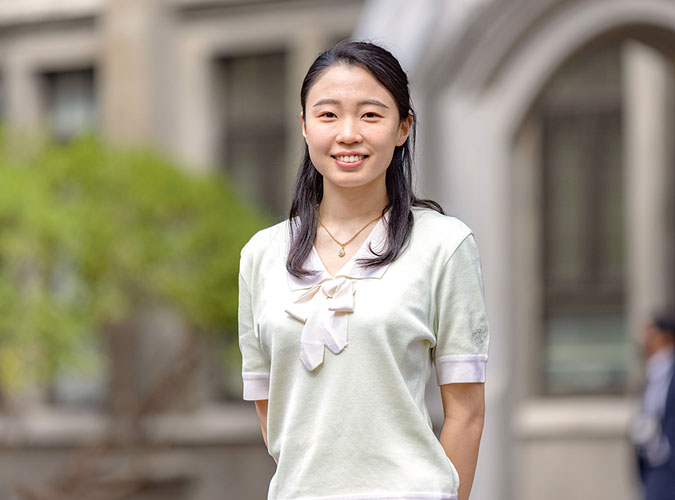
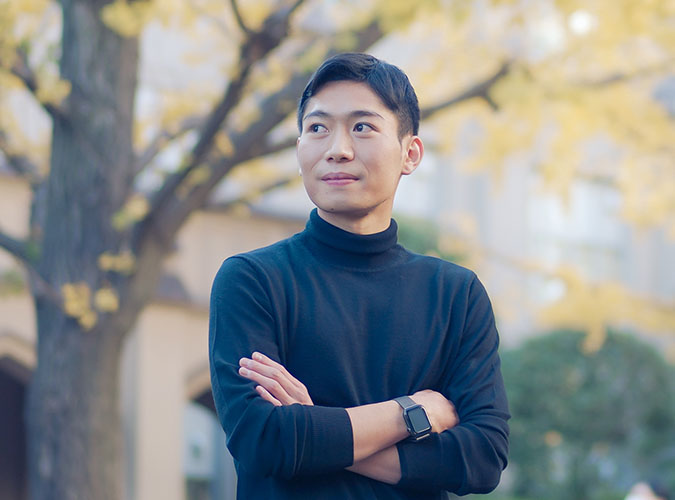
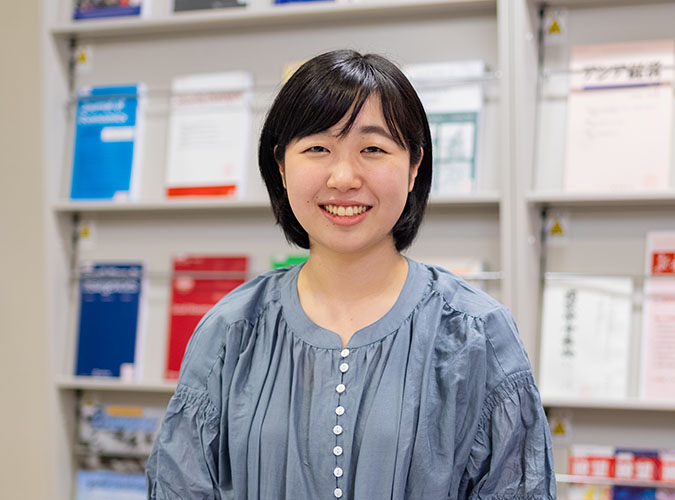
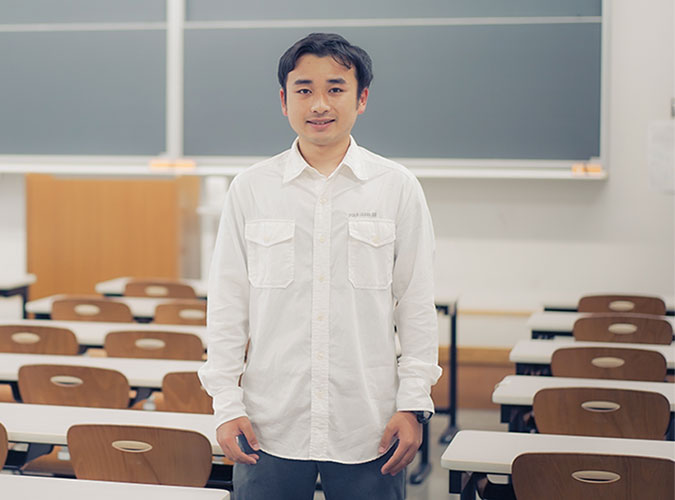
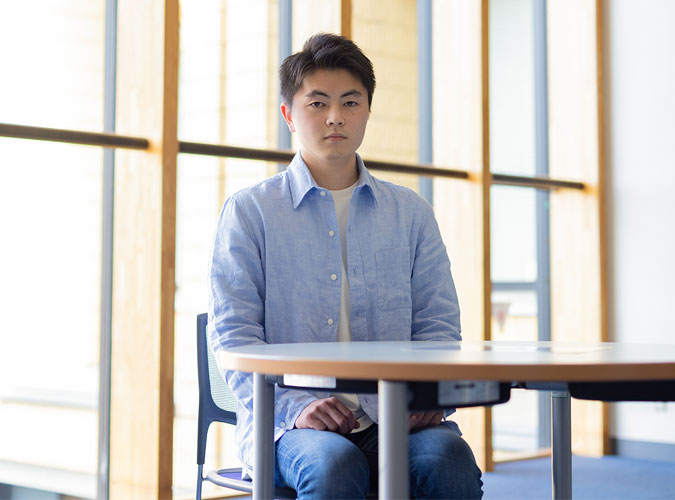
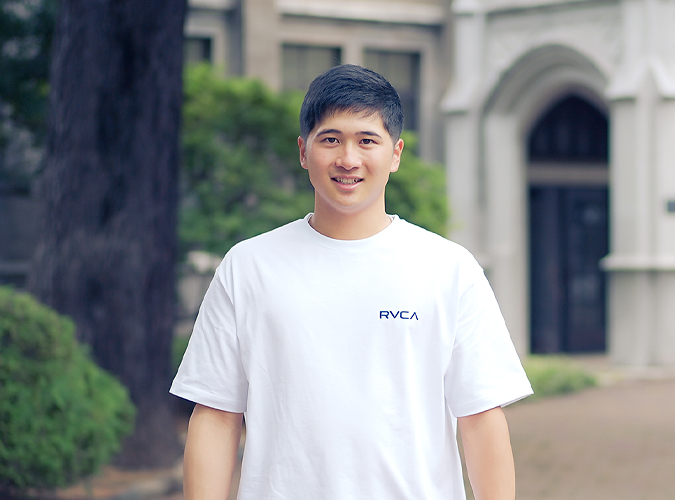
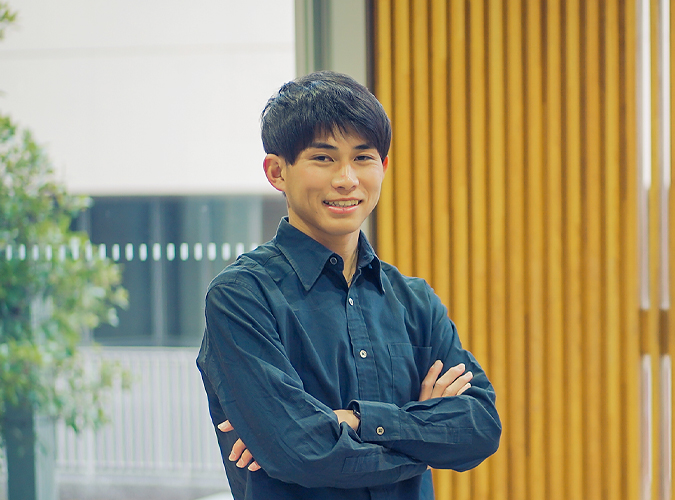
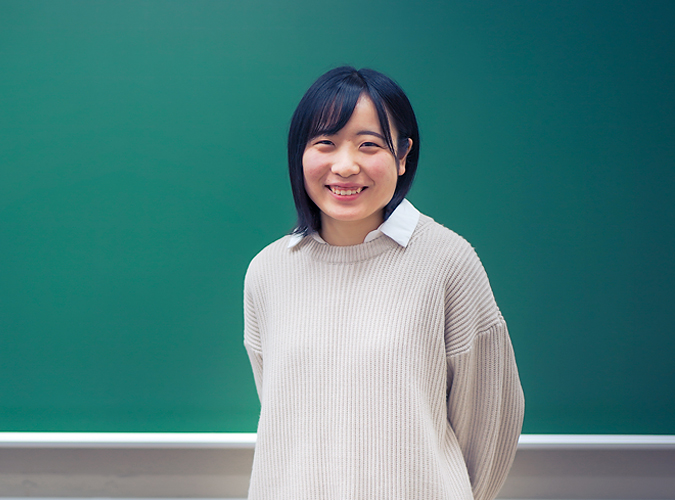
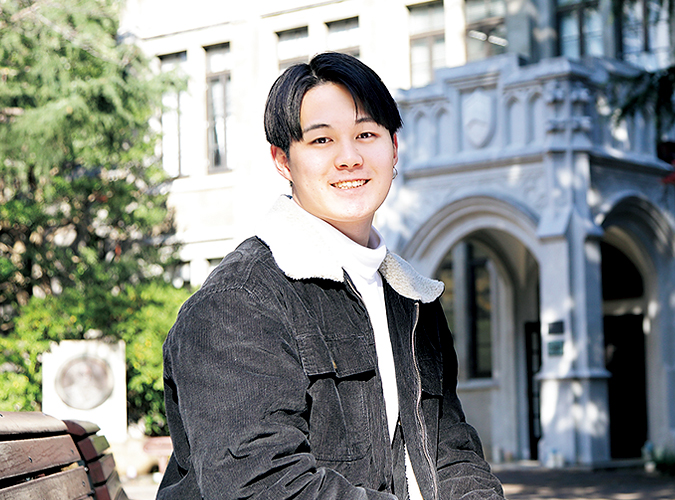
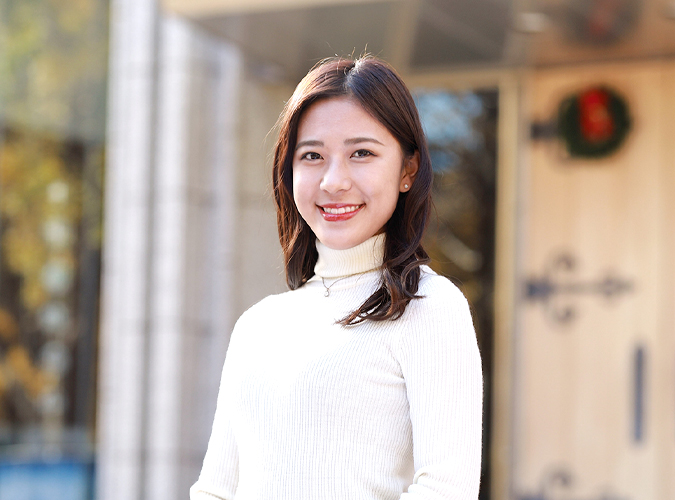
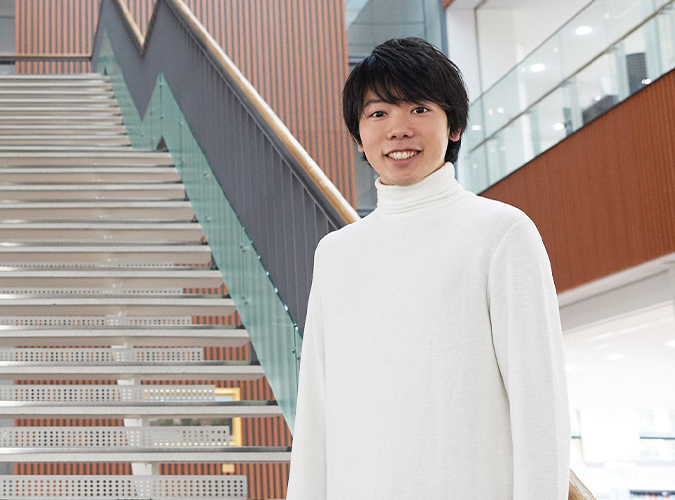
Choi is trying to objectively understand history, which is interpreted differently depending on the environment in which one was born and raised, the position one is in, etc. In order to broaden his perspective, he decided to leave his native Korea and study in Japan, where he is currently studying in the Oriental History course.

Study Aogaku at Aoyama Gakuin University, where you can study a variety of historical fields

I grew up in a family that had many opportunities to travel, not only within Korea, but also to other Asian countries, including Japan. My mother's policy was to visit local museums and history centers first when traveling, to experience the culture and history of the place before sightseeing. Naturally, I became interested in the history of East Asia, and I am currently studying the Oriental History course in Department of History.
Initially, I was planning to go to a university in Korea and was studying for entrance exams in Korea, but in my third year of high school, I decided to study abroad in Japan. Because history is perceived differently depending on who interprets the historical documents, I thought that in order to understand it objectively, I should know the perspectives of countries other than my own.

I chose Japan as my study abroad destination because I wanted to learn about and deepen my understanding of the relationship between Japan and Korea, where historical opinions often differ. My father worked in a job related to Japan, so I was familiar with the Japanese language from an early age and studied it. However, I had a gap in my Japanese language studies because I had to stop studying to concentrate on studying for entrance exams in Korea, and at the time I did not have the Japanese language skills to study directly from Korea to Japan. I came to Japan after graduating from high school and spent two years thoroughly relearning Japanese at a Japanese language school.

Iijima Seminar, which I had hoped to join even before enrolling in the university

I wanted to gain a wide range of knowledge about history at university, so after coming to Japan, I narrowed down my options by researching the research of the professors on university websites and reading their papers. As a result, I noticed Department of History at Aoyama Gakuin University, which has professors from a wide range of fields. I decided to study under Professor Iijima Wataru, who specializes in modern East Asian history, so I studied hard for the Examination for Japanese University Admission for International Students (EJU) and was able to enroll. Although I had acquired most of the kanji I used in everyday life by the time I entered university, I had to learn technical terms and traditional Chinese characters to study Oriental history, and I struggled with the many unusual kanji used in historical names and place names.

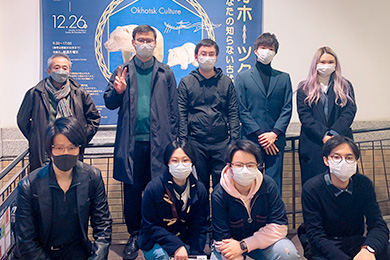
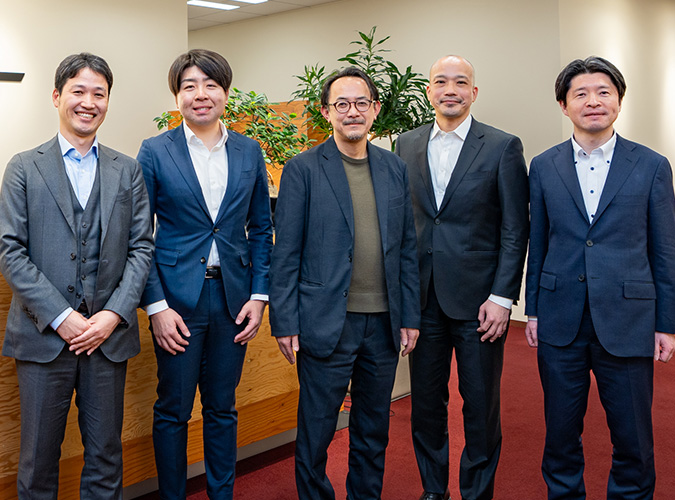
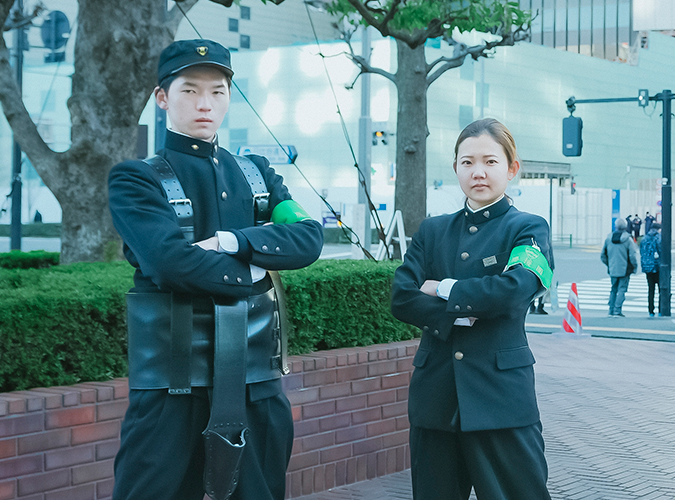
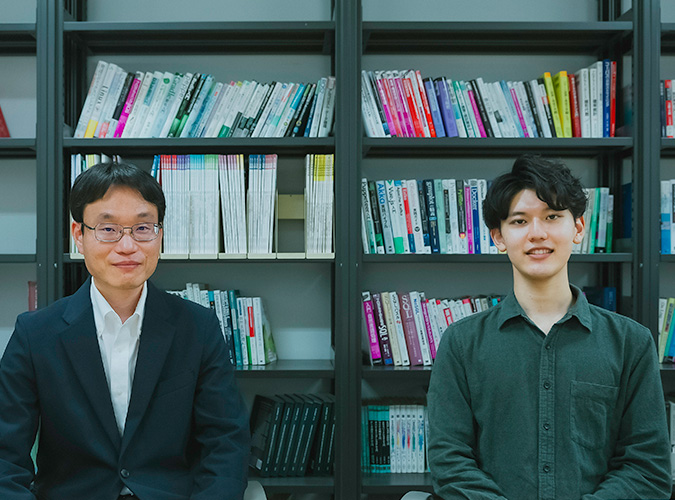
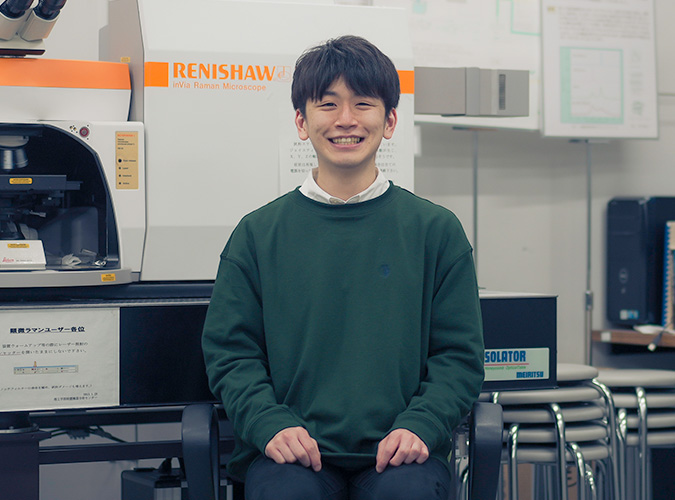
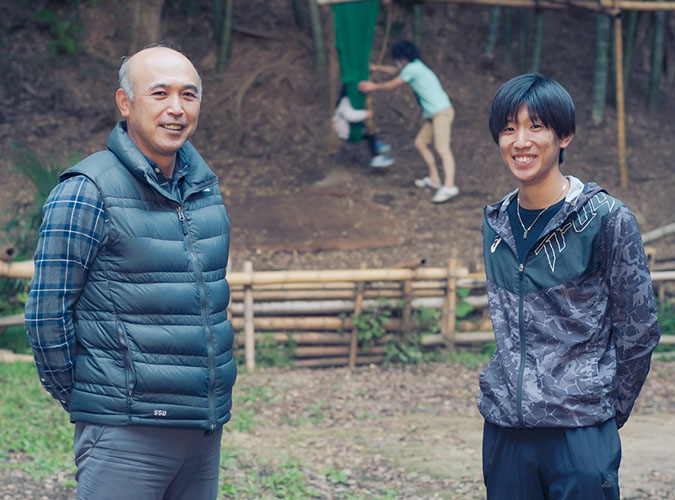
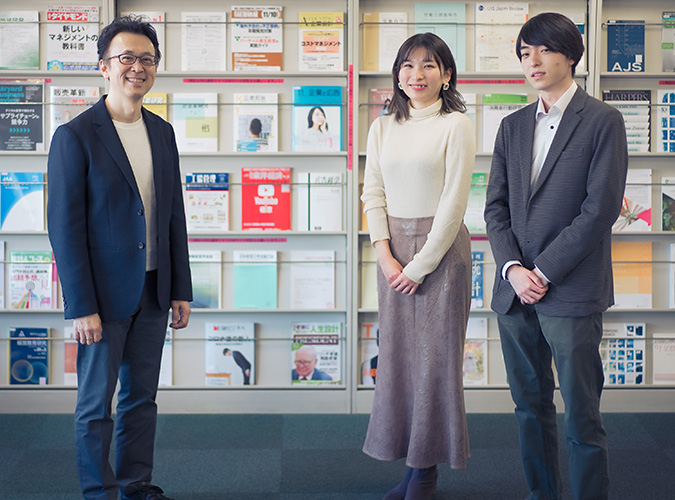
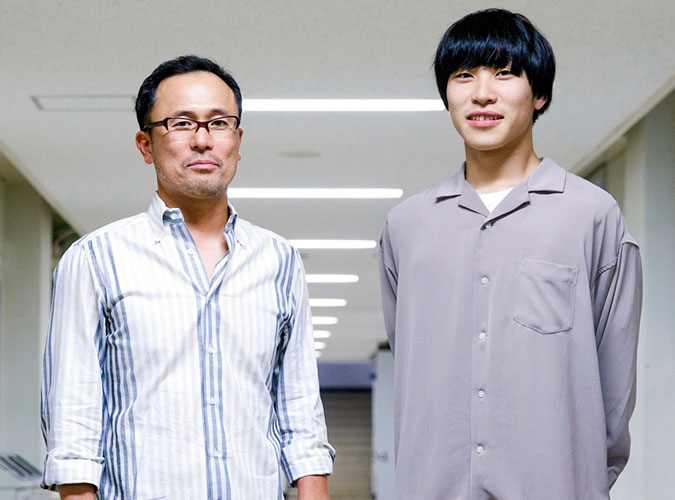
Cultural training for the Iijima seminar at the Yokohama Eurasian Culture Center

In my first year, I learned basic knowledge and the ability to criticize historical documents through courses such as "Introduction to History" and "Overview of History," and was able to judge the quality of documents and historical documents and search for appropriate ones. Thanks to this, I feel that I have become able to analyze and present in my own way in my second year's "Basic Seminars" and "Historical Documents and Literature Reading I and II."
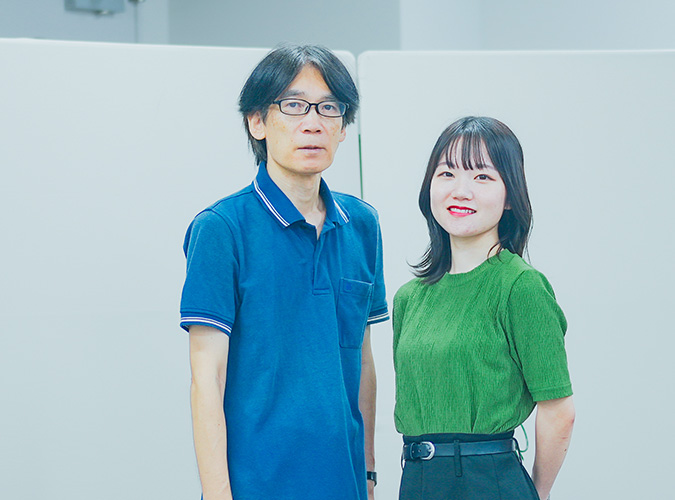
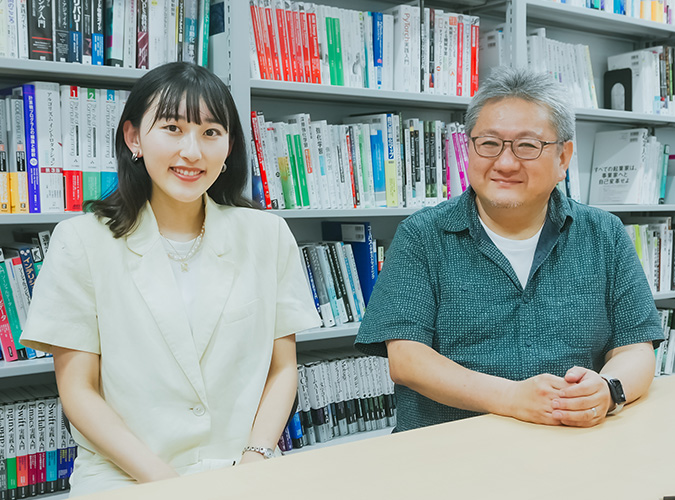
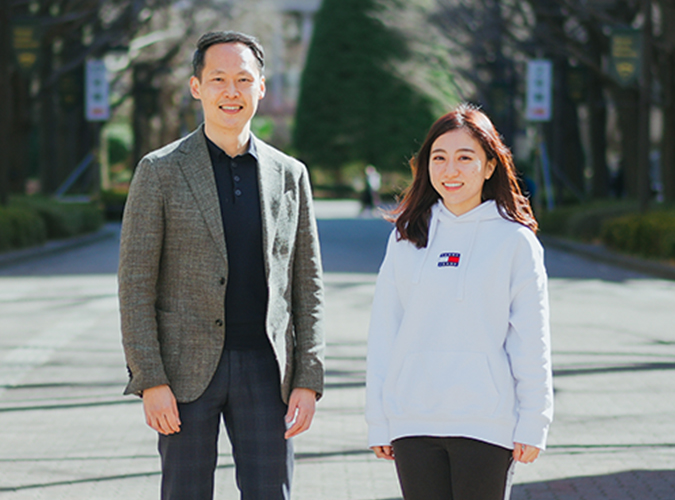
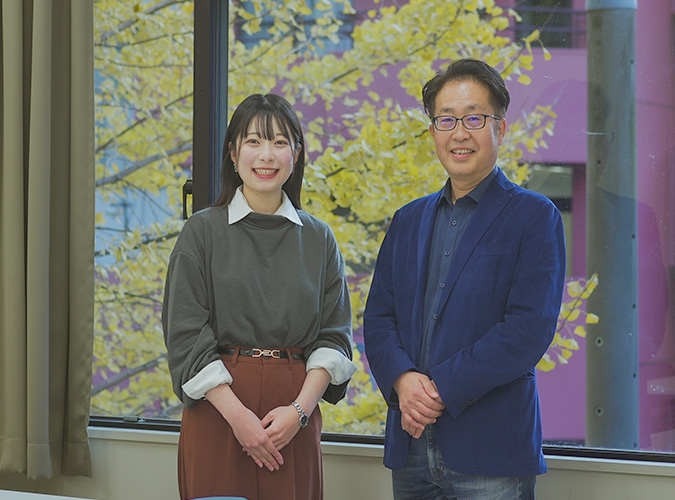
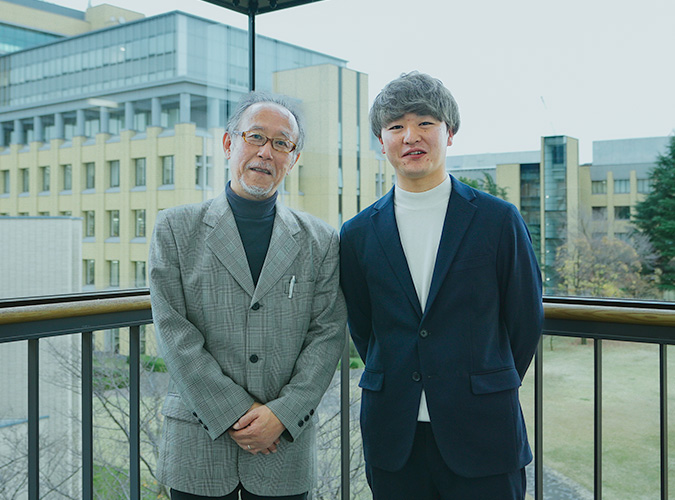
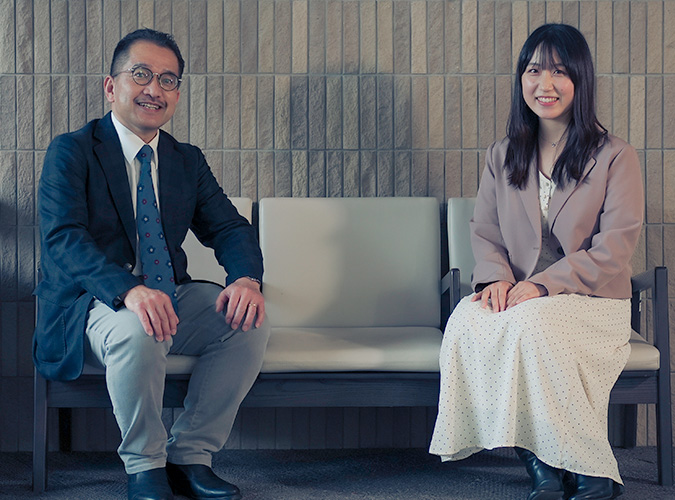
In my second year, I moved on to the Oriental History course, and am currently enrolled in Professor Wataru Iijima's seminar, just as I had hoped. I am also participating in Professor Atsushi Aoki's seminar, which specializes in Chinese history, in an effort to broaden my perspective.
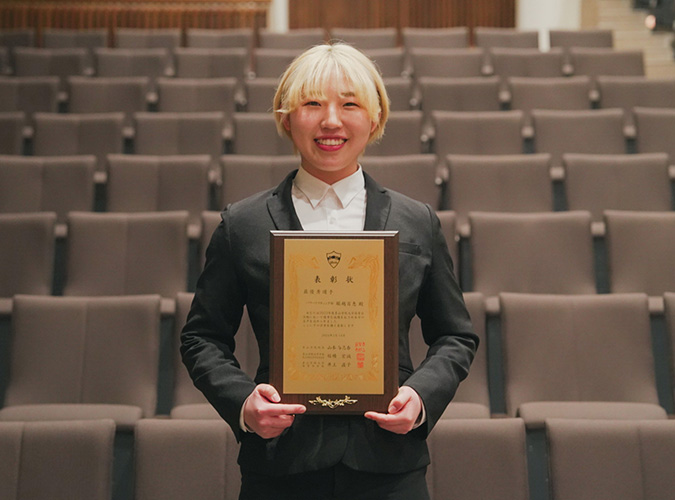
The class in which I learned something very important in studying Oriental history was Professor Iijima's "Historical Materials and Literature Reading I and II" in my second year. In this class, we read documents in English and Chinese (classical Chinese) and interpret them in Japanese, which was very difficult for me because it meant translating one foreign language into another. In particular, classical Chinese requires the Japanese-specific "written-down" technique, and it took a long time just to master this skill. However, at first, the professor was considerate and I was able to translate directly into modern Japanese without the "written-down" technique, and I also got help from my Japanese classmates, so now I can read classical Chinese to a certain extent. I strongly felt through the "Historical Materials and Literature Reading" that I needed knowledge of classical Chinese to study East Asian history, so I started learning Chinese as a third foreign language in my third year. The results of my active and motivated approach to academics were reflected in my grades, and I was selected as the outstanding student in Department of History for two consecutive years.
Based on the knowledge and experience I will gain during my four years at the undergraduate program, I plan to continue on to graduate school and progress to a doctoral program after graduation. My dream for the future is to work in a research position and objectively interpret the history of Japan and Korea, thereby contributing to bridging the gap between the two countries.

The Aoyama Standard A wide range of options to choose from

Our university offers many The Aoyama Standard arts courses, and a major attraction is the wide range of options available for students to choose from outside their field of expertise, such as art, music, and science.
In the core liberal arts course "Self-Understanding," I learned about the Japanese view of religion. In Korea, non-religious people do not visit religious facilities. On the other hand, in Japan, many people visit shrines on New Year's Day, worship at Buddhist altars, and take other religious actions in their daily lives. However, I often hear people say that "there are many non-religious people" or that "I am non-religious," which I found strange. In the "Self-Understanding" class, I learned about the history of how religious policies implemented over a long period of time have changed religious views at the individual level, and I feel that this has given me an opportunity to understand Japan even more.

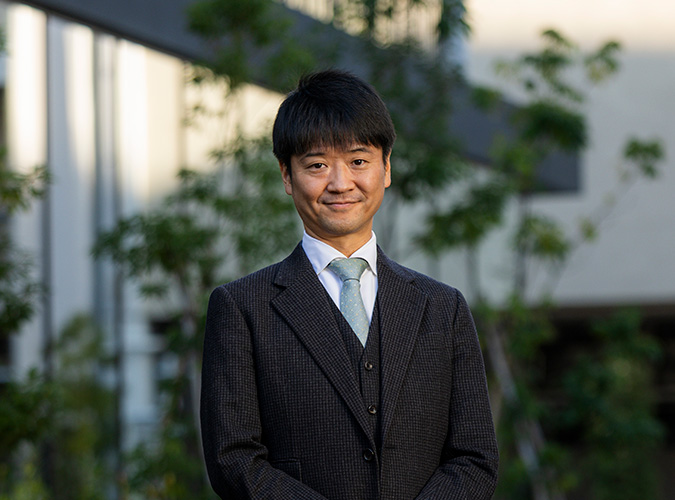
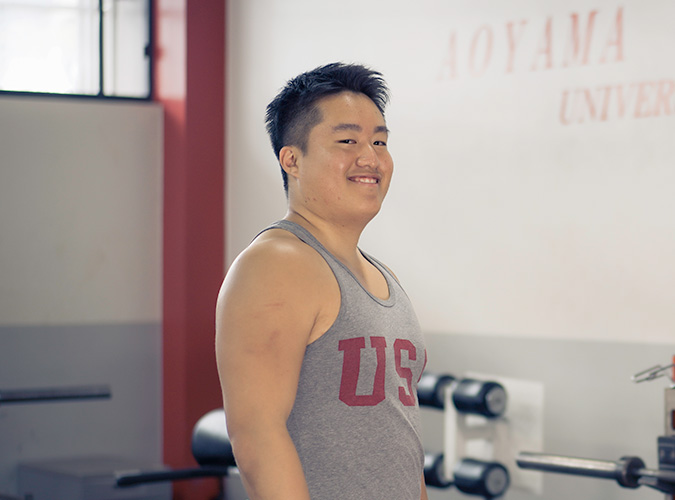
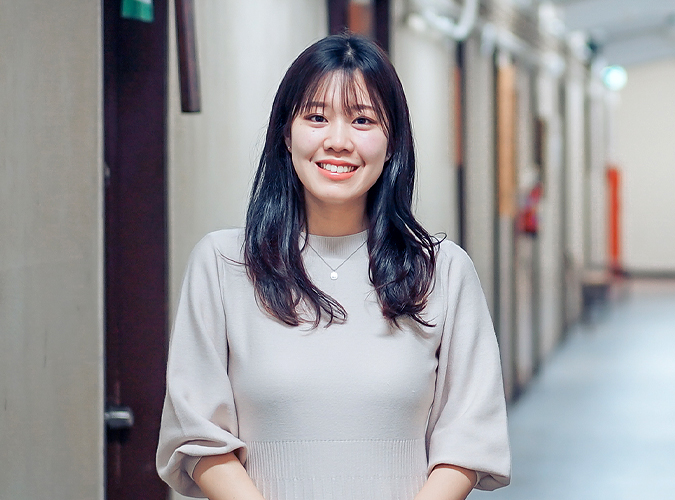
Received the Department of History Excellence Award for the second consecutive year

The "Science and Technology Perspectives (individual subject)" class, which dealt with global warming, also gave me a new perspective. Looking back over billions of years of Earth's history, I was very surprised to learn that there have been drastic climate changes in the past that are incomparable to those we see today. My first exposure to a new perspective based on scientific knowledge broadened my horizons and made me realize that I could look at the field of history from a completely new perspective.

A fulfilling environment where international students can easily learn

Aogaku is a university with good international support on campus. The International Center, which supports international students, prepared many documents necessary for visa and residence status renewal. It was very helpful that they prepared everything quickly and carefully so that I could make it in time for the visa renewal, which takes time.
There is also a chat room where students who want to learn foreign languages can interact with students who are good at those languages, and I serve as the chat leader for Korean. Among Aogaku who have participated in the session here, there are students who have gone on exchange to Korea and seniors who have reported to me that they are going on to graduate school at Seoul National University University, and I am happy to have been able to contribute to their improvement in their language skills.
My own goal is to improve my Japanese, English and Chinese skills to an advanced level by the time I'm 30, and I am taking advantage of Aogaku 's excellent learning environment to study foreign languages.
Looking back, I made an effort to improve my Japanese language skills every day during the two years I attended Japanese language school, but I was anxious about my career falling behind my classmates, and I often wondered if my efforts were in vain. Looking back now, I realize that my efforts were not a detour, but an important step toward my goal. There may be times when preparing to study abroad is too difficult and you feel like giving up. However, if you enter university, interact with a variety of people, and continue to study in the field that interests you, your efforts will surely be rewarded, so don't give up and achieve your goal.

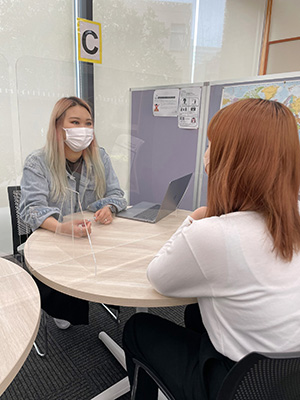
Chat rooms contribute to international exchange through communication in Korean

College of Literature Department of History

College of Literature at Aoyama Gakuin University pursues learning based on the expertise of five international departments, with a foundation in history, thought, and language. By coming into contact with and deepening understanding of the wide variety of intellectual endeavors that humans have created, students will develop broad insight and wisdom. Through "humanities" experiences, students will hone their culture, intellect, sensitivity, and expressiveness, forming the "axis" that will open up their own future.
History, which deals with romantic history, is in fact a scientific and empirical field that interprets historical documents and reconstructs the past. In Department of History, students deepen their learning from four perspectives: Japanese history, Oriental history, Western history, and archaeology. Learning about the past not only cultivates a broad perspective on different cultures, but also deepens understanding of the origins of modern society and leads to exploring the sustainability of society. We provide guidance so that students can objectively express their own views on these issues.

VIEW DETAIL

International Center

The International Center provides support for education related to the internationalization of the university and for cultivating international people. Its main duties include "sending students" and "accepting international students" to overseas partner and accredited schools, planning and running programs and events such as short-term language training, and supporting the integrated education system related to globalization between the university and affiliated schools such as Aoyama Junior and Senior High School. We will further strengthen and expand cooperation between our university and overseas universities while respecting the diverse cultures and customs of each country and the different values of students.

VIEW DETAIL

Back Number

SEARCH