Purpose as motivation
Izumi in Global Business
Acquired the ability to pass
Study in the USA

OVERTURE
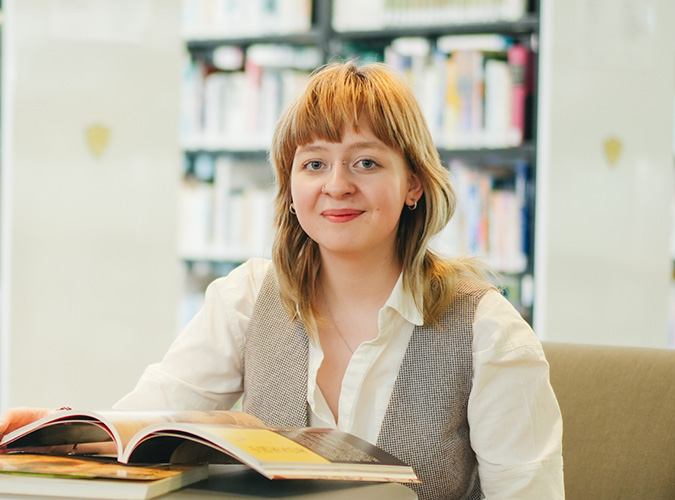
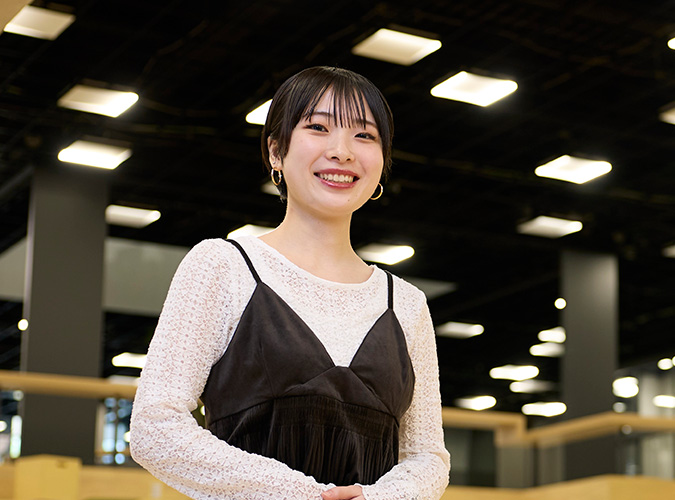
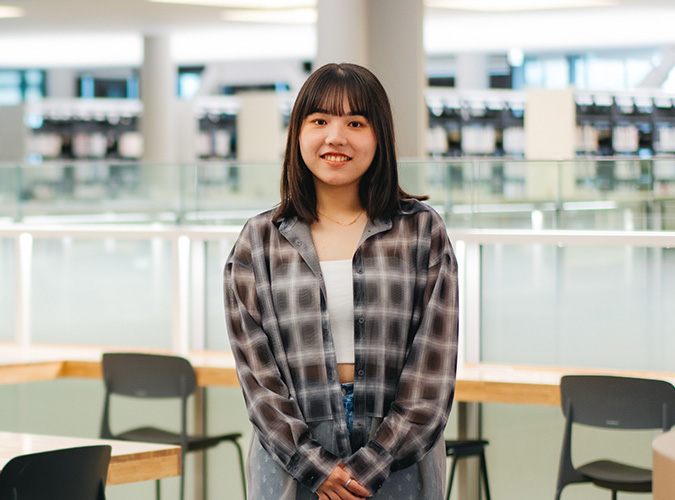
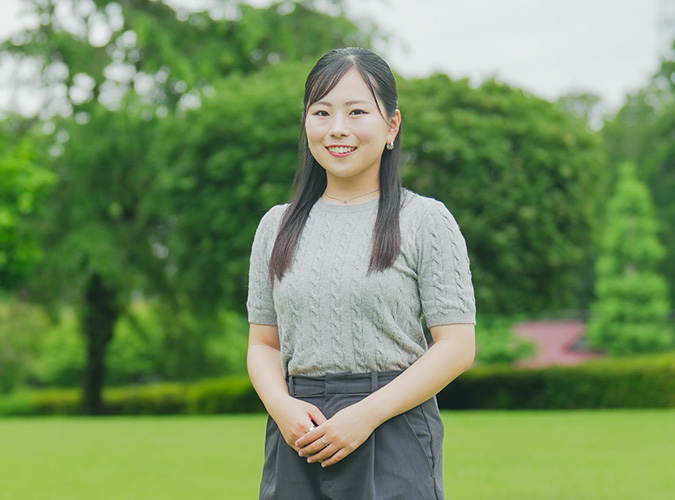
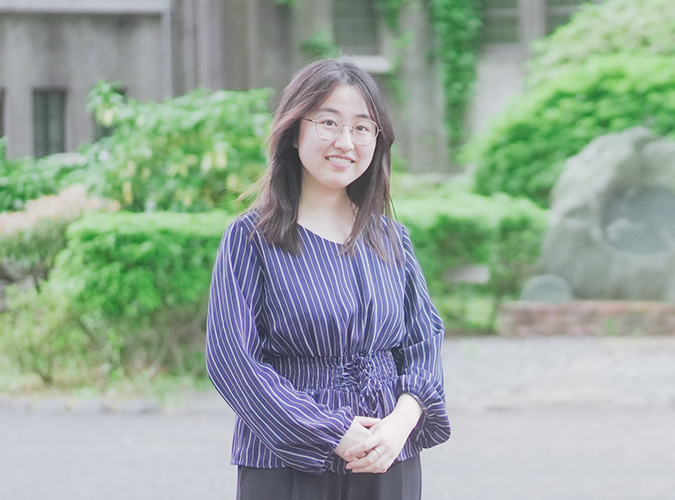
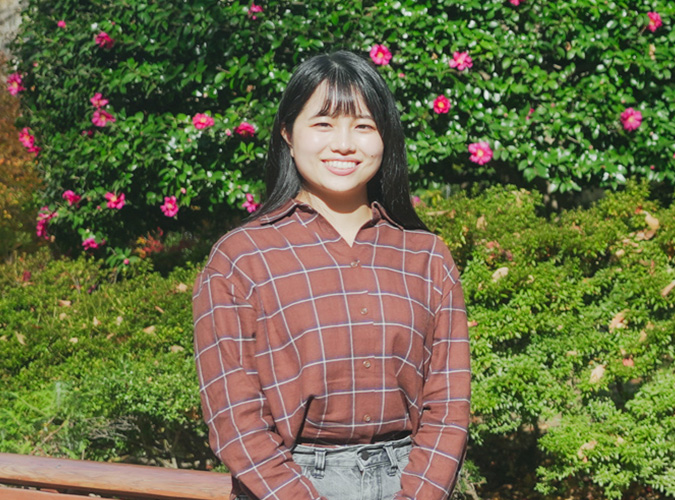
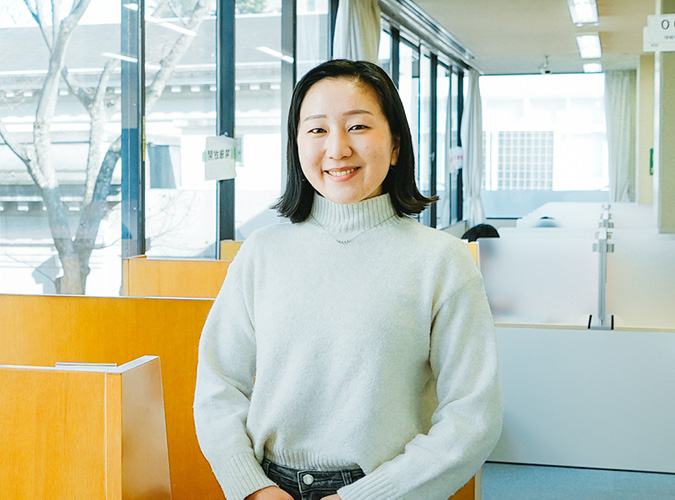
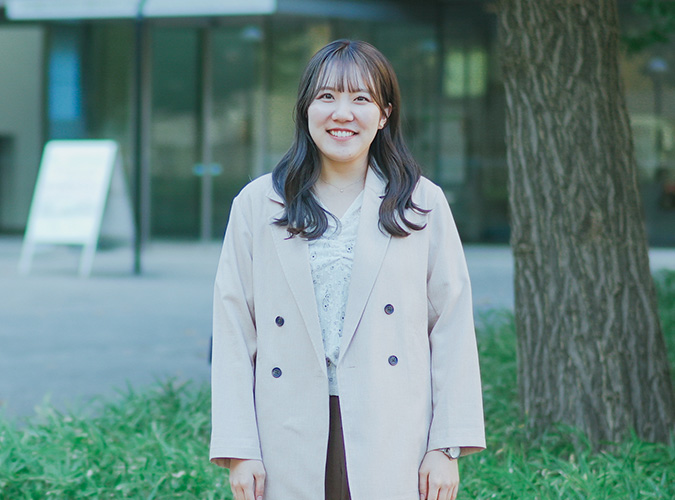
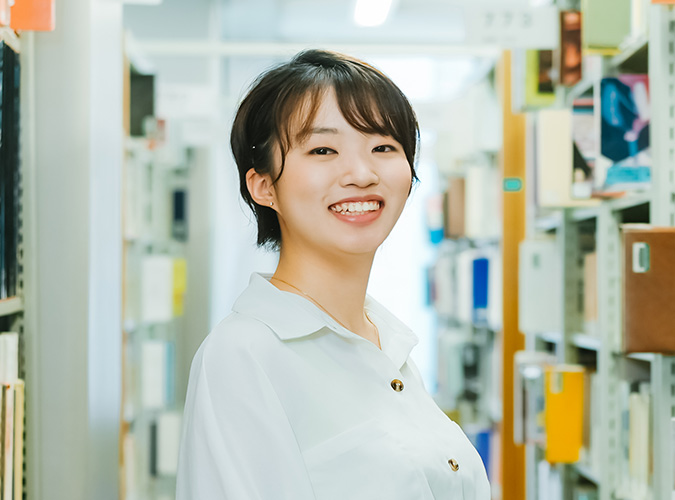
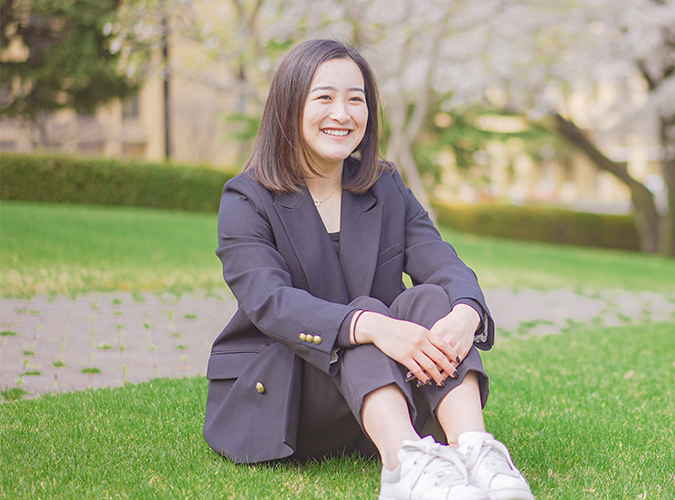
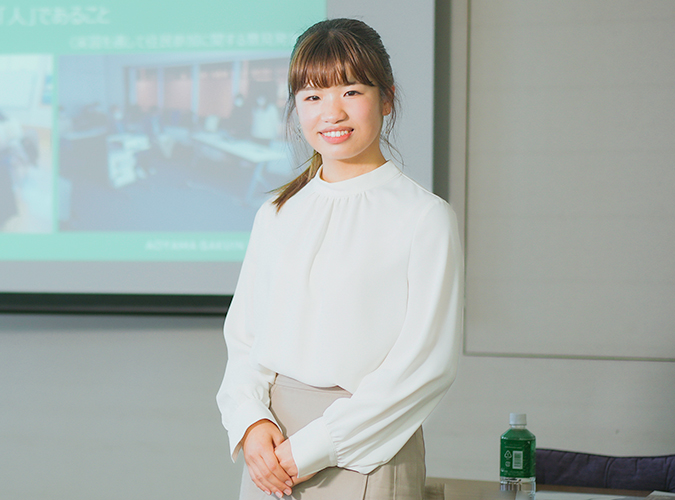
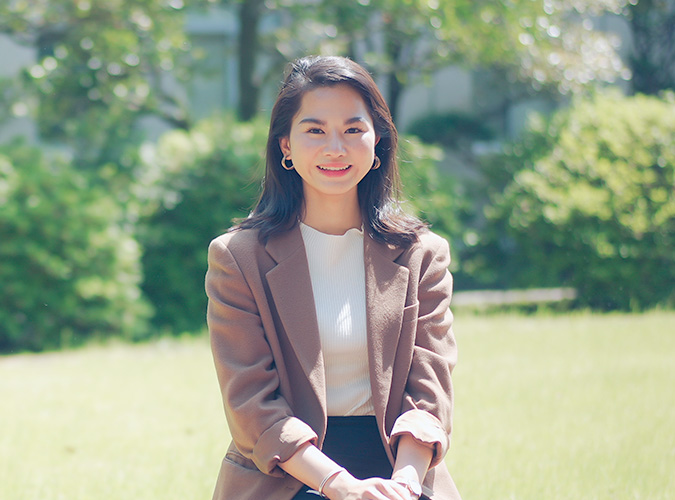
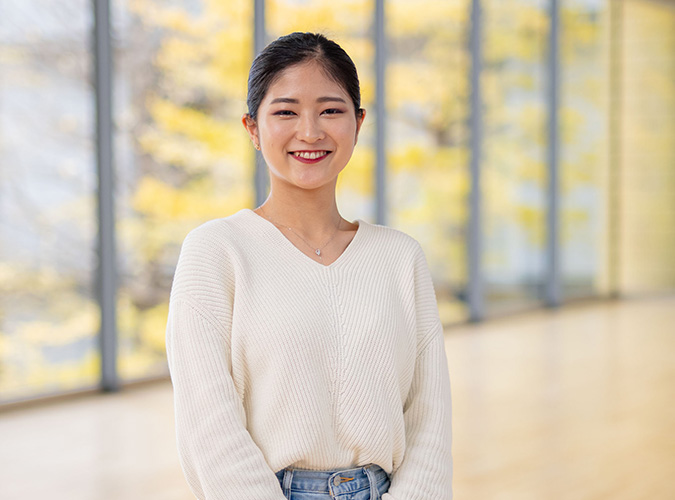
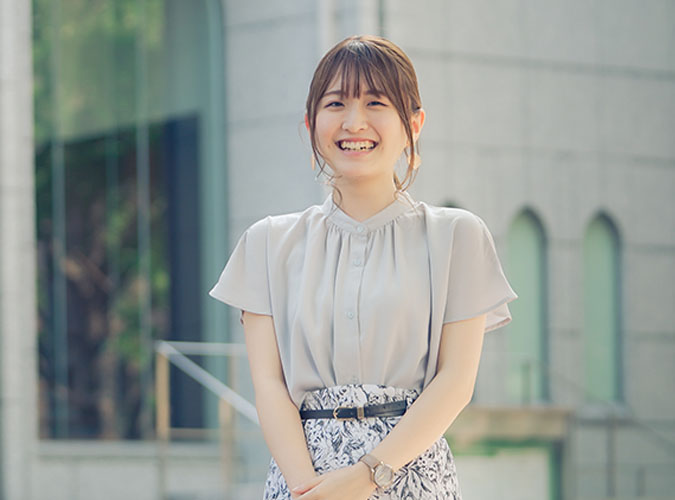
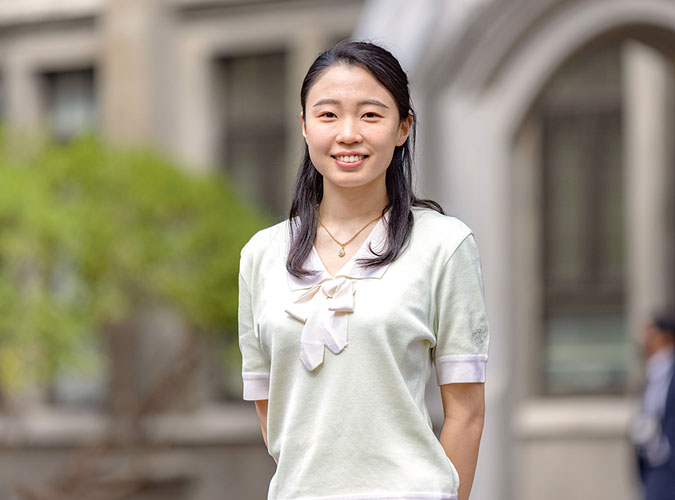
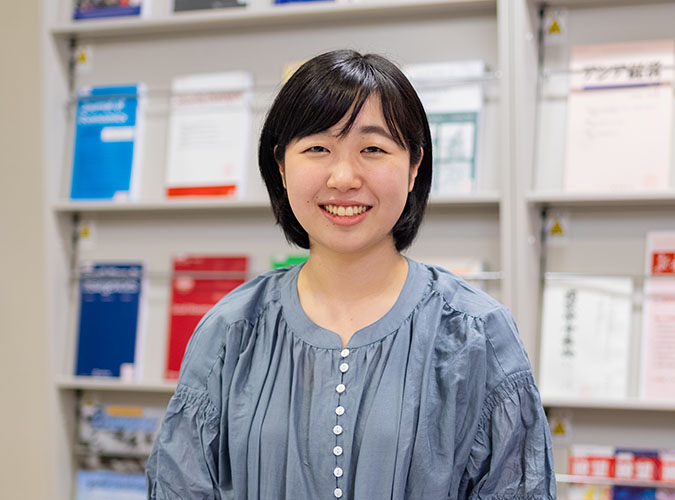
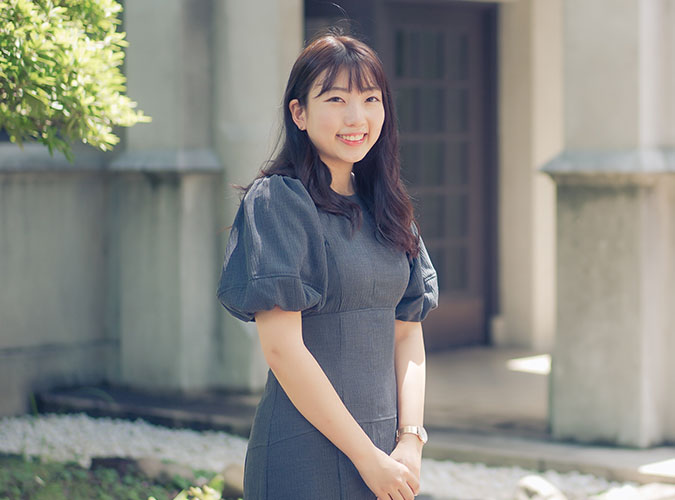
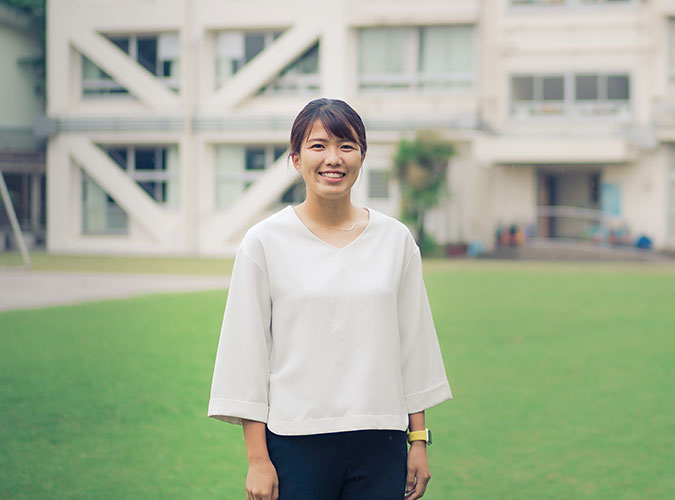
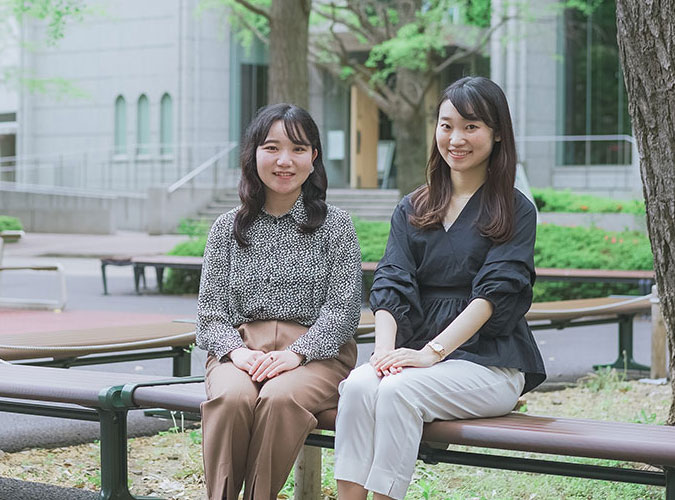
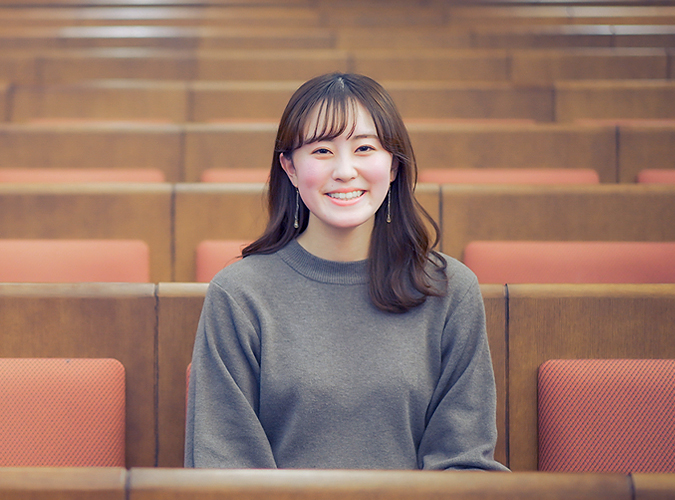
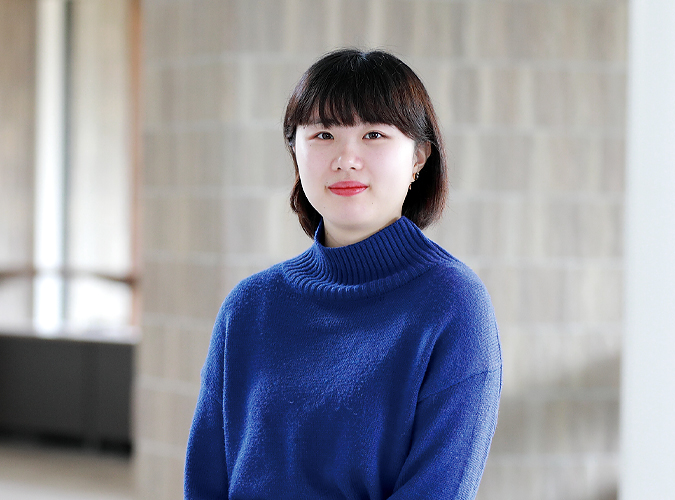
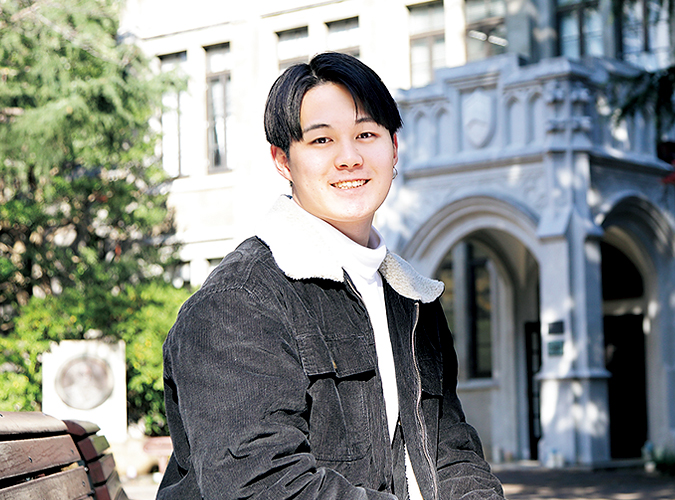
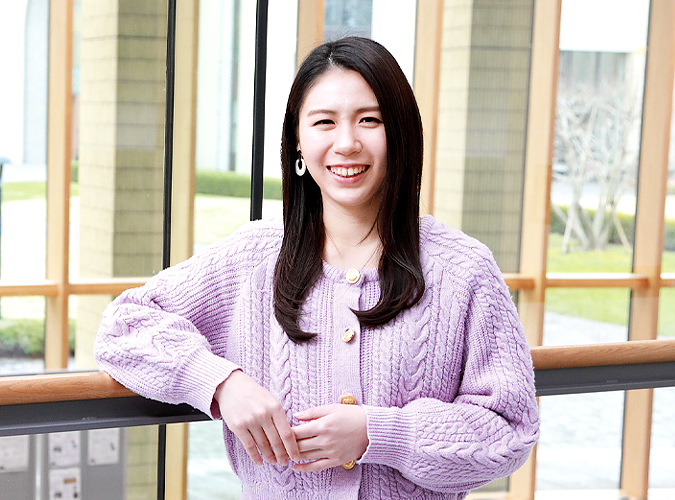
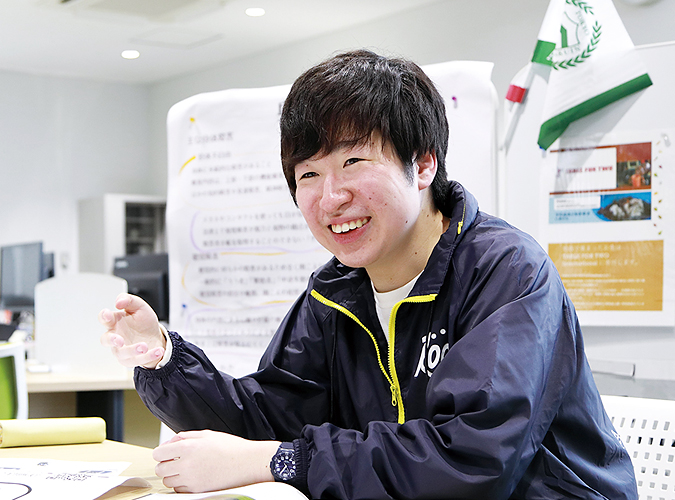
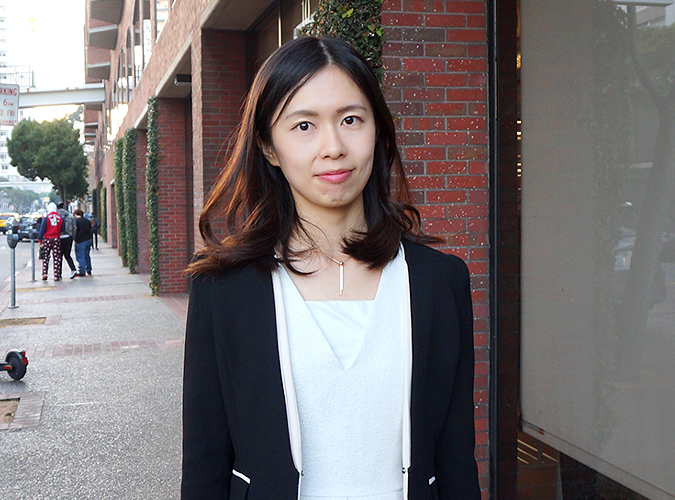
Aoyama Gakuin University The University of California, Berkeley (UC Berkeley) offers various study abroad programs. Nagimi Asaga studied abroad at the University of California, Berkeley for one year from the second semester of her sophomore year under the "Study Abroad Program at an Accredited University". We interviewed Ms. Asaga about her experience and her life at the university so far.
By sticking to my own will, I realized my dream of studying abroad in the United States, something I had decided on even before enrolling.
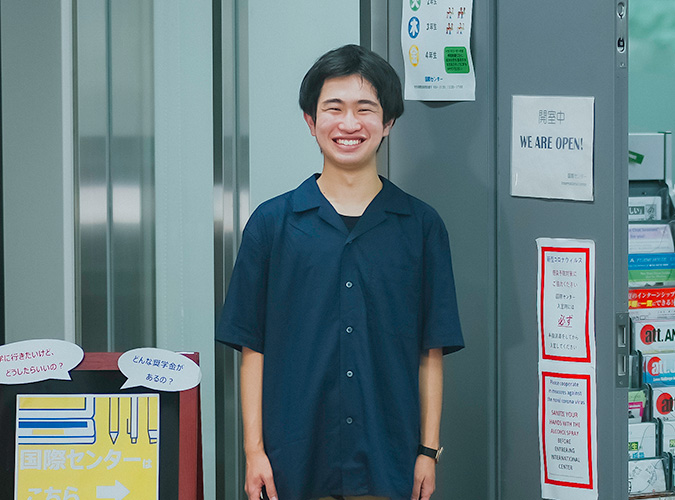
I was interested in economics and wanted to use English to play an active role on the international stage in the future, so the School of International Politics, Economics and Communication, which has the Global Studies Program (GSP), where one-third to one-half of the credits required for graduation can be taken in English, was an attractive choice for me. I was also deeply inspired by the diversity and clear sense of purpose of the students from all over the world who gathered at the University of California, Los Angeles (UCLA) summer school I attended during my high school days (Aoyama Gakuin Senior High School). I decided to study abroad at UCLA again when I became a university student, and from that time on I started gathering information on studying abroad at the university's International Center. Due to the impact of the COVID-19 pandemic, UCLA had restrictions on accepting international students, so I decided to study abroad at the University of California, Berkeley (UCB), which is also a part of the University of California, using the accredited school study abroad program.
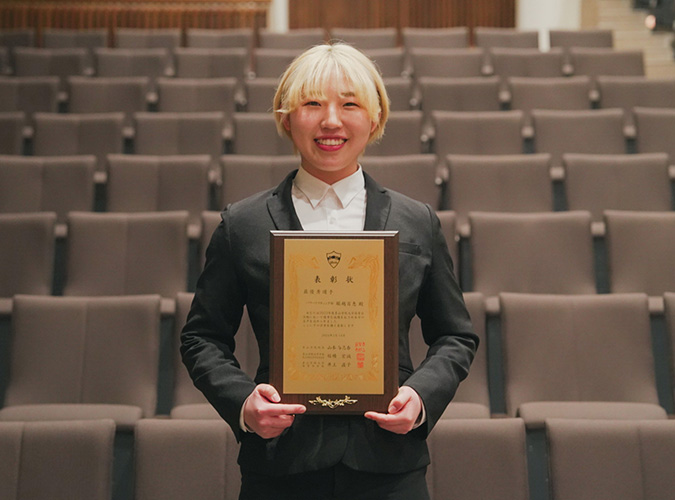
To study abroad at an accredited school, you must go through the study abroad procedures yourself. While attending daily classes, I had to go through many processes, such as communicating with the study abroad destination, including applications and entrance exams, travel and visa procedures, and reporting my progress to the International Center, but the experience of clearing each step one by one toward my goal with my own determination gave me confidence. For example, I was able to receive the Excellence Award at the 2021 Academic Achievement Awards before studying abroad, which I believe is one of the results of my task management skills being greatly improved by independently balancing my studies and preparations for studying abroad. I was also grateful to be able to receive private grants such as the Aoyama Gakuin University Industry-Academic Joint Bandai Overseas Study Encouragement Scholarship - Taihei Engineering/AGU Industry-Academic Joint Scholarship, which reduced my financial burden.
I majored in sociology at UCB, where I studied abroad. In the "Introduction to International Business" course I took in my first year in Department of International Economics, I learned that in order to develop international business in today's diversified society, a wide range of knowledge that takes into account the culture and customs of the region is necessary. Through the GSP course in my first and second years, I had some training in lectures and reports in English, but it was not easy to study sociology, which I was studying professionally for the first time, in a language other than my native language. Even though the lectures were in English, in the Japanese learning environment where everyone around me was Japanese, if I couldn't understand something on my own, I could ask for help in Japanese. However, during my study abroad, I had to use English to make my way through everything on my own. Although I was overwhelmed by the amount of reading assignments given in each class, I felt that the shortcut was to carefully read and understand everything, and by doing so for a year, I felt that I had grown a lot.
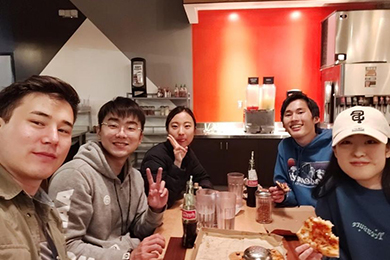 With friends from various universities at a restaurant near UCB. Asaga is in the foreground on the right.
The awareness of the issue gained from studying abroad is the need to balance a sustainable society with business profits
The biggest benefit of studying abroad was that it clarified my vision for the future. Before studying abroad, I had hoped to deepen and expand my knowledge of economics and related fields, but through the class "International Environmental Economics" that I took while studying abroad, I became very conscious of the issue of balancing a sustainable society with business profits, and I set a goal of analyzing the feasibility of sustainability management in the future. Sustainability research is driven by Western countries, so most research papers are written in English. I think that the fact that I was able to acquire academic-level English proficiency at UCB also sparked my interest in this field. In addition, my roommate's daily conversations with me, in which he shared what he had noticed at business school and internships and spoke specifically about his vision for what kind of company he wanted to work for in the future, were a great inspiration and helped me to determine my future prospects.
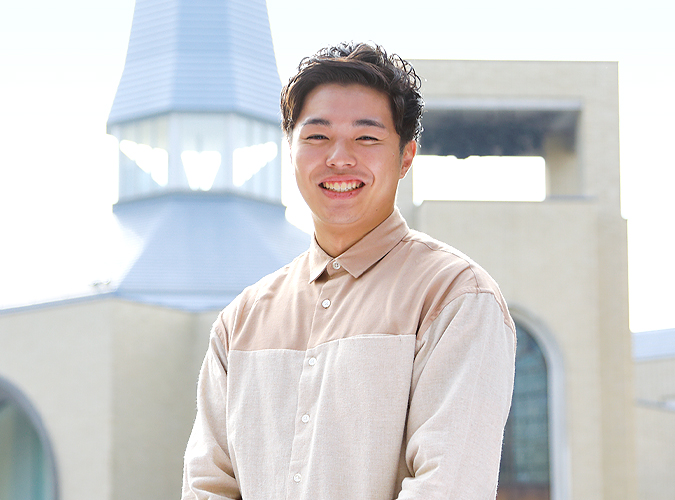
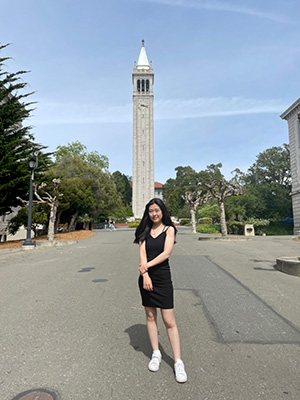 The 90m-tall bell tower, the "Seizer Tower," is the symbol of UCB.
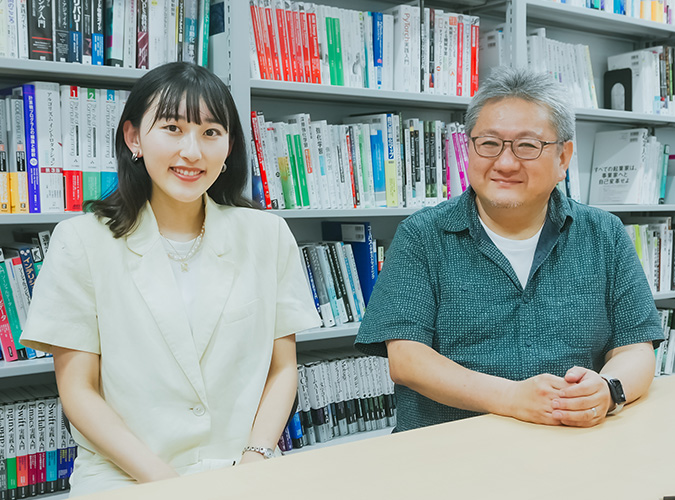
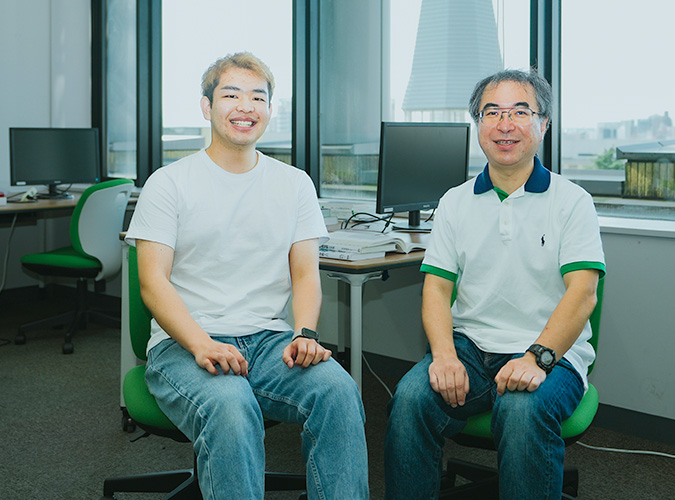
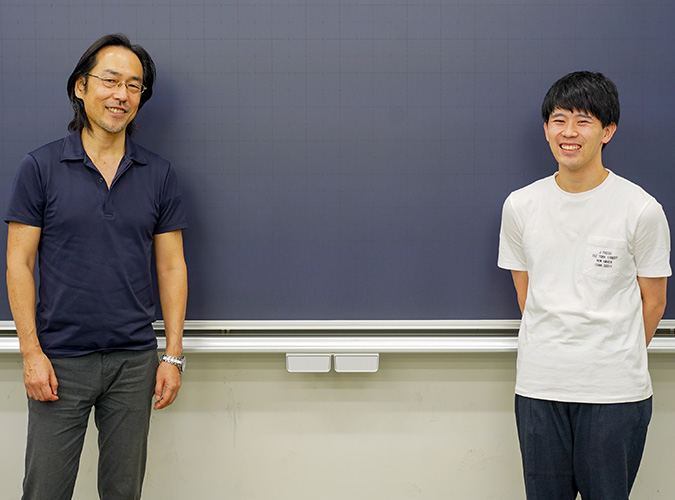
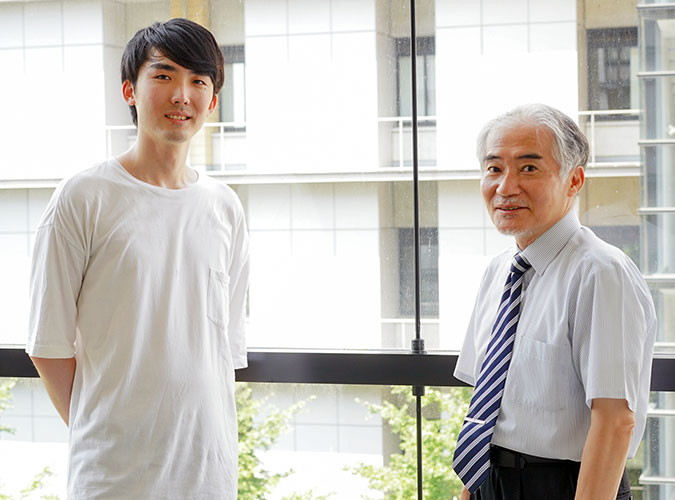
After returning to Japan, I am analyzing risks and constraints that could be a factor in a company's business activities in Professor Yoshitaka Tsuruta 's seminar. I learned statistics and am using statistical methods to analyze the topic of "How much the announcement of the postponement of the Tokyo Olympics affected the stock prices of sponsoring companies." I am working with a group of three people, sharing my opinions, identifying analytical points, analyzing using statistical software, and writing up the results as a paper. I feel that by studying abroad and gaining knowledge of sociology, I am now able to come up with more multifaceted ideas. By using statistical methods, it is possible to derive meaningful analytical results based on numerical values even for new phenomena and hypotheses that are difficult to explain from a traditional perspective. In my graduation thesis, which I will be working on in my fourth year, I would like to use the statistical methods I learned to consider the relationship between corporate activities and sustainability, which is a modern issue.
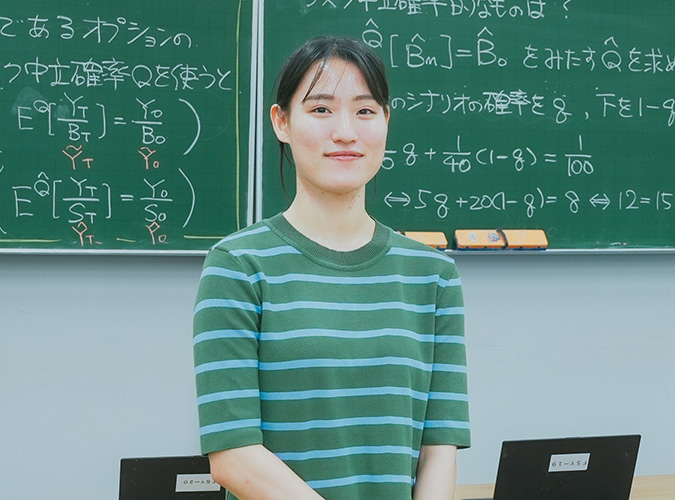
 In the seminar, students used mathematical formulas to deepen their understanding of "conditional variance," which is essential in statistics/econometrics.
I started job hunting after returning to Japan, and after participating in an internship in the summer of my third year, I plan to work at a consulting firm after graduation. The internship was highly advanced and conducted under a level of tension I would never experience in my student life, but the mentor and other employees were attractive, and I strongly felt that I wanted to work with this company. In the feedback, I was praised for my performance in group work, but was also advised that it would be even better if I could emphasize reasons and logic in my opinions. Therefore, I am now conscious of making considerations that value reasons and logic in my studies, including seminars. I am considering going on to graduate school after getting a job and gaining practical experience, so I am working hard to learn all of my subjects so that I can acquire the skills to do so. In the future, I would like to grow so that I can be entrusted with supporting companies related to sustainability.
The experience of taking initiative in things
Leading to awareness of servant leadership
Looking back on my studies, I was especially impressed by "Introduction to Christianity II," a course in The Aoyama Standard a university-wide general education system unique to our university. Learning how Christian teachings are applied to the real world was beneficial for me while I was studying abroad in the United States. Another benefit was being able to consider the "servant leader*" that Aoyama fosters. I had been enrolled in Aoyama since junior high school, so I had been listening to talks about servant leadership for six years, but I was not able to imagine what I could contribute at the time, when I was protected by my family and school. In this class, I learned about servant leadership in relation to historical figures, and by taking on many independent projects at university, my image of a servant leader, someone who takes action on their own and gives something to those around them, became more concrete, and it became the role I aspire to be after graduation.
*Servant leader: a person who finds their mission and willingly serves people and society, and whose way of life is a guiding one.
I also feel the importance of output, which is common to all subjects. After entering university, I have experienced several times that I was unable to properly write or visualize in reports, even though I thought I understood. In other words, even if I have accumulated what I have learned, I have not yet reached the stage where I can do something with it. Learning by inputting knowledge and outputting it as a set leads to practical and applied skills that will be useful in the future, so I would like to continue to value this method of learning.
Looking back, it was difficult to achieve my goal of studying abroad at an accredited school, but I think I was able to achieve irreplaceable results that outweighed the difficulties, such as the strength of being able to use English as my weapon, and a vision for the future and career planning. I believe that a goal is a source of motivation. During my study abroad, I sometimes felt frustrated because I couldn't understand advanced English phrases or jokes, but I never wanted to give up because I was clear about my purpose of studying at UCB to acquire English proficiency and a wide range of knowledge. In a university environment where you can do what you want freely, I think you can have a great experience by working with a goal, whether it be studying, studying abroad, or extracurricular activities. If you are unsure about studying abroad, I recommend you give it a try.

Asaga's "accredited school study abroad" schedule
-
<Third year of high school> 2019
Visiting the "International Center" to gather information
-
<First year of university> June 2020
Started studying for qualification exams (TOEFL, IELTS) in earnest
-
<First year of university> January 2021
IELTS Test
-
<First year of university> March 2021
I applied through a study abroad agent (I applied to UCLA, but changed my application to UC Berkeley because classes were online), and notified the International Center that I wanted to study at an accredited school.
-
<2nd year university student> May 2021
Accepted admission to UC Berkeley
-
<Second year university student> May-July 2021
Sharing information on visa acquisition, scholarship applications, vaccinations, dormitory move-in dates and travel dates with the International Center
-
<2nd year university student> August 2021
Moved to the US and started classes
-
<3rd year of university> May 2022
Returning to Japan
School of International Politics, Economics and Communication Department of International Economics
School of International Politics, Economics and Communication at Aoyama Gakuin University was founded as a pioneer of international faculties, with the mission of contributing to the international community. With three departments and five courses, we practice learning that emphasizes expertise, internationality, and on-site experience. We deepen our understanding of global issues and develop the skills to debate and discuss based on evidence. We foster practical skills to collaborate with diverse people around the world and create new value. In Department of International Economics, we study global issues, especially international economic interdependence, historically, theoretically, and quantitatively from the perspective of economics and business, based on a curriculum specialized in international economics and development economics. Based on each student's interests and career path, we have established the "International Economic Policy Course" and the "International Business Course." We cultivate human resources who have an attitude of understanding and respecting different cultures and values, and who can think and act proactively to solve problems.